
 KOR
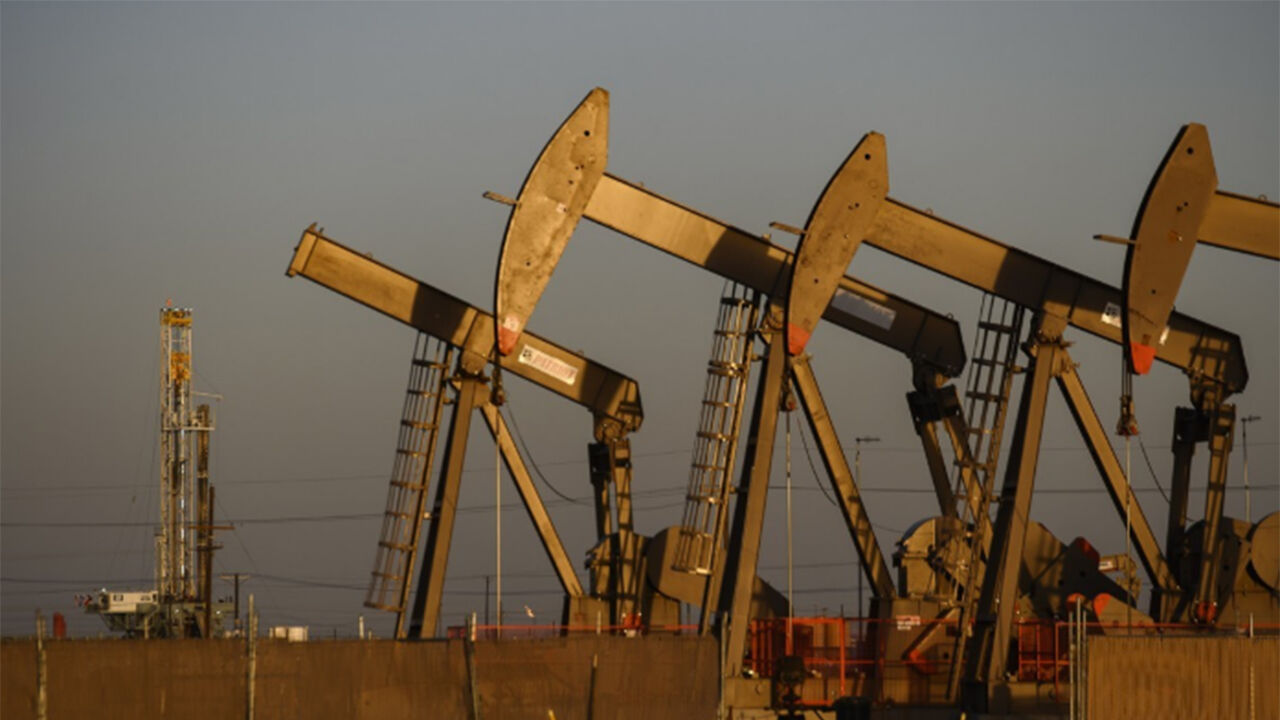
▲ Crude oil drilling operations in Texas, United States
As the prolonged war involving Iran disrupts Middle Eastern crude oil supplies, oil-producing countries in the Americas—including the United States, Canada, and Venezuela—are reaping windfall benefits.
The Financial Times (FT) reported on October 20 (local time) that amid growing concerns that supply instability of Middle Eastern crude could be prolonged, demand is flocking to the Americas to secure stable energy sources.
Canada and Brazil have broken records for their crude oil production this year, while Venezuela and Suriname are expected to significantly boost output, driven by increased investments from Western oil companies.
Exports of petroleum products, such as U.S. crude oil and diesel, have risen by 15 percent.
Energy market research firm Rystad Energy projected that total oil production in North and South America will increase by 10 percent over the two-year period from 2024 to the end of this year.
As instability in the Strait of Hormuz is prolonged, an atmosphere is also forming to lower dependency on Middle Eastern crude.
Beyond simply purchasing crude from the Americas, direct investment movements to participate in oil production and development are spreading.
Argentina is cited as a prime beneficiary.
TotalEnergies announced this month that it will invest $10 billion (approx. 13.3 trillion won) in offshore oilfield development and existing onshore gas projects in Argentina.
Harold Hamm, a tycoon in the U.S. shale industry, unveiled a multi-billion-dollar drilling project plan in Vaca Muerta, recognized as one of the world's largest shale deposits.
Chevron also plans to invest $13.8 billion (approx. 18.3 trillion won) in the Vaca Muerta region over the next 10 years to triple its production within Argentina.
Chevron has increased crude oil production at Vaca Muerta's El Trapial oilfield from 5,000 barrels per day to 40,000 barrels per day over the past three years.
Investor interest is also gathering in Venezuela.
The Abu Dhabi National Oil Company (ADNOC) of the United Arab Emirates (UAE), Shell, and BP have reached early-stage investment agreements with Venezuela, and Chevron plans to invest $7 billion (approx. 9.3 trillion won) over the next five years to raise local production to about 600,000 barrels per day.
Entering this year, Venezuela's crude oil production has risen by 10 percent to reach approximately 1.2 million barrels per day.
Capital is also flowing into Canada, which features relatively low political and investment risks.
Last month, a Shell-led consortium announced an investment of more than $20 billion (approx. 26.6 trillion won) to double the production capacity of a liquefied natural gas (LNG) facility in western Canada.
Experts analyzed that while increased production in the Americas may not completely replace Middle Eastern crude, it can mitigate international oil price spikes and limit the pricing power of the Organization of the Petroleum Exporting Countries (OPEC).
Schuyler Parker, an analyst at Rystad Energy, said, "The production increase in the Western Hemisphere has weakened the pricing power of the Gulf Cooperation Council (GCC), represented by Saudi Arabia," adding, "Venezuela, Argentina, Guyana, the United States, and Canada will all exert a certain degree of influence."
(Photo: Provided by Odessa American, AP, Yonhap News)
※ Please note: This article was translated by AI and may contain errors.


 Video News
 Video News
 Video News
 Video News
 Video News