
 KOR
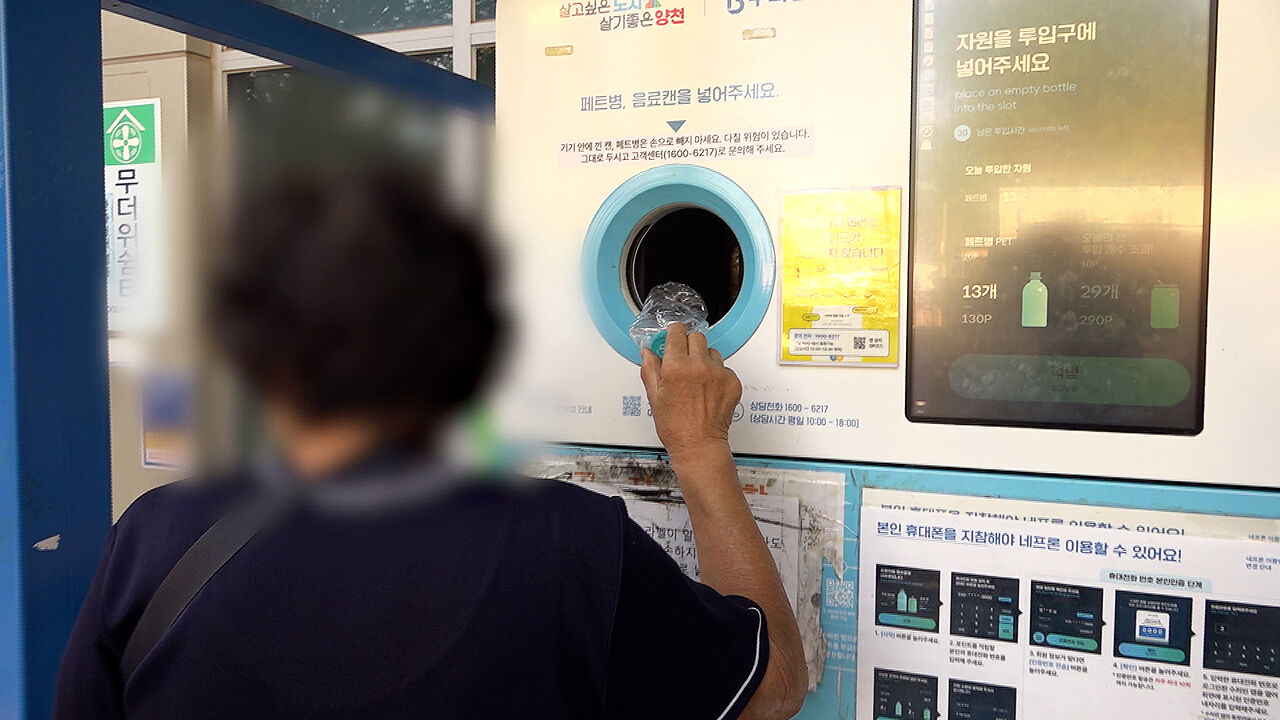
"Better to Put Them Here Than Just Throwing Them Away"
"Before, I used to throw out all my PET bottles together on recycling collection days. But here, you get 10 won per bottle and can deposit up to 30 a day. So I figured it was better to put them here than just throw them away, and I have been doing it consistently ever since."
She usually comes once every two to three days because her household goes through many bottled water containers. When asked about any inconveniences, she brought up the wait times first.
"You often have to wait an hour and a half, or as long as two hours. It would be much better if just one more machine were installed."
Arguments also break out from time to time—squabbles over who arrived first.
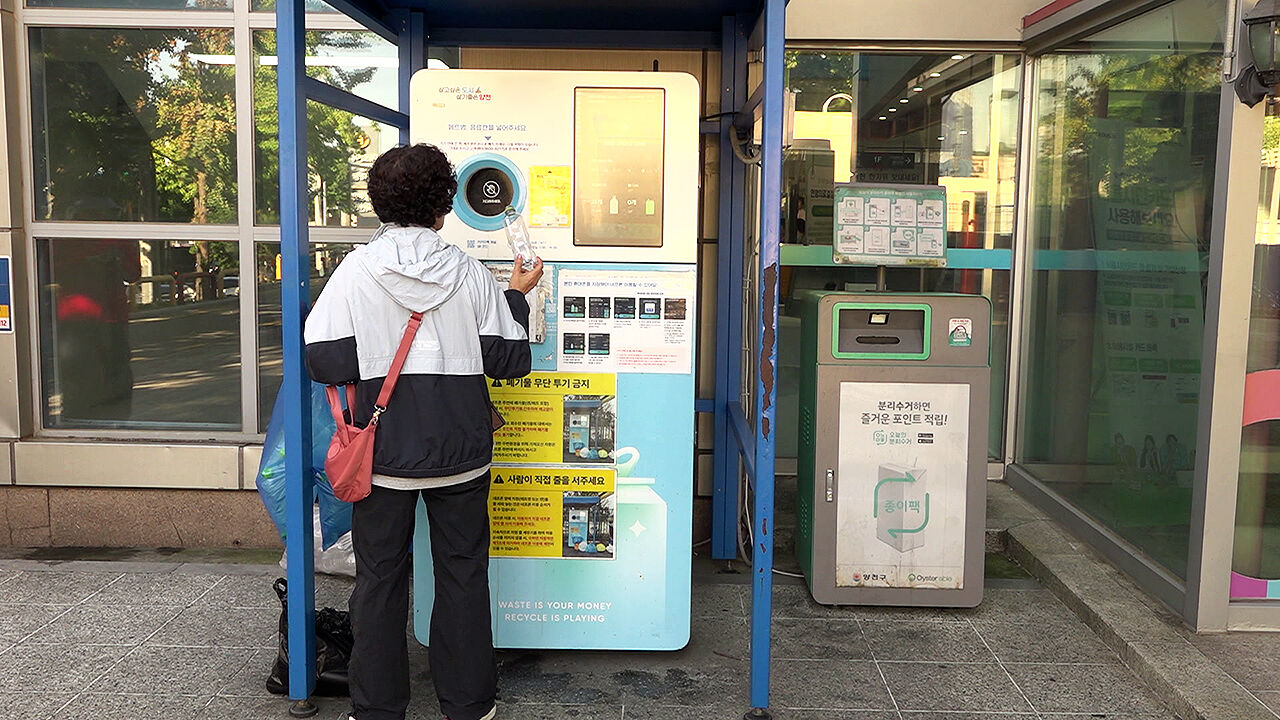
Another user met in front of the same machine, Kim Mi-hee, began accumulating points after her daughter installed the mobile app for her. At first, she decided to bring only what came out of her own home.
"As you get into it, when people I know around me have bottles, I go and collect them. Everyone asks why I bother, but it gives me exercise and I enjoy it."
Over several months, she had collected 70,000 won. When asked whether she had ever transferred the money into her bank account, she answered:
"No. I am still a beginner at this, so not yet."
The Hurdles to Turning Points into Cash
The records showed 2,057 installations. Confirmed procurement costs alone reached 44.3629 billion won, funded mostly by local government budgets. Starting from a single machine in Uiseong, North Gyeongsang Province, in 2017, the machines have now spread to more than 2,000 locations, with over half installed within the past three years. Among the points awarded to users, the amount that never made it into cash reached 1.21756 billion won. This figure reflects only what local governments reported in numerical data, representing a rate of 14 percent.
There are two main reasons this money remained unredeemed.
One is the threshold. Users must gather 2,000 points—meaning they have to deposit 200 PET bottles—to transfer the funds to a bank account in their own name, and some operators require up to 3,000 points.
Manufacturers cited operational burdens.
"There are constraints on our staffing, and in terms of actual operations, processing conversions down to just a few tens of won would generate simply too many transactions."
This threshold was established when the first machines were rolled out in 2017 and was incorporated into the terms of service in 2019. Operators explained that it was initially due to bank transfer fees, arguing that they could not pay a 500-won transaction fee to refund 10 or 20 won. They added that after changing their primary transaction bank and securing investments, transfer fees are no longer the issue. Yet the threshold has remained at 2,000 won for seven years.
Bring 80 Bottles, but Only 30 Accepted
The problem is that elderly residents do not collect bottles in exact batches of 30.
"Someone brings 80 bottles. But after feeding in 30, they have 50 left over. They feel it is such a waste to just leave them. So they start entering their son's or daughter's phone number."
Customer service centers report receiving complaints that the person ahead is feeding in 90 bottles. Checking the timestamp logs reveals consecutive entries under different phone numbers—those of family members. Points accumulated that way cannot be withdrawn because the account is not in the user's own name. The issue could be resolved if their adult children register, but that rarely happens.
"Sons and daughters do not like their mothers doing this. Even when told, 'Please sign up, I have gathered all these points,' younger folks just say, 'How much could that even be worth? Forget it.' That happens far more often."
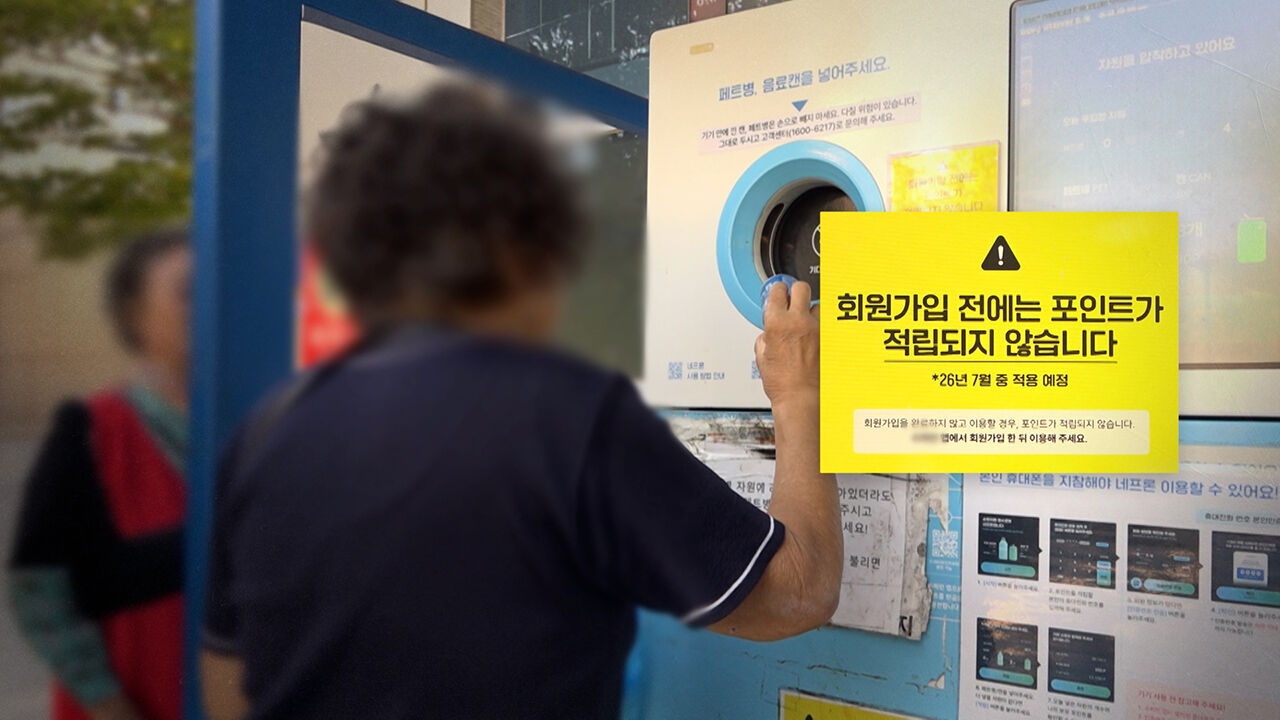
On June 25, the manufacturer amended its terms of service to completely stop awarding points to 'associate members' who only input a phone number, citing persistent cases of users bypassing identity verification. The company stated that points accumulated under a user's phone number prior to the revision remain held by the company and will be disbursed once the user converts to full membership.
However, converting requires identity verification and registering a bank account—the very hurdles that kept them as associate members in the first place. Furthermore, points accumulated under family members' numbers cannot be claimed even if the user converts their own account. They can only be paid out if the registered family member—the son or daughter—signs up and registers their own bank account.
In Germany, a Single Receipt Does the Trick
Germany also has unclaimed funds. The Federal Environment Agency estimates the return rate at 96 percent, while the remaining 4 percent—representing deposits on approximately 720 million containers—is retained by beverage bottlers and retailers. As of 2015, this totaled around 180 million euros. Known locally as "Pfandschlupf," the issue remains a subject of ongoing debate. However, that 4 percent consists of funds that consumers chose not to redeem. In Korea, the 1.2 billion won is a mix of money that has not been redeemed and money that cannot be redeemed.
In Norway, system operator Infinitum manages the nationwide network. In 2024, the deposit return rate stood at 93 percent, while the overall collection rate including all recycling channels reached 98 percent. The company's balance sheet carries a reserve of 641.7 million kroner for deposit liabilities.
The United States takes a different approach. Connecticut, Massachusetts, New York, Maine, Michigan, and Vermont require by law that unredeemed deposits be transferred in whole or in part to the state government. In Iowa and Oregon, the industry retains them.
Michigan's figures are concrete. According to Department of Treasury data, deposits collected in 2025 totaled $389.7 million, while $270.4 million was refunded. The return rate was 69.4 percent, the lowest in decades. Of the unredeemed $119.2 million, $29.6 million was distributed to retailers, $1 million was allocated to state police enforcement against deposit fraud, and the remainder went into the state Department of Environment's cleanup and redevelopment trust fund. When the return rate drops, state revenue increases. Critics locally point out that certain entities stand to gain when the system fails to operate efficiently.
Whether kept by businesses or remitted to state coffers, where unreturned money ends up is codified into law. South Korea's reverse vending machine points lack any such legal provision.
Points with Hurdles vs. Points Without
Upon enrollment, users choose their payout method among direct bank deposits, credit card points, or simple payment points. Points accumulated over a single month are paid out sequentially between the end of the following month and early the month after. There is no minimum threshold to meet. If bank account information cannot be verified, points are kept as remaining balances. Once verification is complete at the end of a given month, all backlogged points are disbursed. The expiration period is five years.
In contrast, points from reverse vending machines are deposited into a bank account only after accumulating 200 bottles, registering a verified bank account in the user's name, and manually requesting withdrawal. There is no expiration clause at all. Under the terms of service, the only conditions for forfeiture are account termination and fraudulent use. The company simply holds onto that money indefinitely.
Instead, another clause exists: if the service terminates, points expire after an operator-designated grace period and cannot be recovered. The terms merely state that notice will be posted 30 days before termination.
When PET Bottle Prices Plunged, Rewards Vanished Too
"We secure funding by turning collected PET bottles into recycled PET flakes and pellets to produce recycled containers. But naturally, that material needs to sell well and at high prices, and those prices constantly fluctuate depending on oil prices."
When oil prices fall, virgin plastic becomes cheaper. Recycled materials stop selling. Paying 10 won per bottle turns into a financial burden.
The city of Jeonju invested 740 million won to install 41 units. The city retained ownership while outsourcing operations to contractors, allowing them to offset operating expenses by keeping the collected PET bottles. In mid-October last year, an operator notified the city of a suspension of operations. At community centers, machines were powered off, accompanied by posted notices:
"Please be advised that operations have been suspended due to operator circumstances. We ask for your understanding."
PET bottle prices, which once fetched 1,000 won per kilogram, plummeted. Wire ties, labels, and leftover beverages mixed in degraded the raw material quality. The contractor asked the city for operating subsidies, but negotiations failed and the city terminated the contract.
Of the two operating contractors, one went bankrupt and the other is embroiled in litigation. Around 470 citizens have been left with approximately 5 million won in unpaid points. There is no way to recover that money.
The machines remain standing, unable even to be removed, because disposal also costs money. What collapsed in Jeonju was the operating contractor. There is no safeguard in place against unredeemed points. The manufacturer stated that legal reviews concluded it was not obligated to maintain escrow deposits or guarantee insurance because the points do not constitute a means of payment.
While Norway's operator sets aside reserves for redeemable deposits, here, operators stop at merely recording liabilities on their books.
"We actually recognize these points as debt. We have been examining various options to clear this debt, but there is admittedly a gap between those deliberations and current realities."
Operators also considered refunding balances via coupons, but noted that they could not do so because they failed to meet registration criteria for prepaid electronic payment instruments.
Half Don't Even Know How Much Is Left
About ten users encountered in front of the machines were asked the same question: What is the best part about these machines being here? The most common answer was that streets became cleaner. Some said it provided exercise, while others said it was fun turning what was once trash into money. People continue to line up, willing to wait up to an hour and a half to use them. And the 1.21756 billion won accumulated through those efforts still sits untouched.
※ Please note: This article was translated by AI and may contain errors.




 Video News

 Video News