
 KOR
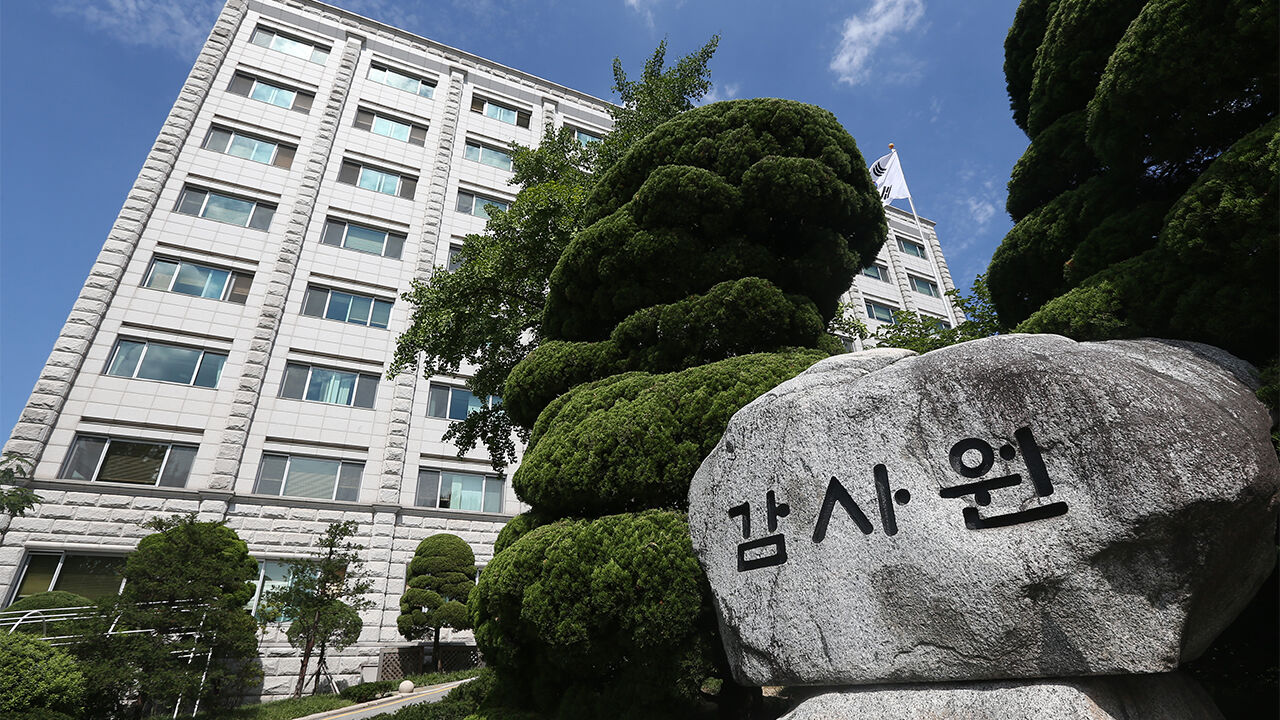
▲ The Board of Audit and Inspection building
An audit has revealed that uncertified weather observation equipment is being used, raising concerns about the declining reliability of meteorological data.
The Board of Audit and Inspection (BAI) released the findings of its periodic audit of the Korea Meteorological Administration (KMA) today (October 19).
According to the BAI, under relevant laws, the KMA is required to supervise whether observation agencies, including central government ministries and local governments, properly install and operate weather observation equipment, and ensure that key information is registered in the Observation Metadata System (OMDS).
However, the audit found that key information for 7,402 out of 21,533 pieces of equipment managed by observation agencies was missing from the OMDS.
In particular, 177 units continued to operate in an abnormal state without being re-inspected after failing verification tests, but the KMA left the situation unattended.
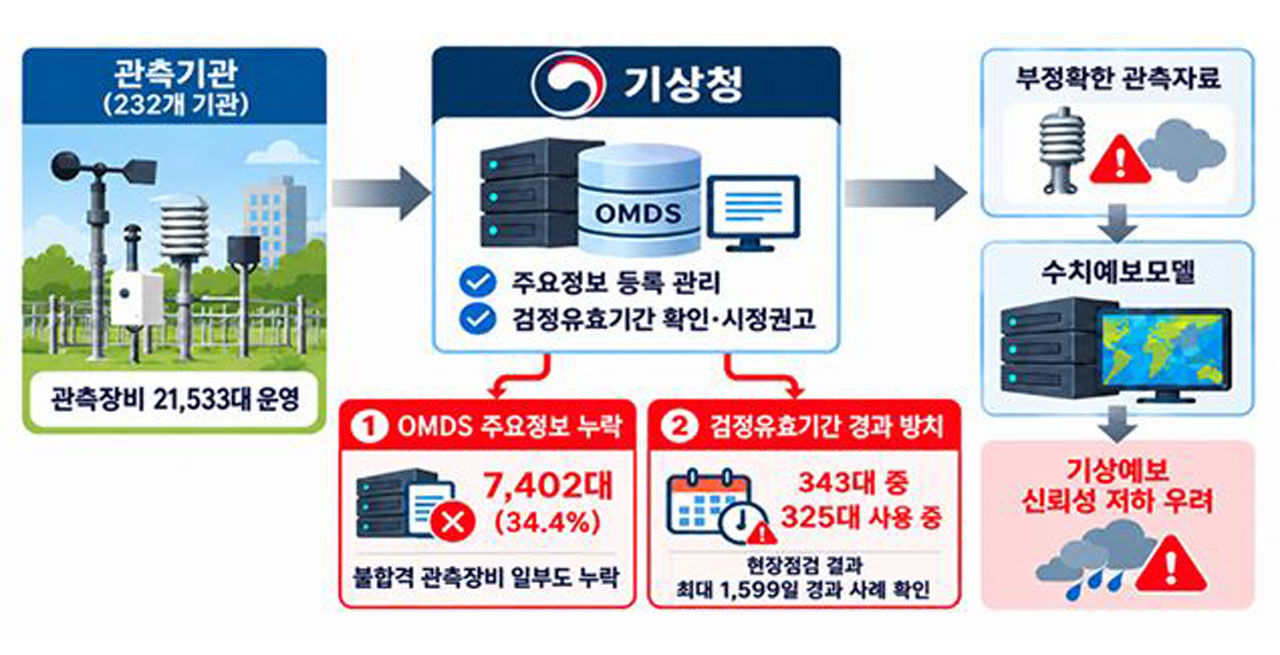
In addition, out of 8,936 pieces of observation equipment belonging to related agencies, 343 were found to have expired verification periods according to OMDS records. An on-site inspection of a sample of 75 units revealed that the validity periods of 39 units had expired by 4 to 1,599 days.
Among them, 11 units were being used even though they failed to meet initial verification standards.
The BAI pointed out, "There are concerns that the reliability of weather forecasts could decline as inaccurate observation data is utilized in forecasting."
Meanwhile, during the process of pushing forward a contract to construct a new office building since 2017, the Seoul Metropolitan Regional Meteorological Administration paid construction costs to the primary contractor, even though the project was subject to direct payment to subcontractors.
When the primary contractor failed to pay the subcontractors due to worsening financial conditions, the Seoul Metropolitan Regional Meteorological Administration ended up having to pay the amount again, resulting in a loss of around 83 million won, the BAI noted.
(Photo: Yonhap News)
※ Please note: This article was translated by AI and may contain errors.


 Video News


 Video News
