
 KOR
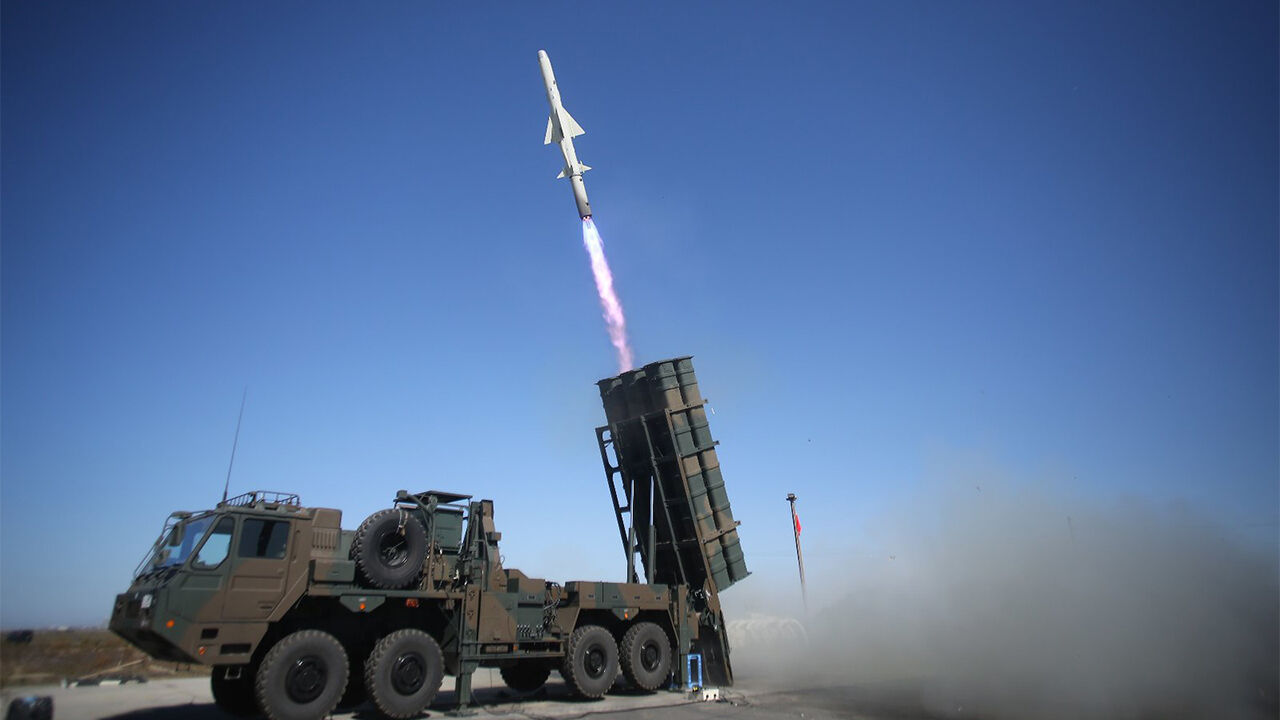
▲ Japan Ground Self-Defense Force Type 12 Surface-to-Ship Missile (SSM) (The photo above is not related to the article content.)
The Mainichi Shimbun and other outlets reported that the "Keen Sword" joint military exercise between the Japan Self-Defense Forces and the U.S. military began today (Oct. 19).
Running through October 29, this year's exercise is the largest in scale ever, expanding beyond conventional landing and amphibious operations and missile defense training into new domains such as space, cyber, and electromagnetic waves.
A total of 45,000 personnel from the Self-Defense Forces and 12,000 from the U.S. military will be mobilized, along with troops from five other countries including Australia and Canada—which have participated in the past—as well as France, Germany, and the Netherlands, taking part in select drills.
The exercise will focus primarily on the Kyushu and Nansei Islands, with a mind toward strengthening deterrence against China.
It is also reportedly being conducted on Yonaguni Island, the westernmost island of Japan in Okinawa Prefecture, located just 107 kilometers away from Taiwan.
The drills simulate a joint U.S.-Japan response scenario in the event that enemy forces attempt to land on and attack the Nansei Islands, which stretch from the southern tip of Japan's Kyushu to the east of Taiwan.
Advanced equipment will be deployed, including the Ground Self-Defense Force's "Type 12 Surface-to-Ship Missile," the U.S. Navy and Marine Corps Expeditionary Ship Interdiction System (NMESIS), the Marine Air Defense Integrated System (MADIS), and the High Mobility Artillery Rocket System (HIMARS).
The Type 12 surface-to-ship missile has a range of approximately 1,000 kilometers, capable of reaching China's coastal regions or maritime areas surrounding Taiwan.
This marks the deployment of long-range missiles in an exercise that will shoulder Japan's capability to attack enemy bases for the first time, aligning with Japan's recent attempts to strengthen deterrence through counterstrike capabilities beyond its exclusive defense-oriented policy.
During this exercise, equipment will be transported by vehicles to check operational and launch procedures, but no actual live firings will take place.
NMESIS is a missile system mounted on a remotely operated unmanned vehicle capable of carrying anti-ship missiles with a range of over 180 kilometers, while MADIS is cutting-edge air defense equipment that detects and shoots down enemy drones or aircraft infiltrating at low altitudes.
General Yoshihide Uchikura, Chief of Staff, Joint Staff (equivalent to the Chairman of the Joint Chiefs of Staff), stated in a recent press conference, "(This exercise) is highly significant in that it enhances the maneuver deployment capabilities of both Japan and the U.S. while boosting immediate response and interoperability."
He added, "The fact that it is on a near-maximum scale is an expression of our sense of crisis and demonstrates the existence of training demand."
(Photo provided by Japan Ground Self-Defense Force, Yonaguni / Yonhap News)
※ Please note: This article was translated by AI and may contain errors.


 Video News

 Video News
 Video News
 Video News