
 KOR
KOR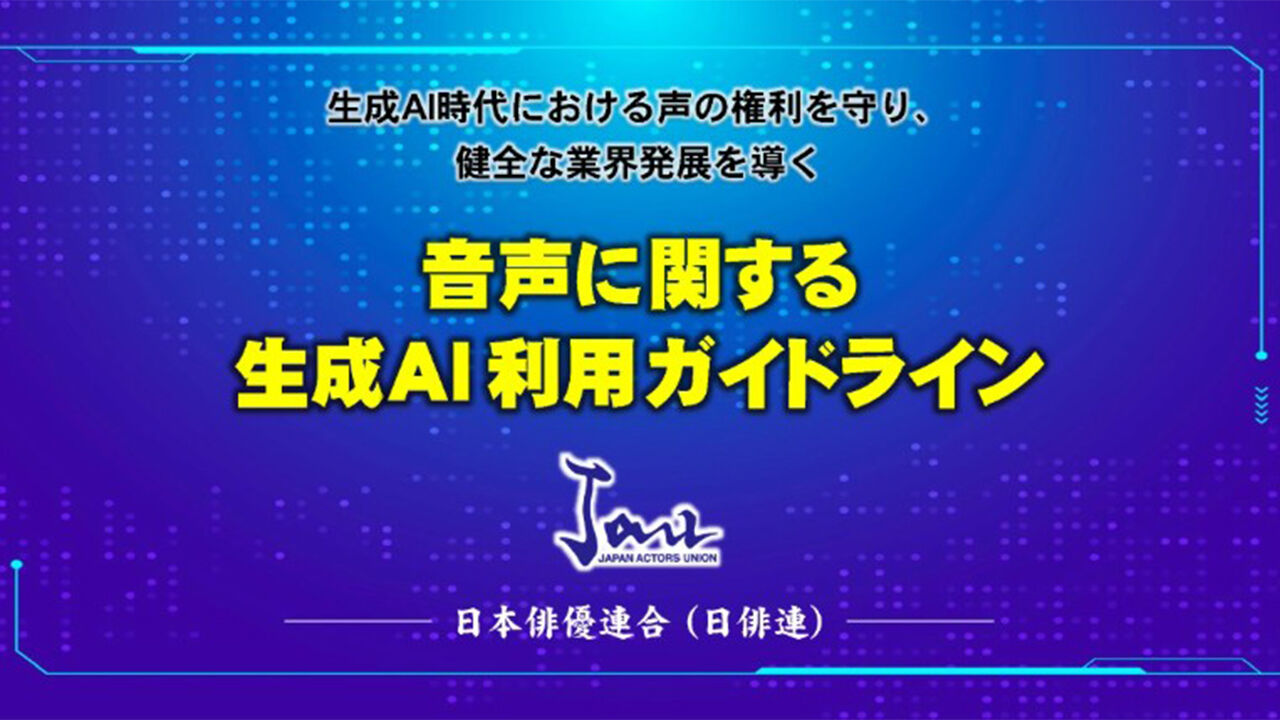
▲ The Japan Council of Performers Rights and Performing Arts Organizations' "Guidelines on the Use of Generative AI Concerning Voice"
Amid a series of damages caused by the unauthorized generation of voices using artificial intelligence (AI) in Japan, actor and voice actor organizations have released guidelines to protect the "rights of the voice."
Kyodo News reported today (October 15) that the Japan Council of Performers Organizations, which includes actors and voice actors, held a press conference in Tokyo and announced the "Guidelines on the Use of Generative AI Concerning Voice."
The guidelines in principle prohibit using the voices of deceased individuals in new works.
However, exceptions are allowed in cases such as obtaining permission from the bereaved families.
Additionally, to protect employment opportunities for voice actors, the guidelines specify that AI should not replace voice actors in dubbing movies or dramas.
Furthermore, the guidelines set a principle that when generating voices using AI, consent must be obtained at each stage: "learning and analysis," where voice data is memorized by AI; "generation and construction," which replicates the individual's sound quality and tone based on that data; and "provision and sale," which uses the generated voice in specific works.
If continued use is desired after the agreed contract period expires, consent from the parties involved must be obtained again.
Shimada Bin, a voice actor for the anime Chibi Maruko-chan, stated at the press conference, "There was an instance where an unauthorized AI voice of a character from an anime I acted in was made to sing." He added, "It made me heave a deep sigh. As time passed, my anger only grew larger."
In Japan, damages involving the theft of celebrities' and voice actors' voices and portrait rights by abusing AI continue to occur without a break.
According to a 2025 survey by the non-profit organization "Japan Association for Protection of Portrait Publicity Rights," unauthorized theft posts on social media (SNS) reached over 40,000 cases, with cumulative views hitting 335 million.
Last month, a court even ruled that a celebrity's voice is legally protected.
After voice actor Tsuda Kenjiro filed a lawsuit when a TikTok account uploaded ghost stories and conspiracy theory videos featuring AI narration closely resembling his low-pitched voice, the Tokyo District Court ruled that his voice holds economic value and is legally protected under the "right of publicity."
(Photo: Captured from the Japan Council of Performers Organizations website, Yonhap News)
※ Please note: This article was translated by AI and may contain errors.


 Video News


 Video News