
 KOR
KOR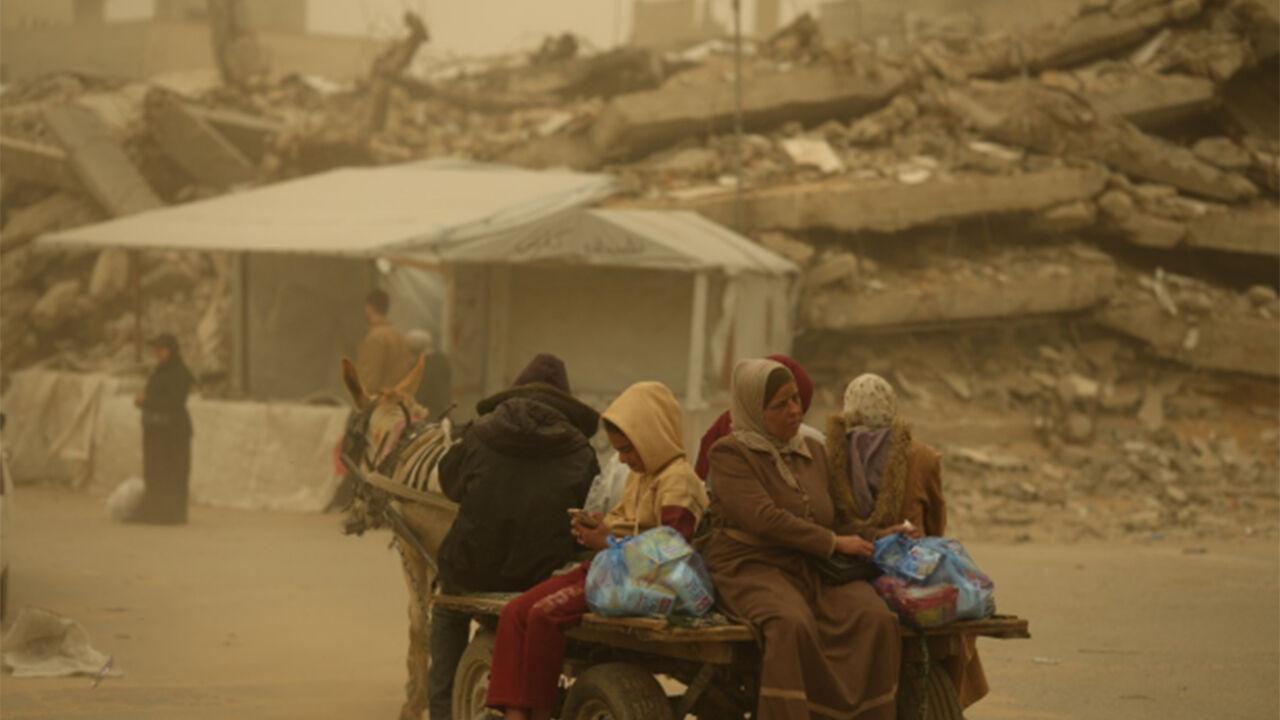
▲ Residents of the Gaza Strip riding a donkey cart
"A donkey costs 40 million won, a horse 39 million won, and a sheep 10 million won..." The UK daily The Telegraph reported on the 14th (local time) that livestock prices have skyrocketed in the war-torn Gaza Strip in Palestine.
This is a result of a sharp decline in the livestock population following the three-year war between Israel and the Palestinian militant group Hamas, compounded by a small number of black market traders hoarding livestock.
According to the report, a donkey, which previously traded for around 1,000 dollars (approx. 1.35 million won) before the war, has now skyrocketed in price to 30,000 dollars (approx. 40 million won).
Horses are being traded for between 34.8 million and 39.1 million won, while a single sheep is changing hands for 8.09 million to 10.79 million won.
Even a week-old lamb is being sold for 1.08 million to 1.35 million won.
In the case of donkeys, their utility has soared because vehicles and other means of transportation have virtually disappeared from Gaza in the aftermath of the war.
Dr. Ahmad Tabet, a veterinarian operating locally, stated, "Given that it is impossible to obtain even basic automobile parts due to the war, the current price [of donkeys] is reasonable."
He noted that working animals like donkeys offer advantages in the current situation, saying, "Donkeys can move everything from rubble and trash to family belongings, and they can yield quite a profit."
Dr. Tabet entered Gaza in 2017 after studying in Jordan and Germany, and currently works as a veterinarian with the backing of British charities such as Safe Haven for Donkeys.
He criticized that what has worsened the situation in Gaza even further is a small group of black market traders who have made massive profits by intercepting relief supplies.
Although the flow of aid improved significantly after a temporary ceasefire was announced in Gaza a year ago, livestock prices remain much higher than before the war, Dr. Tabet said.
Black market traders face criticism for trying to monopolize local transportation by hoarding donkeys and other animals with funds they acquired illicitly.
The World Food Programme (WFP) stated in an August report, "Despite an increase in the arrival of commercial and humanitarian trucks in June and July, most households in Gaza are experiencing difficulties accessing markets."
(Photo: AP, Yonhap News)
※ Please note: This article was translated by AI and may contain errors.


 Video News


 Video News