
 KOR
KORSetting Fires and Smashing Windows: Witnessing 'French Student Protests' Firsthand
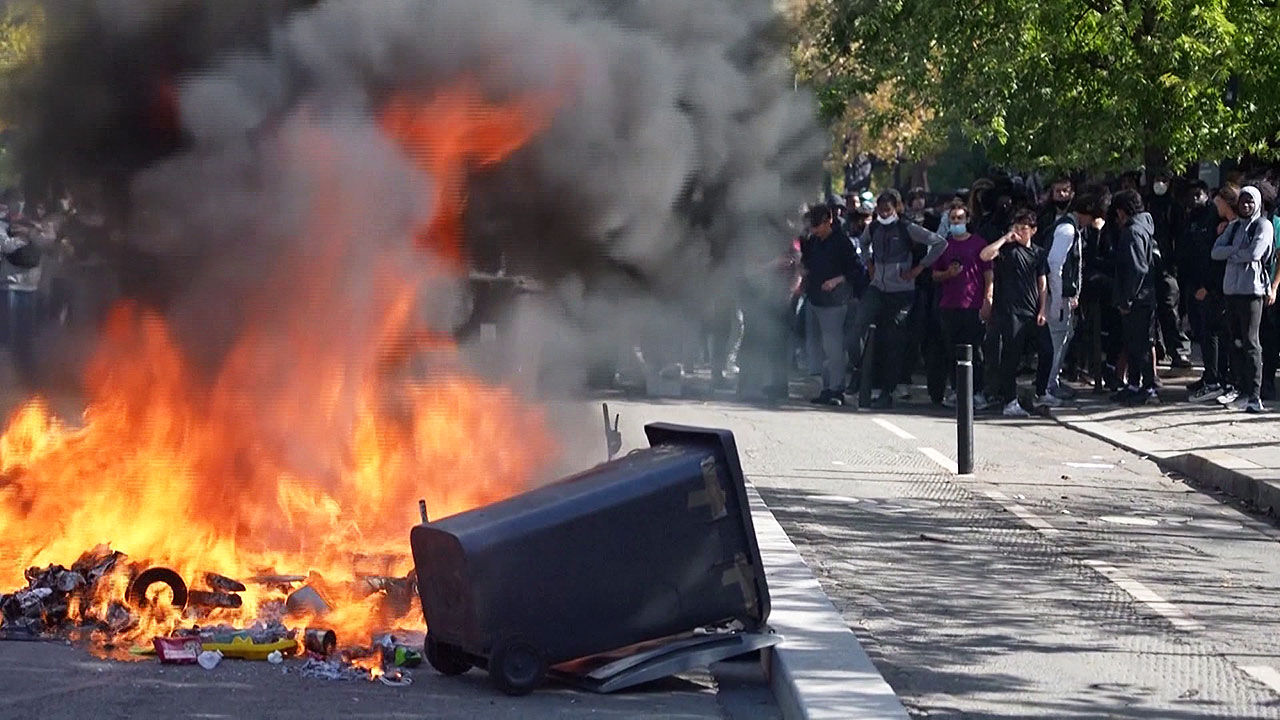
As these protests continued for more than two weeks, as of October 9, 6,877 people have been detained. Among them, 5,890 are minors, accounting for 86%. A total of 2,376 people have been referred to court, with minors making up a staggering 1,923 of them. More than 800 police officers alone have been injured. There are about 3,700 high schools in France. During this protest period, protests took place in more than a third of those schools. Local media are reporting that this is the largest student protest since the one in 1998.
Why Are French Students So Angry?
First, let us look at the poor school facilities. When I went to the protest sites and listened to students' complaints, conditions at French schools were more serious than expected. One student said that rats roam around classrooms during lessons and cockroaches crawl everywhere. Another mentioned that there are holes in the ceiling where rain leaks through.
[Anop / French student: "I came out because I am angry. The younger generation in France is now exhausted. Some students study with 40 people crammed into a single classroom. Some students even have to stay in hallways, and in some places, the ceilings look ready to collapse."]
Furthermore, Europe suffered from severe heatwaves exceeding 40°C (104°F) this summer. It was intense even in June before the school break. Yet schools do not have air conditioning, and many lack even electric fans. In the winter, when students complained about being cold due to inadequate heating facilities, some were told simply to put on more layers of clothes. From our perspective, none of this makes sense. Yet this is the current reality of French schools.
Another issue, the "teacher shortage," is truly astonishing. When teachers fall sick, take maternity leave, or need to take sudden time off, substitute teachers should fill the void, but schools frequently fail to find replacements. These absences do not last just a day or two. Often, teachers are missing for three or four months at a time. It is reported that some students had to take exams without receiving instruction for three to four months in essential subjects like French or mathematics while preparing for university entrance. In the 2024–2025 school year, the total number of hours when classes could not be held nationwide due to a lack of teachers reached 15.4 million hours. That accounts for 7.5% of total class hours. In effect, classes were canceled at a rate of one hour every two days due to the absence of teachers.
The third issue, the revised admissions system, can be explained briefly. In the past, students gained university admission based solely on their Baccalauréat exam scores. Now, a system called Parcoursup has been added to the Baccalauréat, similar to rolling admissions. However, its admission criteria are unclear and rarely made transparent. There are also suspicions of a school grading system that disadvantages students from peripheral, rural, and suburban schools. This is precisely why the protests began in the suburbs. Feeling that facilities are poor, teacher staffing is worse, and they even face reverse discrimination in university admissions exams just because they are in the outskirts, students exploded in anger. As student protests lasted longer and grew more intense than expected, politicians could no longer avoid responding.
Is All This Because the Country Has No Money?
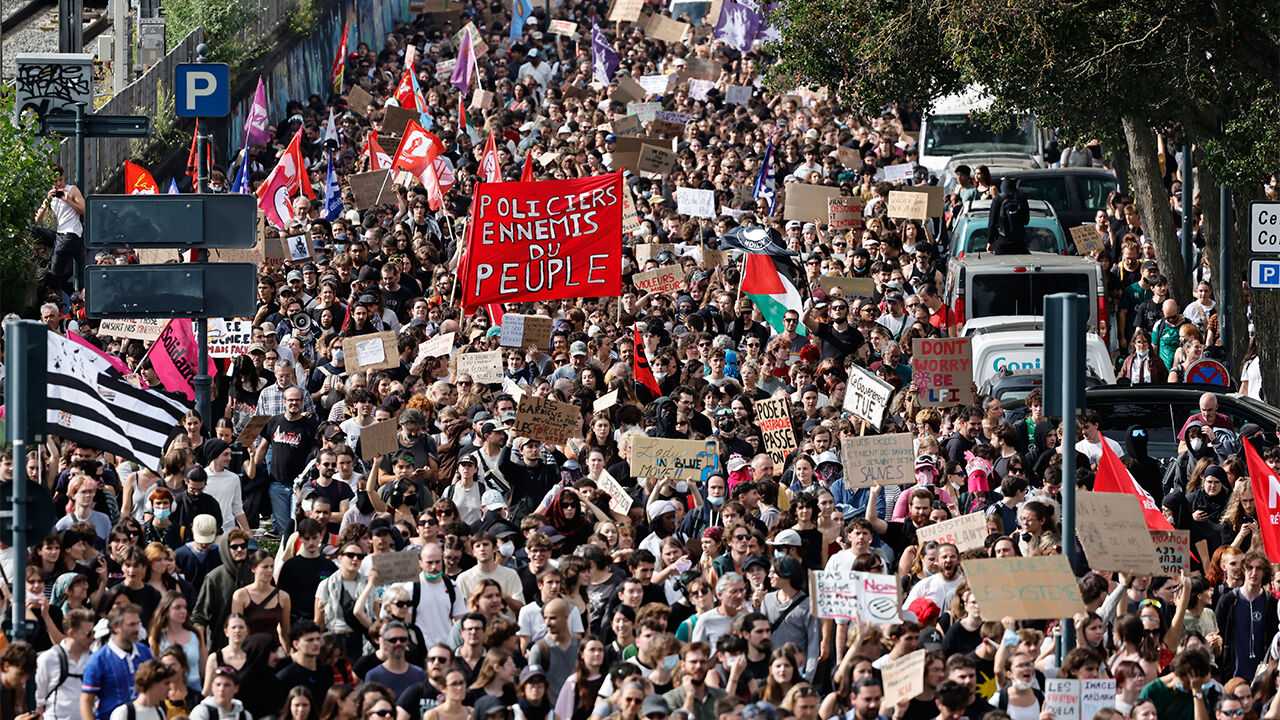
Let us look at the teacher shortage issue. Rather than increasing the number of teachers, the French government is actually reducing it. This year alone, it cut 4,000 regular teaching positions. The government's rationale is that because the student population is declining, the number of teachers should also be reduced. At first glance, this might not seem completely wrong, but as mentioned, France is a country where classes are canceled for an hour every two days due to teacher shortages. The number of students per class is also crowded to an extent rarely seen in Europe. Among OECD member nations, Japan is virtually the only country with larger class sizes than France. Instead of using declining student numbers to resolve overcrowded classrooms, the government is cutting teaching staff to save on labor costs. All of this is happening because the country lacks money.
A 'Twist' in the Teacher Shortage
The French government has set its education budget for next year at 108 trillion won. Cash-strapped France is pleading that even while drafting next year's budget with cuts of 71 trillion won, it increased education spending by nearly 2 trillion won, making education the only sector other than defense to see an increase. However, considering inflation, this education budget, which effectively amounts to a freeze, appears insufficient to solve the problem. Moreover, the 108 trillion won figure is large in aggregate only; both the French government and French society appear woefully lacking in the competence needed to solve the problems facing French students today.
※ Please note: This article was translated by AI and may contain errors.


 Video News

 Video News
 Video News
 Video News