
 KOR
KOR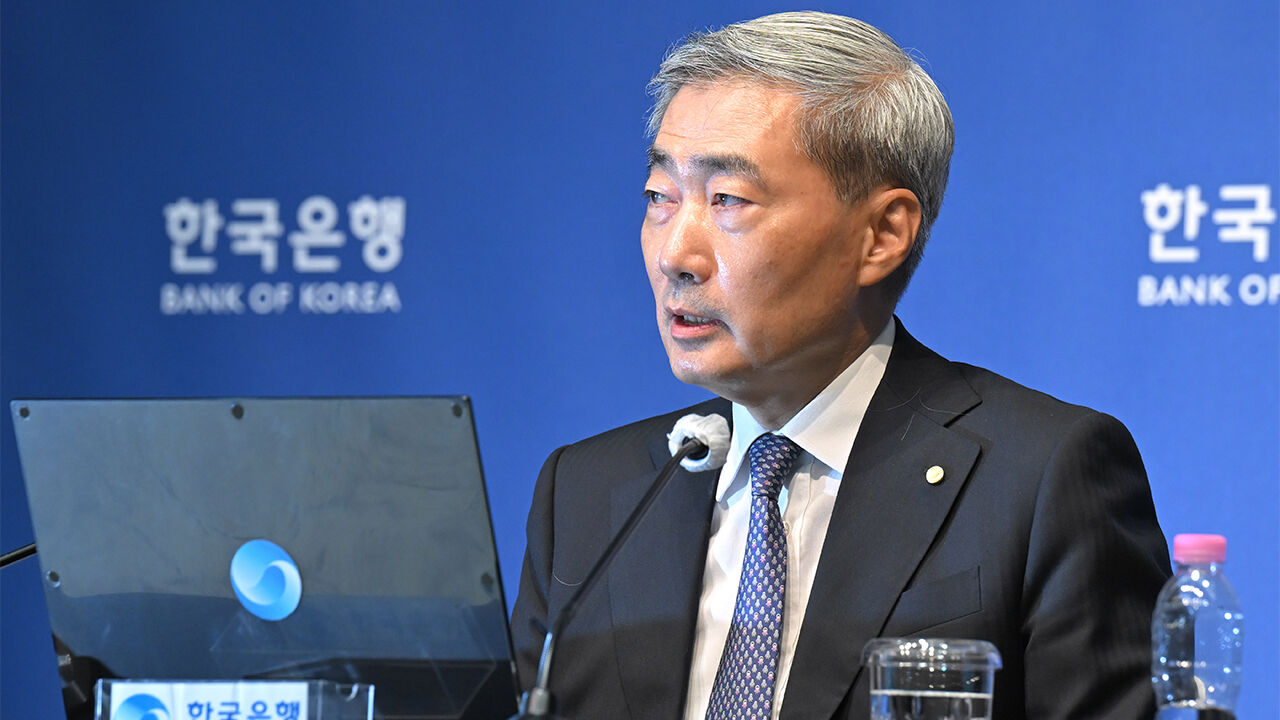
▲ Bank of Korea Governor Shin Hyun-song
The Bank of Korea (BOK) stated that "it is necessary to maintain a consistent policy stance so as not to stimulate expectations of rising housing prices and the growth of household debt."
In its parliamentary audit operational data submitted to the National Assembly's Finance and Economy Committee today (October 12), the BOK made the remarks, noting that "in the short term, uncertainties surrounding the housing market and household debt remain high."
The BOK diagnosed that "while apartment prices in Seoul saw the three Gangnam districts show a downward trend since August, outer areas continued to show strong upward momentum," adding that "in the case of the southern Gyeonggi region, the scale of the increase expanded significantly."
It subsequently analyzed that "household loans in the financial sector have continued a robust upward trend centered on housing-related loans, influenced by these housing market conditions."
It also expressed concern that the rise in long-term government bond yields in major countries such as the United States and Japan, specifically 10-year yields, "could tighten domestic financial market conditions going forward and amplify the volatility of major pricing variables."
This means that as domestic and overseas long-term interest rates become synchronized, domestic market rates face additional upward pressure, and the magnitude of the rise in borrowing costs for households and corporations could also widen.
The BOK projected that "as global risk-off sentiment strengthens, there is also a possibility that stock price volatility will expand, coupled with concerns over a slowdown in global AI investments and valuation burdens."
Regarding economic forecasts, it predicted that "amid the ongoing expansion of the semiconductor cycle, the impact of improved income conditions will spread across overall domestic demand such as consumption, exhibiting a favorable growth trend."
However, it pointed out that "difficulties for relatively vulnerable small and medium-sized enterprises and micro-business owners are likely to persist for the time being."
The BOK also stated that "because the degree of income improvement is differentiated by sector, the risk of insolvency in vulnerable sectors could increase during the process of rising interest rates."
Regarding the semiconductor cycle, it stated that "it will maintain its expansionary trend for a considerable period," while noting that "uncertainties surrounding the scale of big tech investment are large, and there remains the possibility that supply capacity will expand faster than expected due to the expansion of facility investments over the mid-to-long term."
Regarding the recent level of the won-dollar exchange rate, the BOK evaluated that "since July, the won has shown a stronger appreciation than major currencies such as the US dollar, reversing the weak trend seen during the first half of this year," and added that "external borrowing conditions and foreign currency liquidity situations are also at a favorable level."
As variables for expanding volatility in the foreign exchange market going forward, it cited the prolonged situation in the Middle East, rising US Treasury yields, and uncertainties regarding the monetary policy paths of major countries including the US Federal Reserve.
(Photo: Yonhap News)
※ Please note: This article was translated by AI and may contain errors.



 Video News
 Video News
 Video News
 Video News