
 KOR
KOR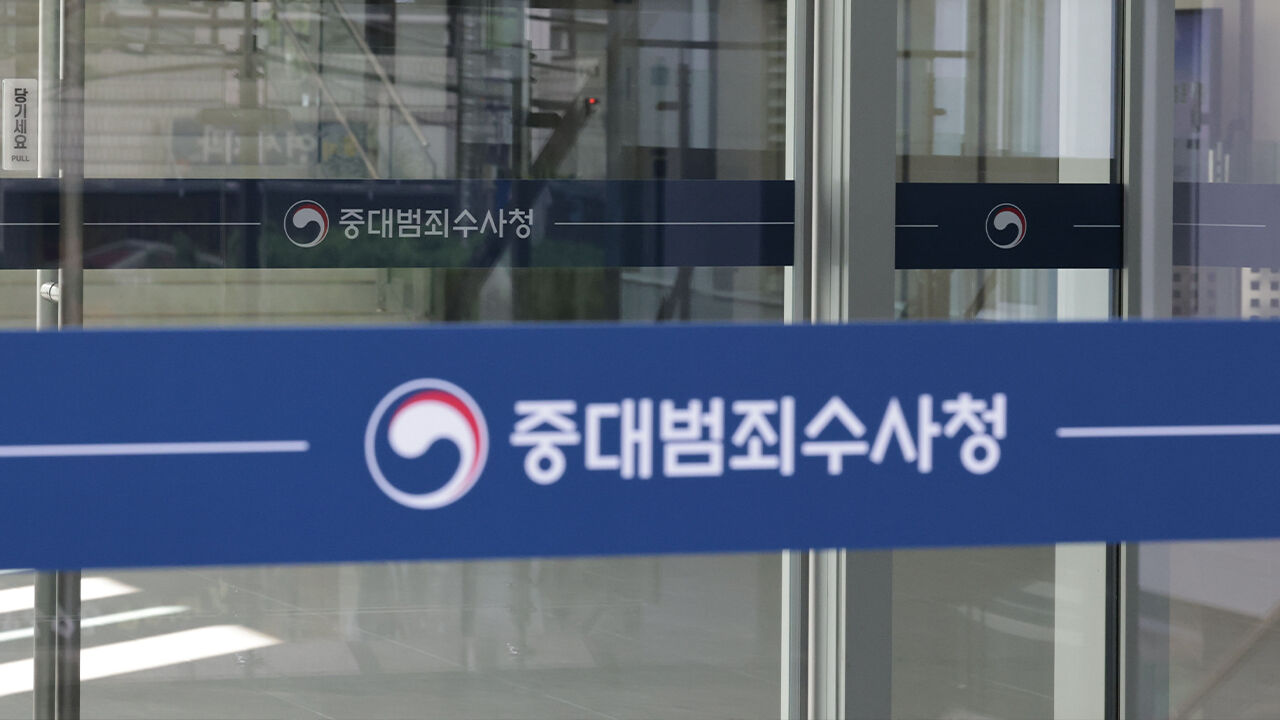
▲ The Major Crime Investigation Agency (Chungsuwon) located in Jung-gu, Seoul, on October 11, marking the 9th day since its launch
Nine days since its launch, the Major Crime Investigation Agency (Chungsuwon) is still experiencing sluggish investigation preparations due to a shortage of infrastructure such as personnel and facilities.
Amid the absence of a head of the organization and the lack of proper operational systems, a significant portion of tasks is being conducted manually (by hand).
Chungsuwon remains at the stage of reviewing filed complaints and accusations to prepare for the launch of investigations.
According to the legal community on October 11, Chungsuwon assigned the complaints and accusations received after its opening to relevant departments by jurisdiction.
While the responsible departments are reviewing related documents, actual investigations have not yet commenced due to insufficient infrastructure.
Chungsuwon has been unable to establish its own Criminal Justice Information System (KICS) and is currently borrowing the police KICS, but only essential functions such as receiving, accepting, and assigning transferred cases are available.
It is projected that building Chungsuwon's own KICS will take around three years.
As of October 2, its opening day, Chungsuwon received more than 30 complaints and accusations, and cases continue to flow in through the civil petition office and e-People.
However, functions such as case processing and the criminal justice portal will only be available after the second phase of KICS is launched in December. Until then, investigation records, dispatches, and ledger entries must be handled manually.
For administrative information systems such as electronic approval and email, the Ministry of the Interior and Safety's On-Nara system is being used, while messengers utilize PC KakaoTalk or "Ontalk," an internal messenger for public officials.
It is reported that a considerable number of investigators have not yet been assigned work PCs.
Consequently, work systems, reporting, approval, and other operational procedures are mostly processed manually.
Meetings presided over by the head of each office are being held, but they are reportedly limited to reporting the situation following the opening.
An investigator at Chungsuwon's headquarters said, "There is not much we can do due to the lack of infrastructure, and specific tasks have not been determined. Meetings continue, but there is no progress."
An official from a regional Chungsuwon branch also stated, "Even if we try to ask about tasks, headquarters staff are too frantic and busy, making it difficult to learn the work. Far from launching full-scale investigations, we remain in a continuous state of preparation."
It is also reported that frontline investigators frequently have to make personal payments because Chungsuwon lacks an expenditure account in its own name.
Since Chungsuwon's budget has not yet been allocated, instances where individuals pay out of pocket first and process the payment later occur frequently when purchasing necessary supplies.
The shortage of personnel, such as division heads who must handle practical affairs, is another urgent issue that needs to be resolved.
Chungsuwon has started operations with 1,900 personnel, which is 66.1 percent of its quota of 2,874.
According to the Chungsuwon deployment chart, seven out of the eight bureau chief-level positions at headquarters have been filled, excluding the inspector general, but 16 out of the 24 division head-level positions remain vacant.
All four positions for directors under the Personnel Policy Planning Officer and the Investigation Information Officer have not been filled.
At the Seoul Chungsuwon as well, 11 out of 25 division head positions across six investigation bureaus are vacant.
Chungsuwon plans to continuously recruit personnel through career-competitive recruitment and additional special appointments targeting officials from the Public Prosecutors' Office.
Chungsuwon maintains that it is continuing preparatory work by department in order to stabilize the organization.
It is currently producing its own manuals regarding case processing and organizational management.
In the case of digital forensics, it has secured equipment, recovery tools, and programs transferred from the Public Prosecutors' Office.
Chungsuwon plans to receive additional equipment transfers through consultations with the Public Prosecutors' Office and strengthen its digital forensic investigation capabilities by expanding personnel.
A Chungsuwon official said, "Recognizing that this is an emergency situation in the early stage of opening, we are carrying out preliminary preparations to exert various functions."
Meanwhile, attention is also focused on whether the artificial intelligence (AI) hacking incident that recently struck the domestic financial sector will become the "first case" into which Chungsuwon pours its investigative capabilities.
The Seoul Chungsuwon is examining whether the financial sector hacking accident constitutes a major crime and whether it can notify the police and others of a request for case transfer.
It is understood that the police have not yet transferred or notified Chungsuwon of the case.
The Seoul Chungsuwon continues to review whether this AI hacking case falls under the scope of investigation stipulated by relevant laws.
Cybercrimes are included among the six major crimes subject to Chungsuwon's investigation.
However, the Act on the Organization and Operation of Chungsuwon (Chungsuwon Act) stipulates that Chungsuwon can only investigate cybercrimes that correspond to attacks on national core infrastructure.
Previously, the police concluded that the victim financial institution itself does not constitute national core infrastructure, but requested a formal legal interpretation from the Financial Services Commission to check whether the infringed system falls under electronic financial infrastructure.
Possibilities are also being raised that crimes closely related to people's livelihoods, such as drugs or voice phishing, could become the first subject of investigation.
A significant number of personnel from the former Seoul Eastern District Prosecutors' Office's Government Joint Investigation Team on Voice Phishing and the past Suwon District Prosecutors' Office's Joint Narcotics Investigation Headquarters have moved to the Seoul Chungsuwon and Suwon Chungsuwon, respectively, continuing case reviews based on existing investigation statuses.
As President Lee Jae-myung is reportedly reviewing operational systems and other frameworks to take over follow-up investigations into the insurrection case following the special prosecutor teams led by special prosecutor Cho Eun-seok and second general special prosecutor Kwon Chang-young, there is also interest in whether an investigation body in the form of an insurrection special investigation headquarters will be established within Chungsuwon.
Kim Ji-yong, nominee for head of Chungsuwon, also expressed his willingness to investigate insurrection cases during a meeting with reporters on October 8, stating, "I will eradicate insurrection crimes and will not sit idly by regarding acts that shake state discipline, strictly correcting them to establish discipline."
(Photo: Yonhap News)
※ Please note: This article was translated by AI and may contain errors.


 Video News
 Video News

 Video News
 Video News