
 KOR

▲ People Power Party Representative Choi Hyung-du
Representative Choi Hyung-du of the People Power Party (Masan Happo, South Gyeongsang Province), who serves as the party's ranking member on the National Assembly Science, ICT, Broadcasting and Communications Committee, addressed repeated leaks of Connecting Information (CI), urging, "Even if CI—introduced to replace Resident Registration Numbers—is leaked, people are practically forced to use the exact same identifier for life," and calling for "institutional mechanisms to promptly introduce CI expiration dates and enable the renewal of already compromised CIs."
CI is unique identification information generated based on a Resident Registration Number by identity verification agencies to identify the same individual online.
It was introduced to verify user identity and match individuals across platforms without directly handling Resident Registration Numbers, and is widely utilized for member identification and management across online services.
However, because CI remains practically the same unless a person's Resident Registration Number is changed, concerns have been raised that users must continue using the existing identifier even after a data leak.
While passwords can be changed following a breach, institutional options for users to directly change or discard their CI remain limited.
Repeated CI Leaks at Lotte Card, Tving, CU, Woori Bank, and More
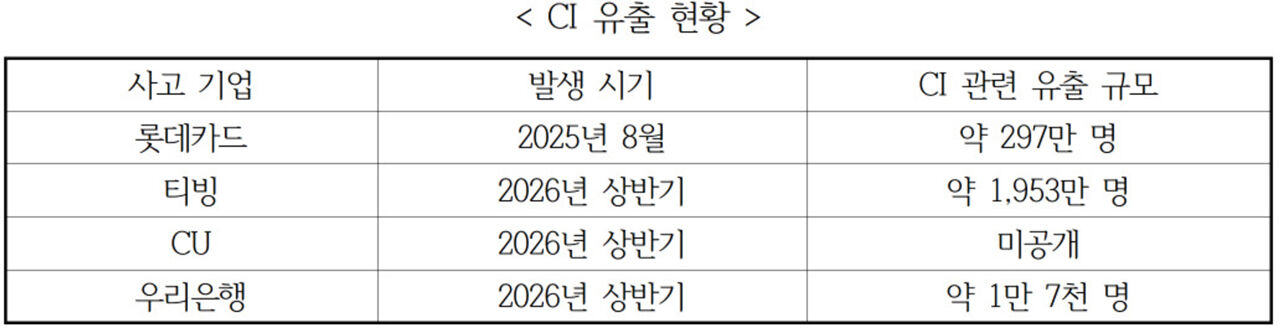
He stressed the need to inspect whether a substantial number of citizens have already had their CIs compromised through multiple breaches, and to comprehensively assess the leak status and follow-up measures for each incident.
"Must Leaked CIs Still Be Used?" Structural Limits of Permanent Identifiers
In particular, when CI serves as an identifier linking databases across different services, it could be combined with other personal data to identify individuals or connect user records across separate platforms.
Concerns have also surfaced that if leaked CIs cannot be modified, the risks associated with the breaches could persist indefinitely.
"If an alternative introduced to restrict the use of Resident Registration Numbers has essentially turned into a permanent identifier, the security and reliability of the system must be fundamentally reexamined," Rep. Choi emphasized. "Effective measures are needed to issue new identifiers to citizens whose CIs have been leaked or invalidate their existing ones."
Reviewing Maximum 1-Year Expiration for CI... Measures to Renew Leaked CIs Also Needed
The proposal envisions establishing a management system in which users receive a new CI through identity verification once the validity period expires, preventing the previous CI from being utilized in the same manner.
However, actual implementation would require comprehensive reviews of inter-service linkages, system upgrades at identity verification agencies, business transition costs, and methods for processing existing data.
He also pointed out that applying expiration dates solely to newly issued CIs would not resolve the risks stemming from past breach incidents.
He argued that authorities should consider renewing already leaked CIs either all at once or in phases within a set period, prioritizing businesses that experienced large-scale leaks.
Rep. Choi suggested reviewing systemic improvements to allow the modification and renewal of CIs following a leak, citing precedents such as periodic renewals of the Personal Customs Clearance Code.
Nevertheless, he stressed that because the characteristics and operational scope of CI differ, actual implementation must weigh both service continuity and privacy protection effects.
"Broadcasting, Media and Communications Commission Must Not Stop at Review... Submit Roadmap Before Comprehensive Audit"
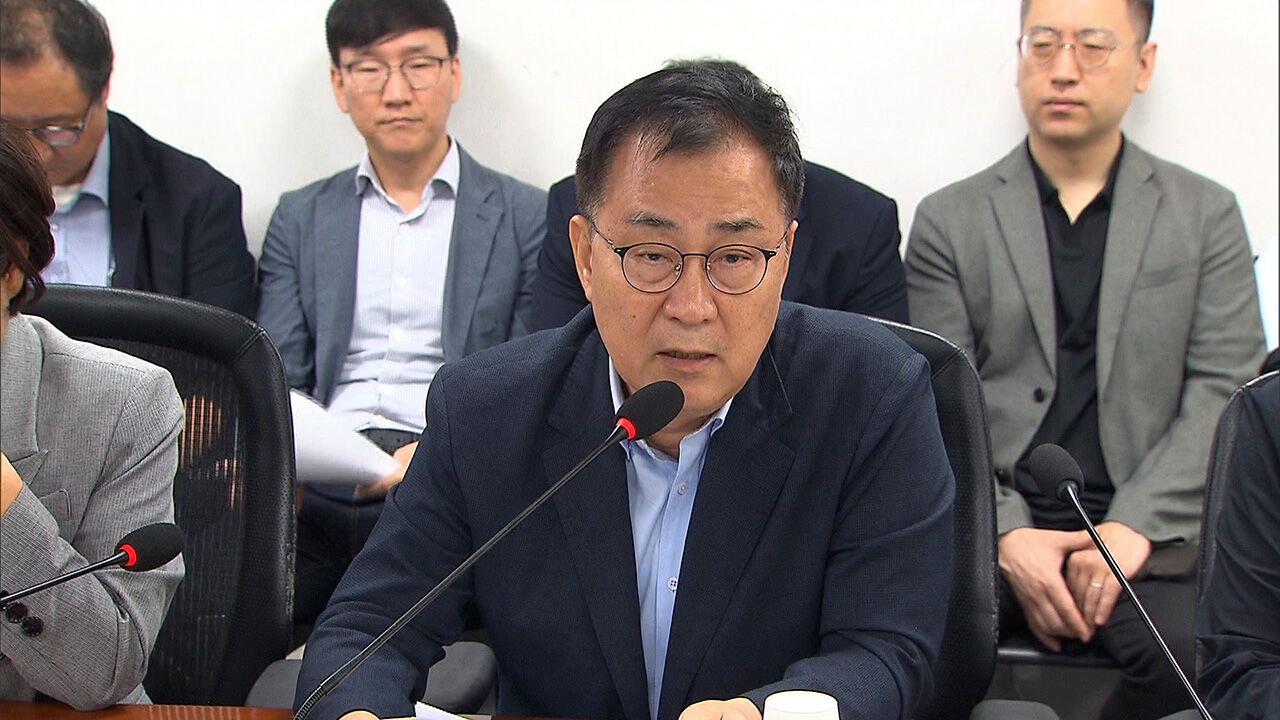
"Because CI is key information that replaces Resident Registration Numbers to identify individuals online, we must not leave unchecked a structure where people are practically forced to keep using the same value even after a breach," Rep. Choi said. "Rather than treating recurring leaks merely as security issues at individual companies, we must examine the structural risks of the CI system itself."
He added, "The commission must not stop at simply replying that it will review institutional improvements, but must submit a concrete action plan to the lawmaker's office before the comprehensive audit of this parliamentary inspection."
※ Please note: This article was translated by AI and may contain errors.



 Video News
 Video News
 Video News
