
 KOR
KOR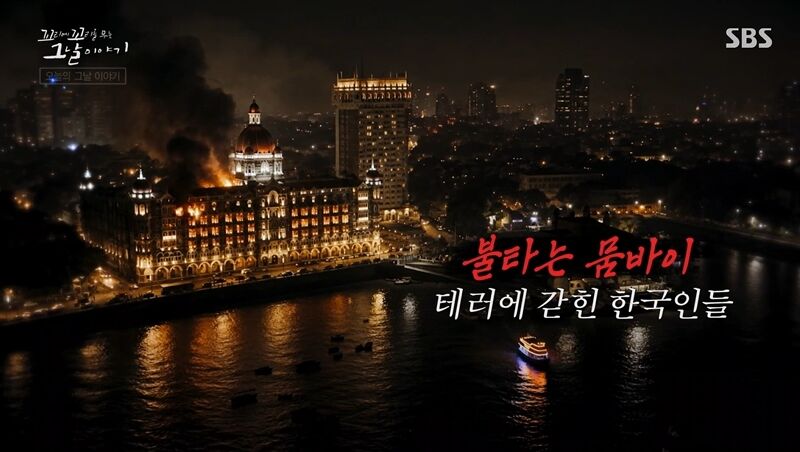
The story of "that day" we want to share with "you" this time is the episode titled "Burning Mumbai—Koreans Trapped in Terror," which aired on October 8. Story guests included Youngseo of the group ALLDAY PROJECT, Hui of Pentagon, and actor Moon Sung-hyun. (In keeping with the program's signature conversational style, this review is told in an informal, intimate tone.)
▲ Chaos in Mumbai
The date is November 26, 2008. The place is Mumbai, India. First, let me show you a photo.
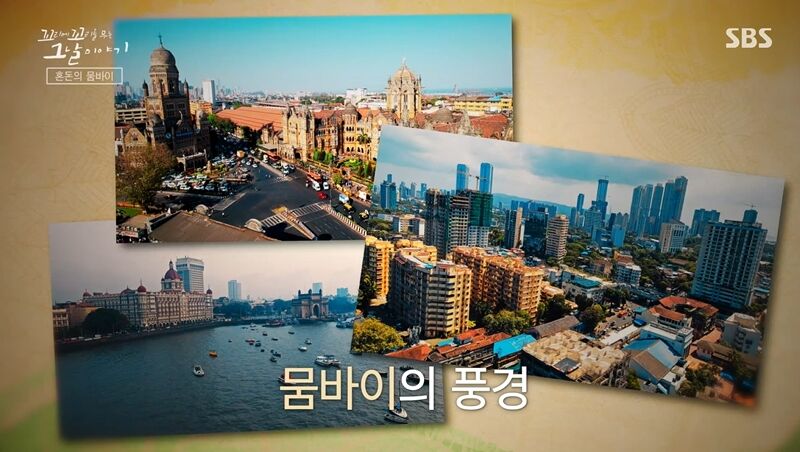
Mumbai is the second-largest city in India, home to as many as 13 million residents. It is the beating heart of the Indian economy, housing the Reserve Bank of India and the Bombay Stock Exchange. In American terms, it is much like New York City. That is why millions of tourists visit Mumbai each year.
Dara Huang, who was living in Switzerland at the time, was visiting India for the first time to attend an acquaintance's wedding.
She was spending her final day in India with her boyfriend. Right here.
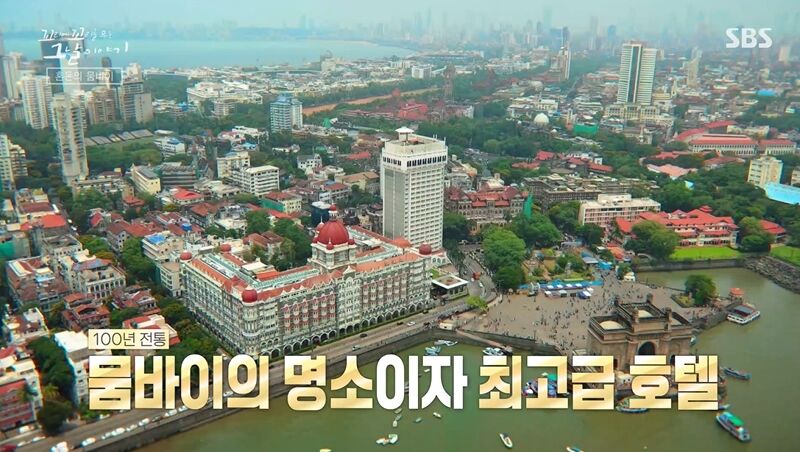
A luxury hotel and iconic Mumbai landmark boasting a 100-year history: the Taj Mahal Hotel. True to its renowned reputation, countless celebrities and political leaders have stayed there, including The Beatles, Michael Jackson, and Barack Obama. As a prominent landmark of Mumbai, it is also immensely popular among foreign travelers.
To enjoy their last night in India, Dara Huang and her boyfriend headed to the Leopold Cafe near the hotel. It is one of the most famous cafes in Mumbai, and another spot constantly bustling with international travelers. That night was no exception, packed with guests in a lively and buzzing atmosphere.
Just as the couple was about to eat the food they ordered, a sharp, loud clatter sounded, like something shattering. The cafe went quiet for a moment, but people soon resumed laughing and chattering. Having tensed up for a second at the noise, they quickly relaxed when it seemed like nothing serious. But shortly after, an unbelievable incident unfolded. Let us hear it directly from her.

"The noisy room went quiet for a few seconds before going back to normal. But not long after, we heard 'bang, bang, bang, bang, bang' in rapid succession, and only then did I realize, 'Oh, something has happened.' I completely froze, and John (my boyfriend) shoved me off my chair onto the floor. It was total pandemonium. In the middle of being shot at, it never even crossed my mind to grab any belongings."
- Dara Huang, 26-year-old traveler at the time
Two gunmen had entered the cafe and opened fire. Dara Huang and her boyfriend quickly ducked under a table. Lying flat, she noticed blood flowing from her boyfriend's leg; he seemed to have been hit by shrapnel. But what was even more terrifying was that the attackers kept firing bullets even at that very moment. At that second, Dara Huang had only one thought: "We must get out of here right away."
"I think that was when I realized something had gone horribly wrong. We had to escape somehow. It was sheer panic."
- Dara Huang, traveler
Fortunately, the table Dara Huang and her boyfriend were seated at was near the entrance. They stood up and bolted outside as fast as they could.
"My shoes slipped off as we ran into the street, but there was no time to care about that. I ran barefoot. I just had to keep running. Even if there were shards of glass on the street and I stepped on them, I would have kept running. All I could think was, 'Where do we go to be safe?' I didn't know whether to keep running, or return to the hotel when I had no idea where anything was in an unfamiliar city..."
- Dara Huang, traveler
Dara Huang and her boyfriend first ran toward the Taj Mahal Hotel, where they were staying. When they arrived in a breathless panic, neatly dressed guests looked at the battered pair with puzzled expressions. Thankfully, nothing seemed to be happening here at the Taj Mahal Hotel. Breathing a sigh of relief, thinking "Whew, we survived," the couple caught their breath in the lobby. At that very moment, suddenly! The same gunshots they had heard at the cafe erupted inside the hotel. They had fled to escape a shooting, only to find gunfire breaking out inside their hotel as well. As an ordinary day was drawing to a close, something extraordinary and terrifying was clearly unfolding in Mumbai.
▲ India's 9/11
Let me show you the situation from that day.
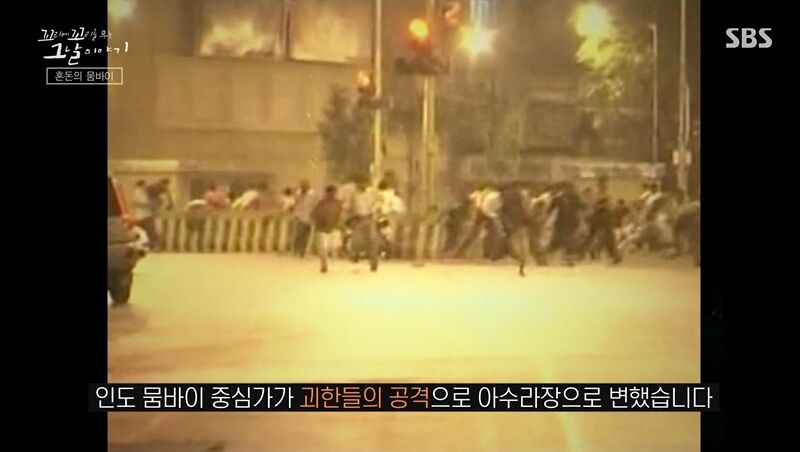
"Central Mumbai, India, has been turned into chaos following attacks by armed assailants."
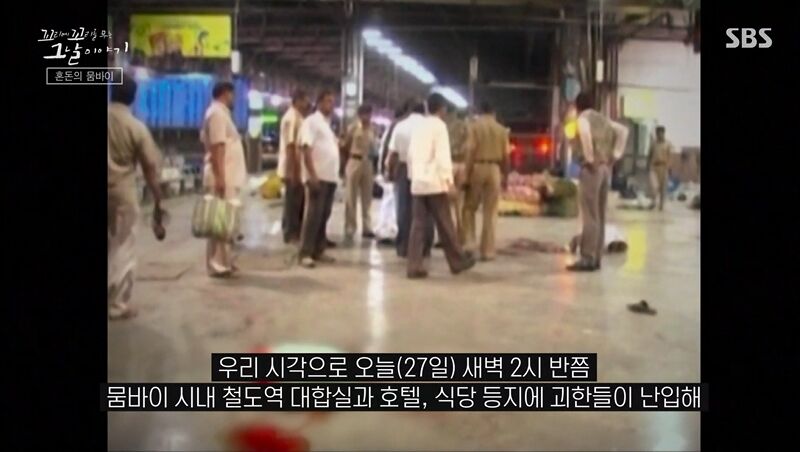
"At around 2:30 a.m. today (September 27) Korea time, gunmen stormed railway waiting rooms, hotels, restaurants, and other locations in downtown Mumbai, launching indiscriminate attacks against citizens and tourists."
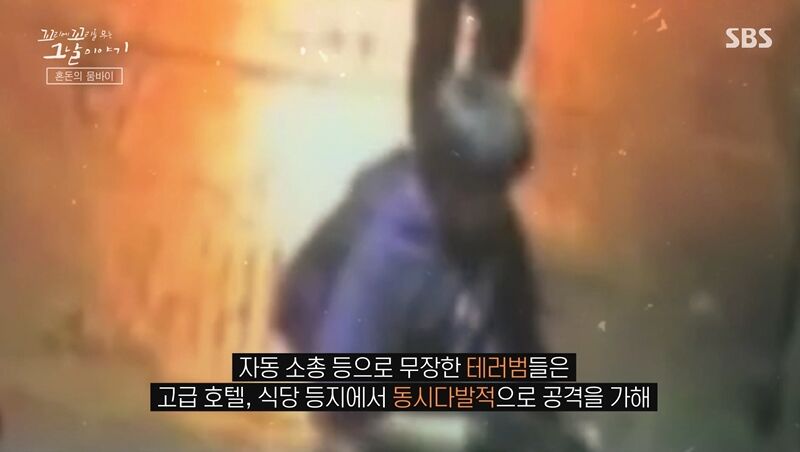
"Armed with automatic rifles and other weapons, terrorists carried out coordinated attacks at luxury hotels, restaurants, and other sites, leaving around 80 people dead and some 250 injured so far."
- From news reports at the time
On November 26, 2008, a shocking terrorist attack took place in Mumbai, India. Have you heard of the Mumbai terror attacks? Or perhaps you have heard of the September 11 attacks in the United States? This attack is often called "India's 9/11". Indiscriminate assaults raged for a staggering 60 hours. Caught in the carnage, countless individuals found themselves at the crossroads of life and death. Among them were numerous Koreans. Let us hear that story firsthand.
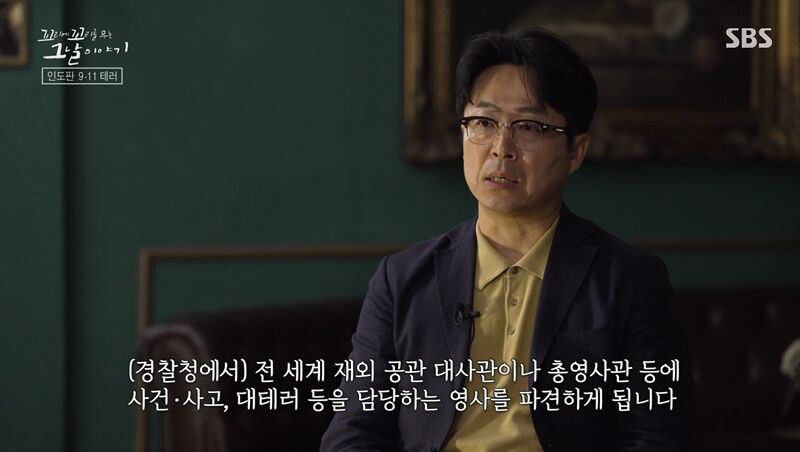
"I am Kang Ki-taek, consul at the Consulate General of the Republic of Korea in Mumbai. Originally, I was with the National Police Agency. (The National Police Agency) dispatches consuls to handle incident, accident, and counterterrorism affairs at overseas diplomatic missions, such as embassies and consulates general worldwide. I was selected at that time and dispatched to Mumbai, India. On that day, we inaugurated the Korea-India Business Friendship Association. At the time, the mission hosted the event to establish such an organization and provide networking opportunities to explore the Indian market. The Taj Mahal Hotel was the most prestigious five-star hotel along Mumbai's waterfront, and I attended as a member of the diplomatic mission to help facilitate the event."
- Kang Ki-taek, consul at the Korean Consulate General in Mumbai at the time
On the day of the attack, the Koreans attending the event and Dara Huang were in the exact same place: the Taj Mahal Hotel. The hotel consists of an old wing called the "Palace Wing" and a new wing called the "Tower Wing." The two wings are interconnected so guests can move between them from the inside.
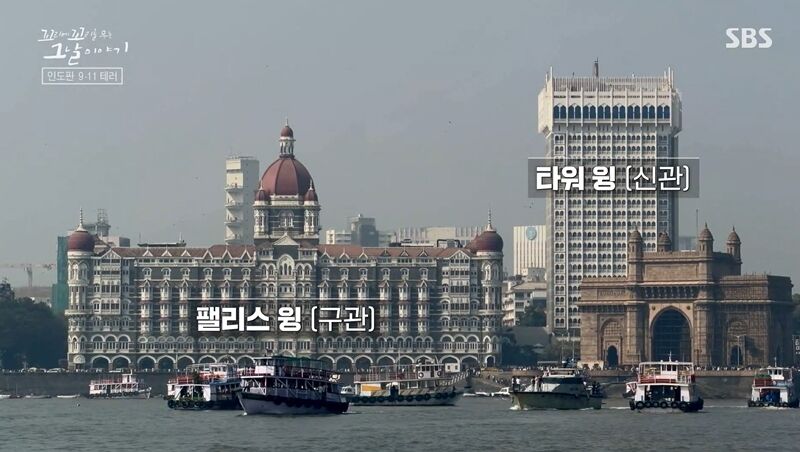
The hotel boasts well over 500 guest rooms. That meant, counting guests, visitors, and employees, more than 1,000 people were inside the hotel. Around 9:30 p.m., when the Mumbai attacks began, Dara Huang and her boyfriend—now caught in gunfire at the hotel right after escaping the cafe—dashed into whichever door they saw in front of them. Right here.
It was a restaurant located on the G (ground) floor, where the lobby is. So what was the situation inside the restaurant they ran into? Inside, a man and a woman were in the middle of a marriage proposal. They had not yet realized a shooting was taking place inside the hotel.
"There was a couple who had arranged rose petals in the shape of a heart. Everyone froze and stared at us."
- Dara Huang, traveler
The restaurant patrons, puzzled at the sight of Dara Huang and her boyfriend, soon realized what was happening. Everyone began scrambling for cover in chaos.

"Gunfire kept ringing out, but we had no idea how close it was, who they were, or how many there were. I thought, 'Am I going to die here? Is this the end?'"
- Dara Huang, traveler
On the G floor where the lobby was, there were several restaurants and bars. "Kkokkomu" managed to track down someone who was at the bar at that time—someone who perhaps knew more about the terror unfolding in the hotel than anyone else.
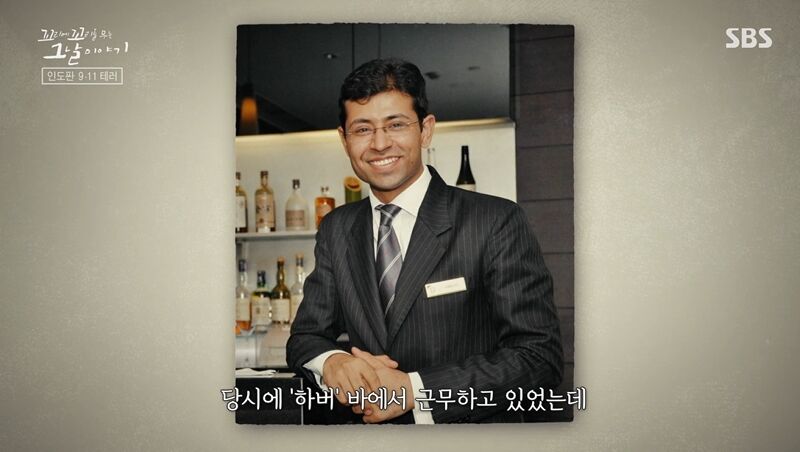
"I am Ankur Chawla. I started my first job at the Taj Mahal Hotel in 2008. At the time, I was working at the Harbour Bar. I heard noises, so I stepped outside the Harbour Bar to see what was happening. When I went outside, someone was shooting at someone else, and I vaguely remember seeing a person collapsed on the lobby floor. I also saw someone running with a backpack and a gun."
- Ankur Chawla, Taj Mahal Hotel employee at the time
At the time, Chawla was a rookie hotelier only four months on the job. Even though it was his day off, he gave up his leave to work and got caught up in the attack. Chawla urgently moved the guests. There was a stairway inside the bar leading up to an upper floor. Since the lobby was under attack, he tried to move toward the upstairs to find relative safety. That was how everyone went up to the Japanese restaurant called "Wasabi" on the upper floor. Can you imagine what the hotel was like? Let me show you the CCTV footage from back then.
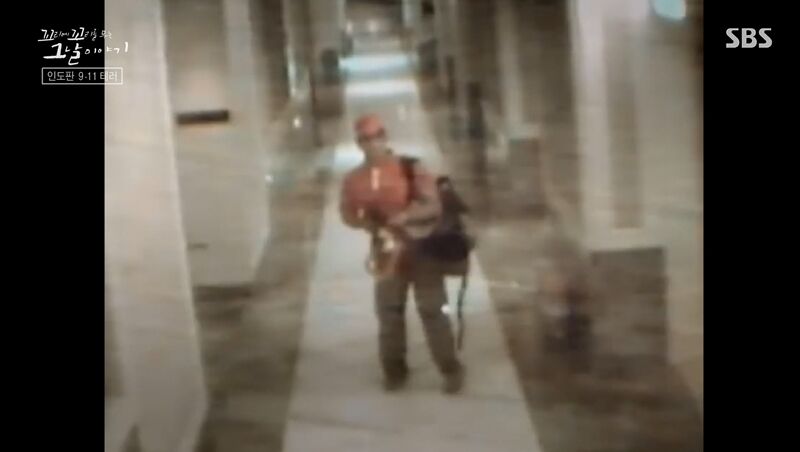
Two terrorists had entered the hotel. They walked in naturally like regular travelers, then suddenly pulled out guns and opened fire. And at this moment, who else was in the hotel? The Koreans attending the event. Around how many people were there?
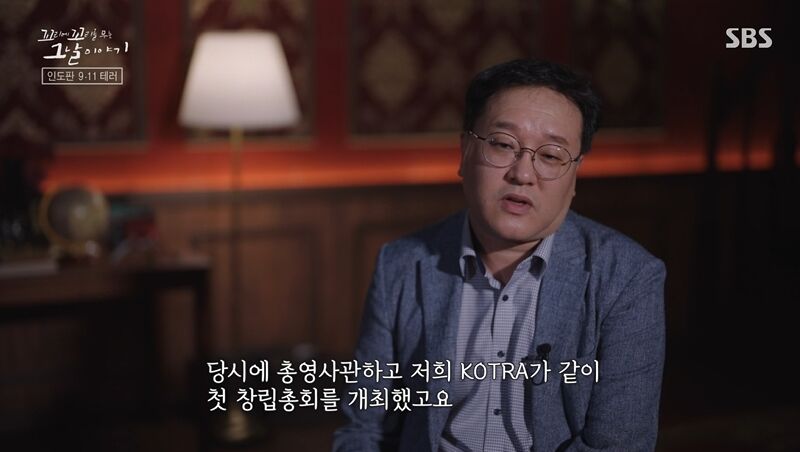
"At the time, the Consulate General and KOTRA jointly hosted the inaugural general meeting. The event aimed to establish the meeting with 30 to 40 local Korean business leaders and about 80 Indian business figures. By around 9 p.m., the meal was almost over, and people were continuing to chat. About 15 people had finished eating and left early."
- Kim Jung-hyun, then-employee of Korea Trade-Investment Promotion Agency (KOTRA)
As the event was wrapping up, about 20 Koreans remained in the hotel. Right here, on the 19th floor of the new wing.
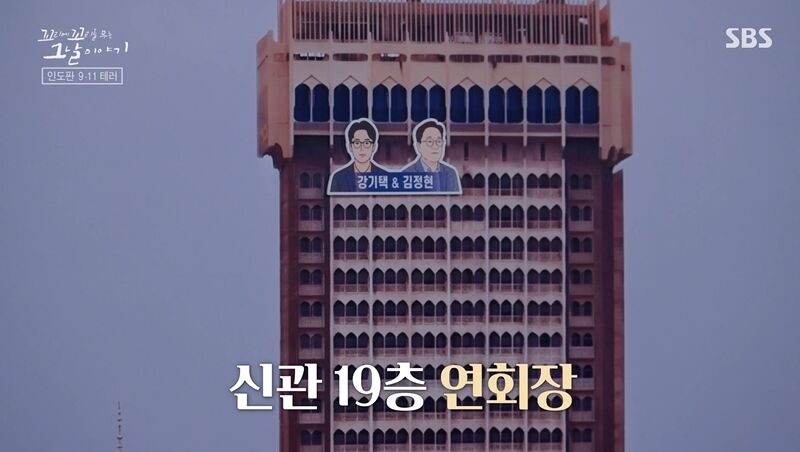
The Koreans in the banquet hall first sensed something was off when they heard "pop, pop" sounds coming from outside the window. At first, Kim thought, "They must be setting off fireworks again." In India, fireworks are set off frequently during weddings, festivals, and other events. But then, several people rushed hurriedly into the banquet hall.
"There was a shooting!"
Shortly afterward, text messages flooded into the mobile phones of the people in the banquet hall. They read:
"Terrorists reportedly attacked the hotel lobby."
"They're shooting everywhere in Mumbai, it's utter madness."
"They're reportedly going around indiscriminately killing people!"
Acquaintances who saw breaking news and staff members remaining at the Consulate General had sent the word from the outside. People scrambled to make phone calls one after another.
"Honey, it's me! Are you okay? Everything alright there? What about the kids?"
"Don't go outside and stay safe! Okay?"
Rather than their own peril, their thoughts were first on their families who had come with them to India.
"Most people came to India with their families and were living locally, so they asked about their family's safety first, ahead of themselves. I remember seeing them place calls to ensure their families were safe before worrying about their own."
- Kang Ki-taek, consul at the Korean Consulate General in Mumbai at the time
However, Consul Kang Ki-taek reportedly could not call his family. Or rather, he did not call them. As a consul of the Consulate General, he had more pressing duties. Kang began calling various places to assess the situation. He alerted the Consulate General and Embassy, and also called the chief of India's Anti-Terrorism Squad. But there was no answer. Shortly after, the news he received through a foreign diplomat was utterly shocking.
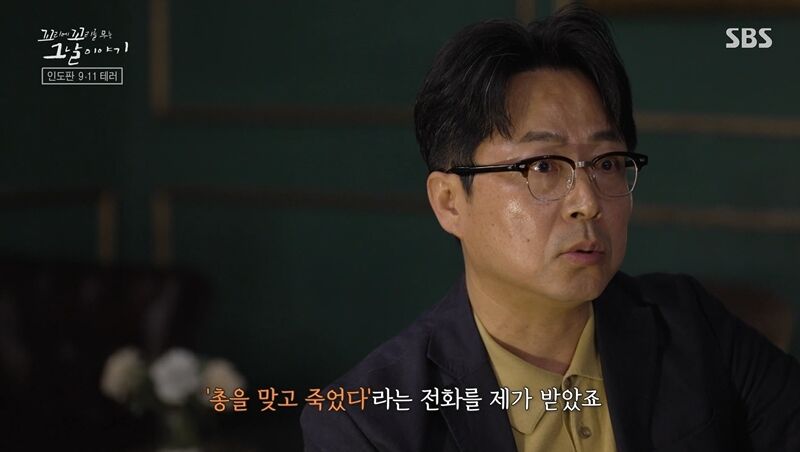
"(The Indian counterterrorism chief) was someone I had interacted with on terrorism matters, and I tried to reach him, but couldn't. Then I received a call saying, 'He was shot and killed.' As far as I know, he was initially shot after encountering terrorists in the street."
- Kang Ki-taek, consul at the Korean Consulate General in Mumbai at the time
The very counterterrorism chief tasked with quelling the crisis had been killed. The situation was grave. Just how many terrorists were attacking people? Now, let us turn back the clock a bit.
It was around 8:30 p.m. on November 26, one hour before the attacks began. Two inflatable rubber boats arrived on a southern Mumbai beach. Who was on board? That's right, the terrorists. Ten in total. Let me show you a photo of the terrorists.
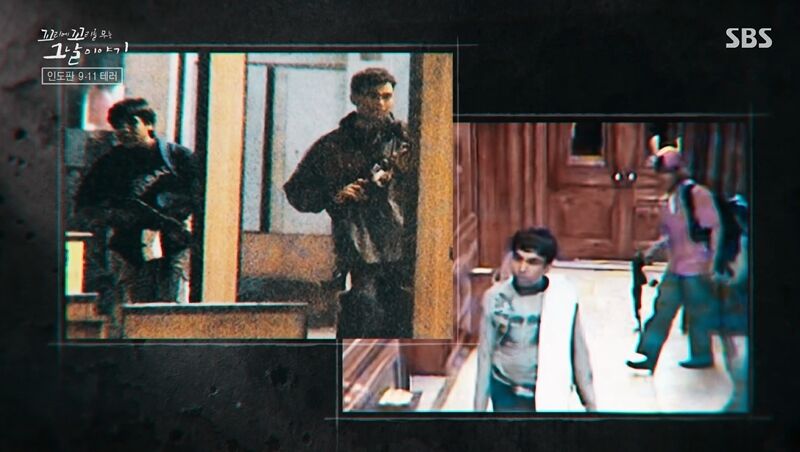
The terrorists were between 20 and 28 years old. They belonged to Lashkar-e-Taiba, a militant group based in Pakistan. You've heard of Al-Qaeda, which carried out the 9/11 attacks, right? While their operational objectives differ, they are similar in that both are terrorist organizations promoting extremist ideology. This militant group sought to deliver a massive shock to Indian society and draw the world's attention by striking Mumbai. Just like this.
The 10 terrorists were divided into five teams of two. That was how they launched their simultaneous, indiscriminate attacks. The Leopold Cafe, and the Taj Mahal Hotel. And where else did they strike?
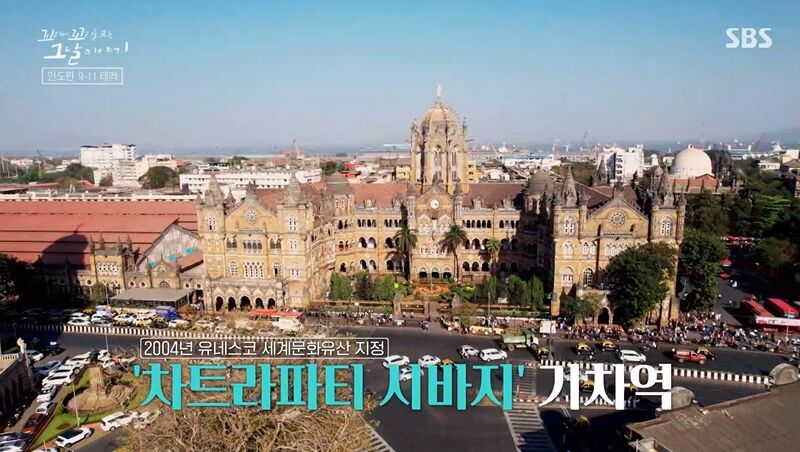
This is a train station called Chhatrapati Shivaji. About 650,000 people use this station every day. Two terrorists who headed to the station threw grenades into a waiting room packed with people. The terrorists then stood back-to-back, spinning around and firing indiscriminately in all directions.
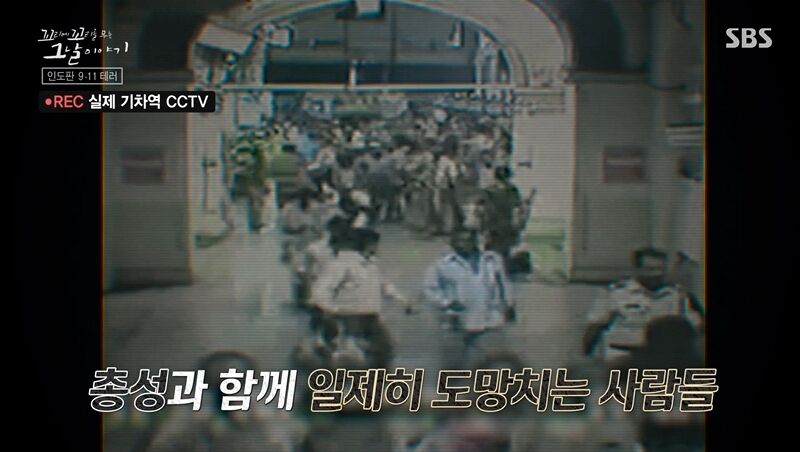
At this train station alone, about 60 people were killed and more than 100 were injured that day.
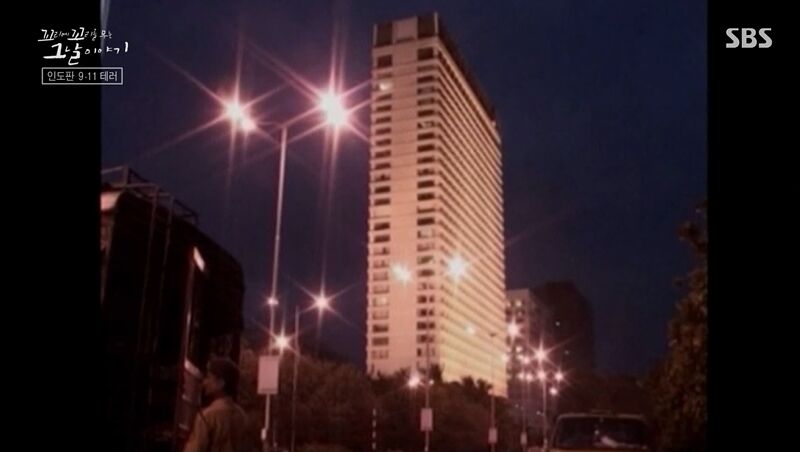
Where did the other terrorists go? It was another hotel. Much like the Taj Mahal Hotel, it was a place frequently visited by foreign tourists. There, the terrorists shot everyone in sight and even fired fatal confirmation shots.
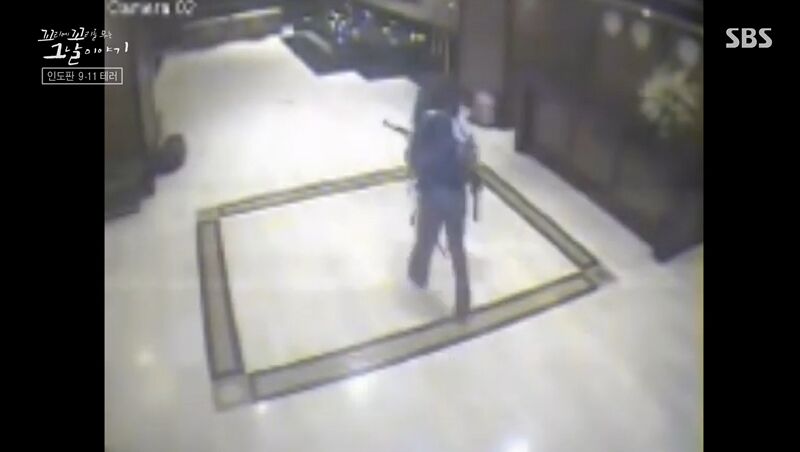
The destination of the last group of terrorists was a place called Nariman House, a building primarily used by Jewish people.
Were these five attack sites all of them? No. Once an attack wrapped up in one location, they moved on to another to continue the assault. They even set time bombs in the taxis they used for transportation to blow them up.
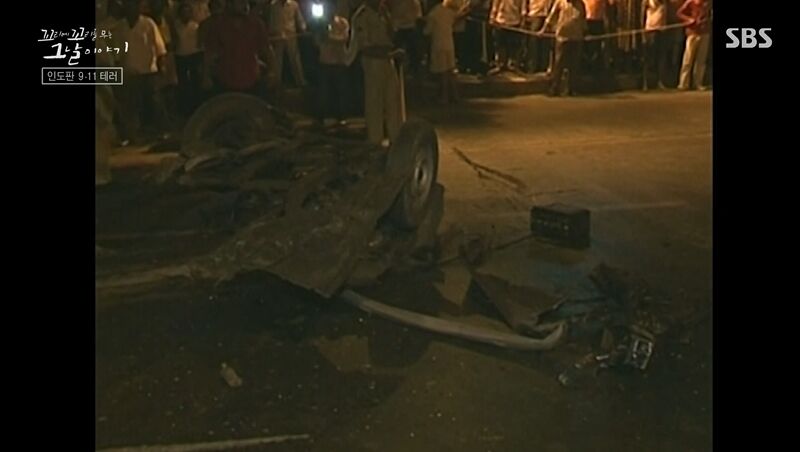
The Mumbai attacks unfolded differently from previous terrorist incidents. Most terrorist incidents end with a single blast, such as a bombing or suicide attack. But the Mumbai attacks were designed to inflict as much damage as possible over the longest possible duration. Mumbai was becoming soaked in blood.
▲ South Koreans Trapped in Terror
Meanwhile, the destination of the team that attacked the cafe was ominous. The two terrorists joined up at the Taj Mahal Hotel. As a result, four terrorists ended up inside this single hotel.
What happened to the people inside the hotel? Jeong-hyeon, an employee of the Korea Trade-Investment Promotion Agency (KOTRA) who was in the 19th-floor banquet hall, went around among the South Koreans with paper and pen. He was trying to figure out the names and number of South Koreans remaining in the hall. There were 21 people left. Why did he compile their names and count? He thought a list would be needed if things went wrong. He then started making phone calls using the attendee list. He wanted to check on the safety of those who had left the banquet hall earlier. But there were specific South Koreans Jeong-hyeon was particularly worried about.
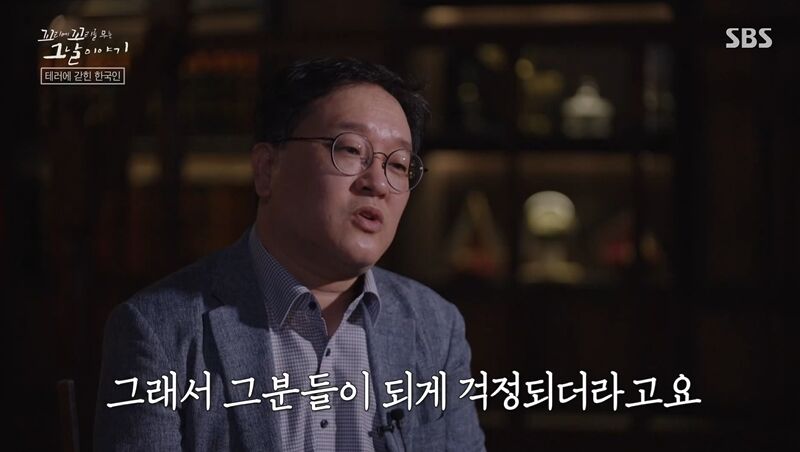
"There were people I couldn't get in touch with—around four individuals. When they said they were leaving, I walked them down to the first-floor lobby, said things like 'I look forward to working with you,' and then came back up. Not long after I returned from the lobby, gunshots rang out and this happened. So I was really worried about them."
-Kim Jeong-hyeon, then an employee of KOTRA
Where was it that the terrorists first began their attack? That's right, the lobby. Those four South Koreans were right there in that lobby. Jeong-hyeon called one of them. His hands trembled with anxiety. Fortunately, the call went through.
"I'm an employee from KOTRA. Where are you right now? You left the hotel, right?"
"I'm still at the hotel. Right now, I'm at the coffee shop in the old wing."
"Are you alright? How many of you are there?"
"Including me, a total of four people are hiding here. And the terrorists are right here right now."
Let's hear directly about the situation at the time.
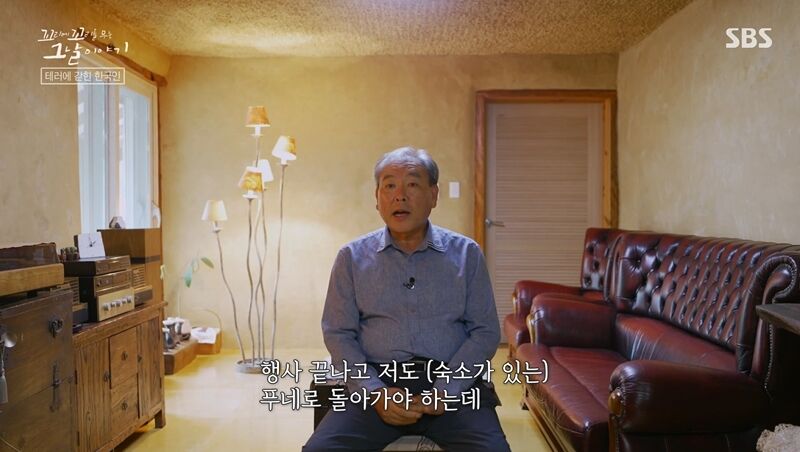
"After the event ended, I needed to head back to Pune where my lodging was. But the four of us thought, 'Let's grab a cup of coffee before heading out,' and 'Let's have some coffee while looking at the sea and then head up,' so we went to the coffee shop."
-Hyeon Dae-sik, then head of an auto parts company subsidiary
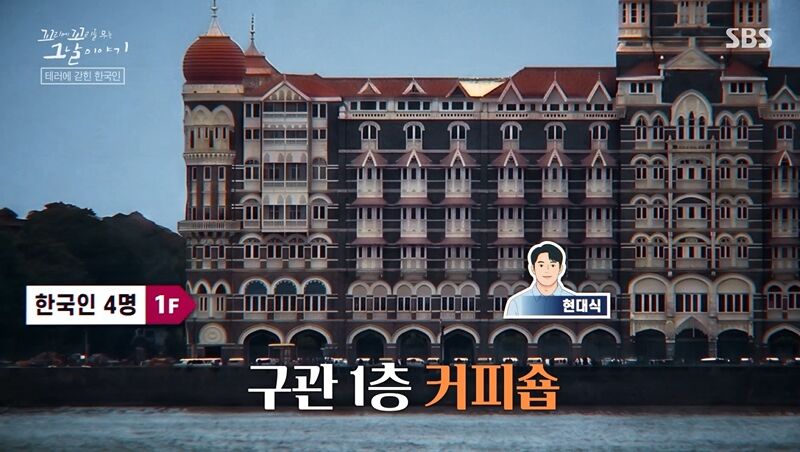
Four South Koreans, including Hyeon Dae-sik, were here in the coffee shop of the old wing. Just as they took a sip of coffee, the glass doors of the coffee shop shattered, and bullets flew in, slamming into the coffee shop walls. Everyone dropped behind the large pillars inside the coffee shop. A dead silence fell for a moment, followed by the sound of multiple footsteps. It sounded like the terrorists were attempting to head up to the second floor via the stairs. That was when the four South Koreans quietly slipped out from behind the pillar and moved toward the entrance.
"The coffee shop entrance was completely wide open. We couldn't let anyone just walk in. While lying prone, we thought, 'That entrance is completely exposed, shouldn't we block it somehow? Shouldn't we build a barricade?' We moved chairs and tables to pile up a barricade. At least to keep anyone from entering unchecked. If (the terrorists) had come down right then, we could have run right into them."
-Hyeon Dae-sik, then head of an auto parts company subsidiary
Just because the terrorists were not visible to the naked eye did not mean danger had passed—who knew where a bullet might come from if they stepped out? It was not that they were not scared. But they were not the only ones in the coffee shop. There were more than 20 foreign nationals, including locals. They took action to protect everyone's safety. Dae-sik did something else as well. With a notepad and pen in hand, he pricked up his ears and focused. He listened to the gunshots and began counting them.
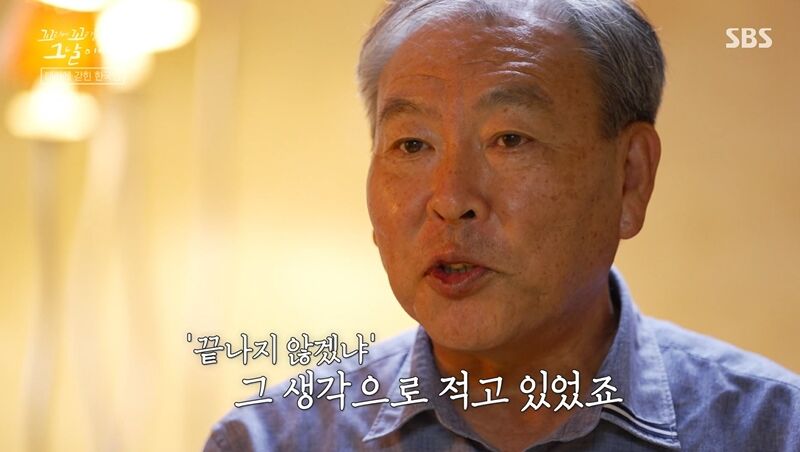
"I kept jotting down estimates based on what I heard, though not completely exact—shots fired from the third floor down to the first, how many rounds were fired, how many sounded like they came from inside guest rooms. Procuring live ammunition isn't easy. If the terrorists brought AK rifles with three, four, or five 30-round magazines, I figured things might reach a resolution or end after around 100 rounds. With that thought, I kept writing."
-Hyeon Dae-sik, then head of an auto parts company subsidiary
However, recording this was immensely painful. Those gunshots meant people were being shot. All the floors above the coffee shop were guest room levels. That meant the terrorists were roaming hotel guest rooms, committing indiscriminate slaughter. Every time gunshots echoed, screams of terror could be heard alongside them. The horrific scenes of that moment were captured vividly on CCTV.
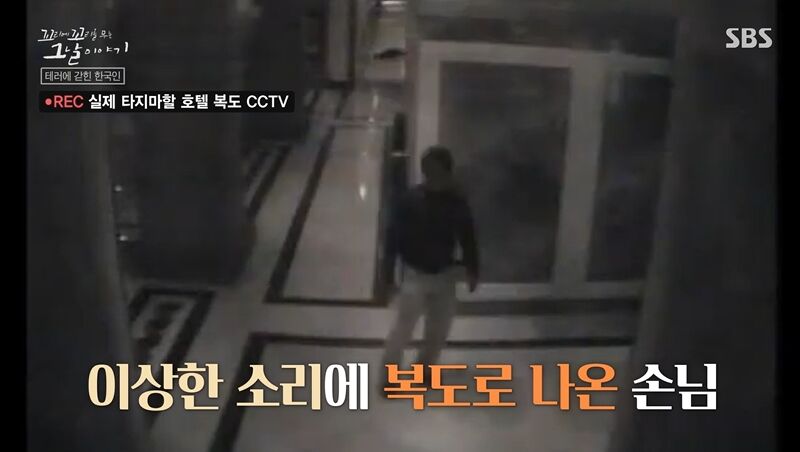
Hearing strange noises, a guest stepped out into the hallway. The guest tried to flee back into the room, but the terrorists spotted him, opened fire relentlessly, and the guest eventually collapsed. They moved from room to room, shooting guests. The cruelty of the terrorists went beyond imagination. There is an actual audio recording of a call between the terrorists and their handler. Here is what was said.
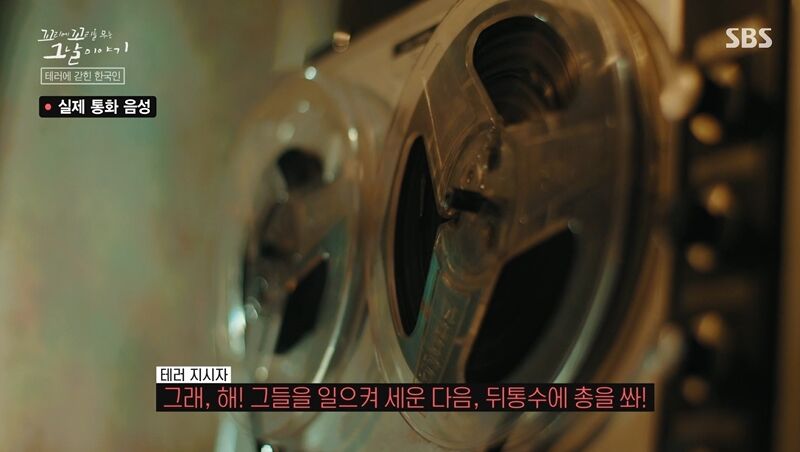
Handler: Yes, do it! Make them stand up, and shoot them in the back of the head! Carry it out! Tell them I am listening to everything!
Terrorist: We captured three foreigners. Among them is a woman.
Handler: Kill them all. Do not hang up the phone, keep it connected so I can hear the gunshots.
From the very beginning of the attack, this handler had been barking orders over the phone to the terrorists on the ground. The instructions were endlessly brutal, and their actions were organized and meticulous. Meanwhile, above the old wing coffee shop where Hyeon Dae-sik was hunkered down, occasional gunshots and screams continued on the guest floors.
Then, what had been sporadic single gunshots suddenly erupted into a fierce barrage. The police had arrived. The police were firing upward from the lobby, while the terrorists were shooting downward from the upper floors. Caught in between were the four South Koreans, including Dae-sik. But then, the terrorists hurled grenades toward the police. At that moment, Dae-sik stopped counting the gunshots in his notepad.
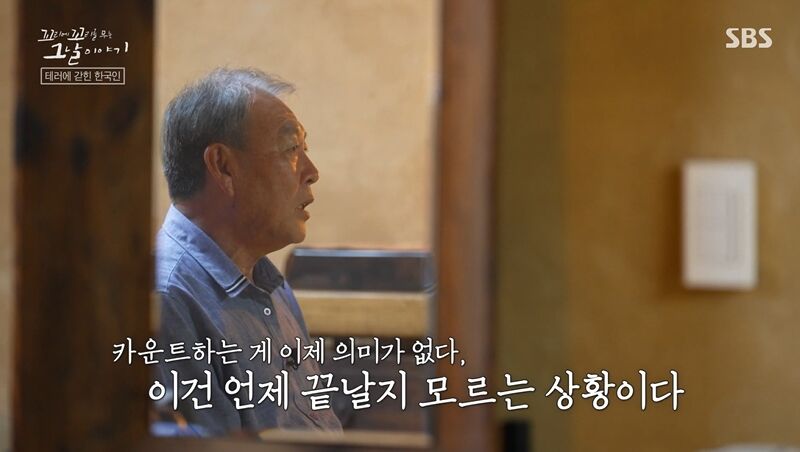
"Seeing that they even had grenades, I realized counting was meaningless. I instinctively felt that this situation could go on indefinitely."
-Hyeon Dae-sik, then head of an auto parts company subsidiary
By this point, the Mumbai police alone could no longer suppress the attack. The Indian government decided to deploy the Black Cats. Known as the Black Cats because of their black uniforms and balaclavas, this unit is an elite counter-terrorism force. But there was a problem. The unit was stationed near the Indian capital of New Delhi. New Delhi and Mumbai are roughly 1,400 kilometers apart. Deploying them immediately into the operation was difficult. In the meantime, what were the people inside the hotel doing?
Chawla, a hotel employee who had been at Wasabi restaurant, was no longer there. Chawla was guiding guests through dim corridors. This was a staff-only service passageway. In addition to regular hallways used by guests, hotels have dedicated passages meant exclusively for staff service. Through this passage, they were heading to the hotel's most secluded space. Where? Let's hear directly.
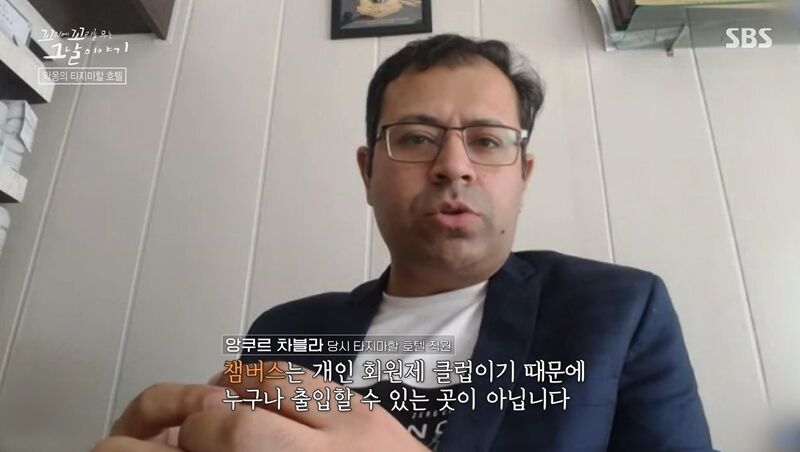
"The Chambers is a private members' club, so not just anyone could enter. Many people didn't even know where The Chambers was. The entrance wasn't large or extravagant. It didn't have 'The Chambers' written in large letters above the door either. You couldn't easily find it just by wandering around."
-Ankur Chawla, then employee of the Taj Mahal Hotel
They were moving guests to the hotel's most secretive area, a place called 'The Chambers.' Located in the new wing, it was a place only staff familiar with the hotel layout could navigate. In this manner, more than 200 guests gathered in the safest evacuation space inside the hotel.
▲ The Nightmare at the Taj Mahal Hotel
Doesn't this raise a question? Hotel employees, who knew the layout better than anyone, could have escaped the hotel to avoid the terrorists. Why didn't they?
"Chef Hemant Oberoi, who was the hotel's executive chef at the time, was the most senior person there, and he took the lead in explaining the situation to the managers."
-Ankur Chawla, then employee of the Taj Mahal Hotel
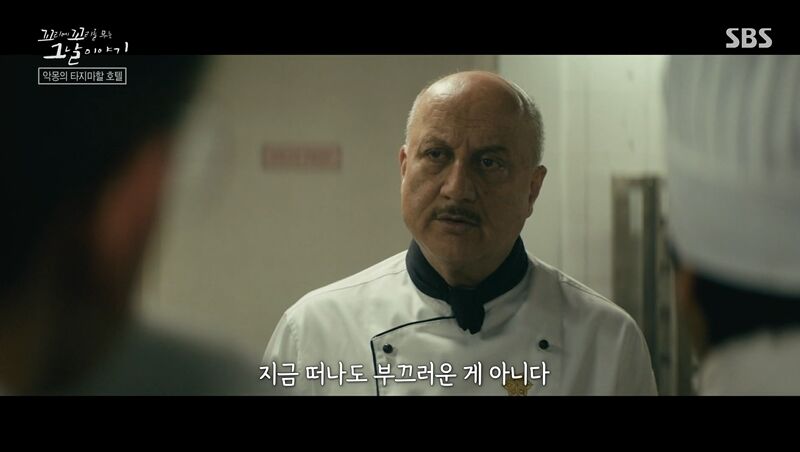
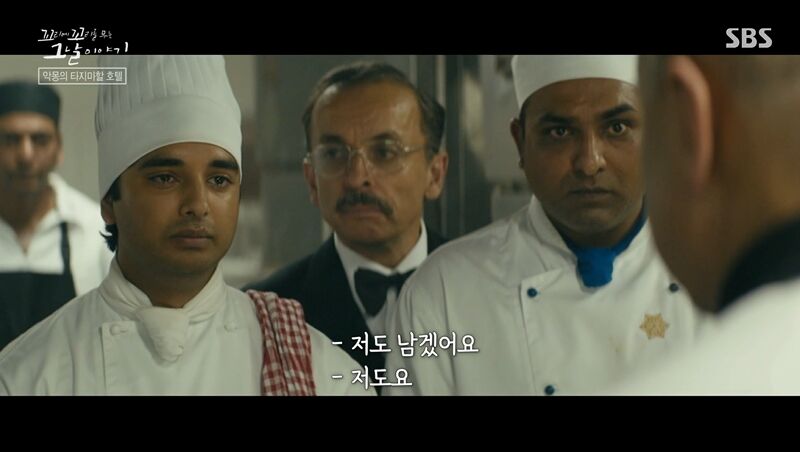
This story is depicted in the film 'Hotel Mumbai' (2018), which was inspired by the Mumbai attacks. In the film, the executive chef tells the staff, "The back staircase for staff is safe. But our guests are trapped in the hotel. Leaving now is nothing to be ashamed of." To this, one employee expresses a determination to stay, saying, "I've worked here for 35 years, and this is my home." Other employees chime in as well, saying, "I'll stay too," refusing to leave the guests behind.
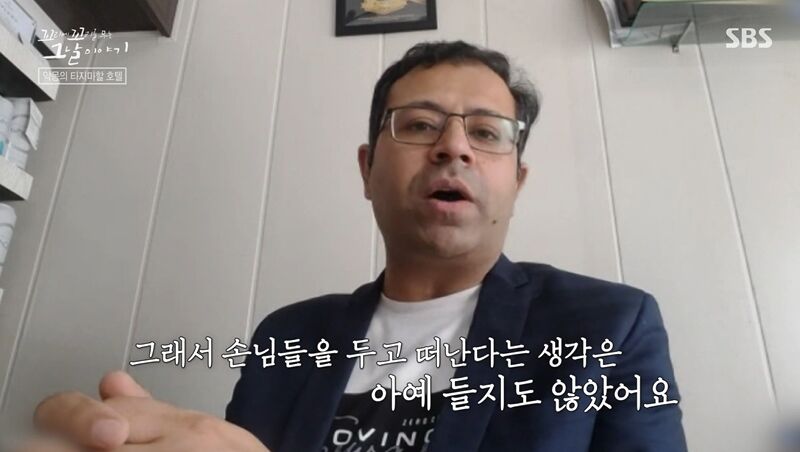
"If we wanted to (escape), it would have been possible. We knew the back routes and where the emergency exits were. If someone really wanted to run away, they could have left the hotel through the back. We were also told we were free to leave and that no one would blame us. But I think everyone wanted to stay together and help the guests as much as possible. We felt so deeply sorry at the time. Of course, it was a situation beyond our control. Just the fact that guests were placed in such a situation made us feel terribly apologetic. So the thought of leaving the guests behind never crossed our minds."
-Ankur Chawla, then employee of the Taj Mahal Hotel
Dara Huang, a tourist who hid inside the restaurant, shared special memories of the hotel staff. To guests trembling in fear and distress, the staff handed this out.
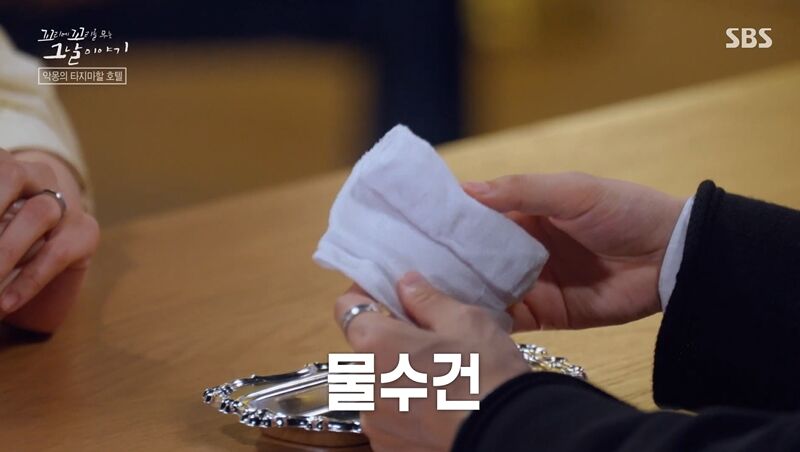
Wet towels. They prepared cold wet towels so guests could place them on their foreheads. That was not all. As the confinement dragged on, they prepared sandwiches and handed them to guests. Carefully tending to the guests' conditions, they offered reassuring words: "Don't worry. Everything will be fine," and "Protecting our guests is our duty."

"The staff took care of us with incredible attentiveness. Looking after the guests until the very end in such an extreme situation was truly amazing. No one ordered them to do it. They just did it on their own."
-Dara Huang, tourist
Chawla also cared for guests in The Chambers. He stayed remarkably composed so the guests would not panic. Yet in the back area reserved for staff, he swallowed his fear, repeatedly calming his trembling hands. In this way, everyone spent an anxious night waiting for rescue.
Three hours into the attack. As time passed, the terrorists' actions reached further extremes. The terrorists and their handler prepared to put a horrific plan into motion.
Handler: Set fire to the top floor guest rooms (of the old wing). Clear the rooms and set them on fire. Hero, you know what to do. Make everyone come down to the lower floors. Have you not set the fire yet?
Terrorist: Yes, we are executing it right now. You will see the fire soon.
Handler: Good. I will watch to see if the fire starts soon.
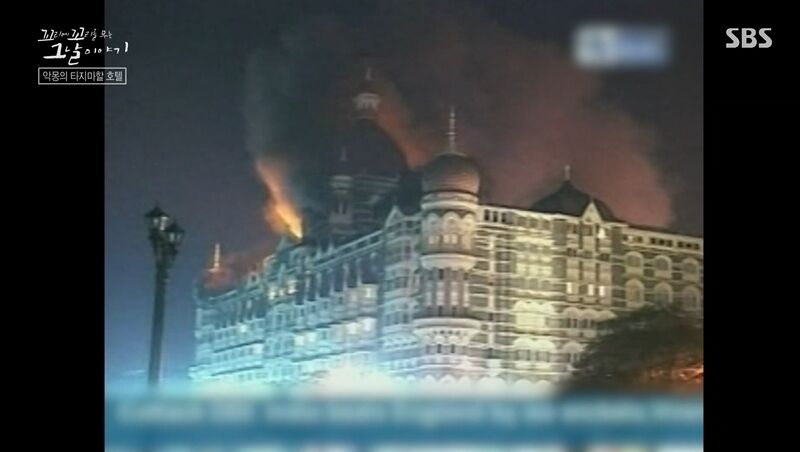
"If you looked down from the 19th floor of the new wing, you could see it. I saw the fire breaking out like that."
— Kim Jung-hyun, then-employee at the Korea Trade-Investment Promotion Agency (KOTRA)
"I could hear the flames inside. It sounded really loud, like a blanket flapping in the wind. I thought we might burn to death. Because we were inside that hotel."
— Dara Huang, traveler
The situation in the hotel was worsening by the minute. As the terrorists set fires and hurled grenades everywhere, explosions shook the entire building. From the 19th-floor banquet hall, Kim thought, 'Could the building collapse like in the 9/11 attacks?'
"The building was shaking slightly, which is why that thought crossed my mind. After all, it happened after the 9/11 attacks in the U.S. We were up high, fires and bombs were going off, and I wondered if the building was going to collapse..."
— Kim Jung-hyun, then-employee at KOTRA
One hotel guest reportedly wrote a will. The guest then went into the bathroom and retrieved a shower cap, hoping that if something went wrong, blood would not stain the letter intended for family.
Meanwhile, the atmosphere in the banquet hall on the 19th floor of the new wing, where 21 Koreans were gathered, was tense. Everyone was quiet yet moving swiftly. Some held fire extinguishers, while others took off their shoes and went barefoot. Here is footage that Kim personally recorded in the 19th-floor banquet hall at the time.
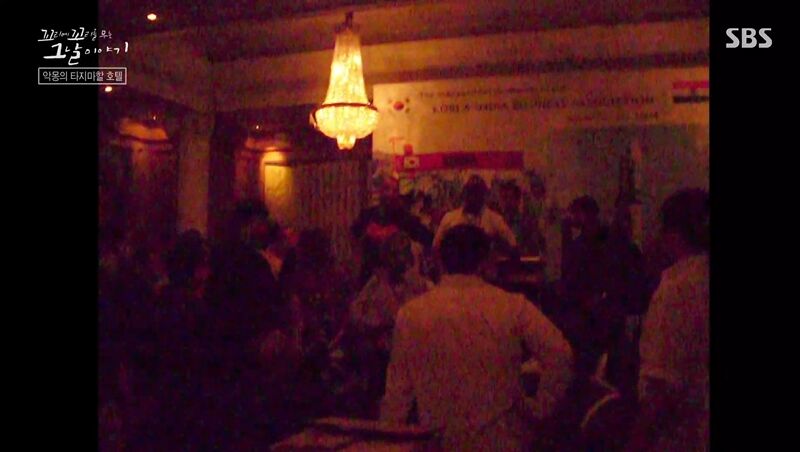
People appeared to be holding a meeting. They were preparing to escape. In fact, that day in the 19th-floor banquet hall, people from other parts of the hotel had joined them. Among them were some very specialized individuals: these people right here.
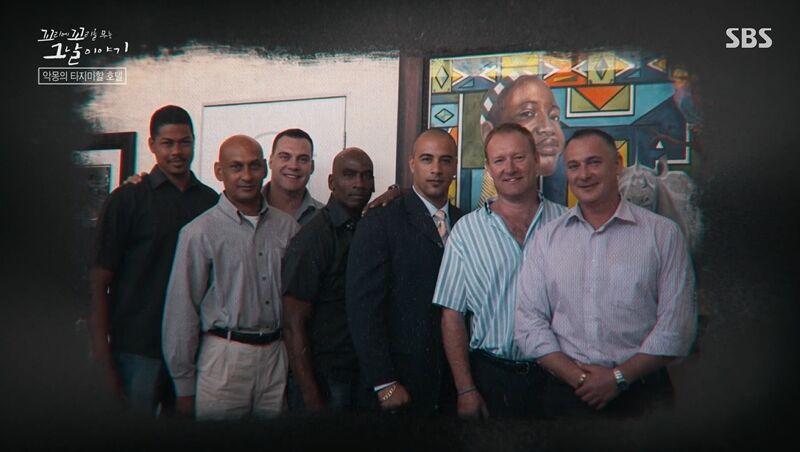
They were professional security specialists who protect business executives, politicians, celebrities, and international events. They had traveled from South Africa to provide security for a cricket tournament held in India. During reporting by the show, their names came up repeatedly: the security team had played a crucial role during the escape.
"They were big, well-trained security professionals, and we held meetings together with them."
— Kang Ki-taek, then-consul at the Korean Consulate General in Mumbai
"I felt truly fortunate. Knowing they were experienced made me rely on them."
— Kim Jung-hyun, then-employee at KOTRA
The production team wanted to hear the security team's story directly. After searching, they tracked them down.
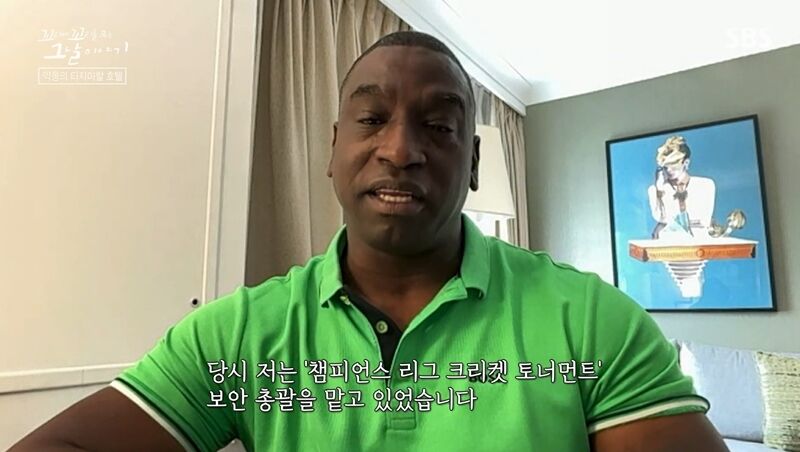
"Hello. I'm Faizel Nagle. At the time, I was in charge of overall security for the Champions League Twenty20 cricket tournament. That's the essence of what we do. That is our job: helping people survive and creating an environment for a better outcome. There were no other options. The only goal was, 'We all escape this place together.' Nationality, identity—none of that mattered."
— Faizel Nagle, then-security detail for the cricket tournament in India
Yet how were they supposed to escape a hotel seized by terrorists? Including those who had newly joined, well over 100 people were packed inside the banquet hall. Could they all make it out? What followed was a breathtaking escape between life and death.
▲ Hotel Escape Operation
The security team dimmed all the lights in the banquet hall and gathered everyone in the center, away from windows and doors. Then they barricaded the emergency stairwell and took control of the elevators.
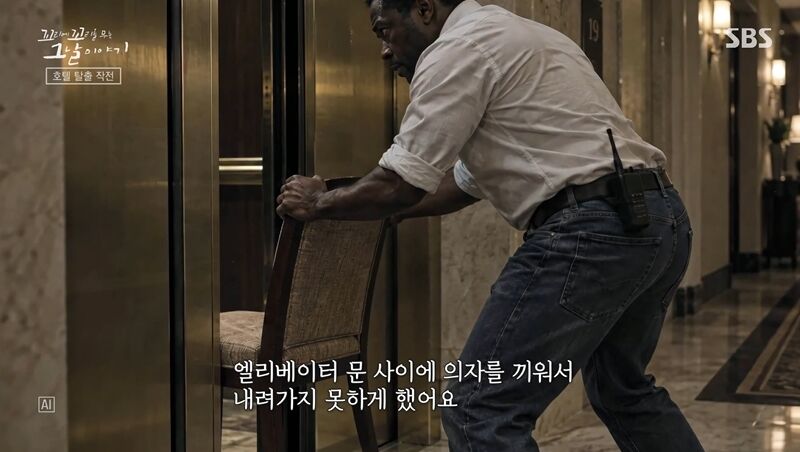
"The very first thing we had to do was prevent anyone from coming up to the 19th floor where we were. We had to seal off the entire floor. The easiest way was blocking the emergency stairs. So team member Regan and another colleague barricaded the stairwell entrance with furniture. Then we began controlling the two elevators we had taken up: we called one elevator to the 19th floor, verified it was empty, and jammed a chair between the elevator doors so it couldn't go down. That left only one elevator operational. That way, we could monitor which floor that single elevator was moving to and track any outsider's movements. We stationed two team members there."
— Faizel Nagle, then-security detail for the cricket tournament
After making the banquet hall as safe as possible, they devised an escape plan. The escape route was an emergency stairwell primarily used by staff. They gathered fire extinguishers and bottled water in case of emergencies, and asked women to remove high heels for safety. But was it simply a matter of heading down the emergency stairs? There was always the chance of running into terrorists on the staircase, making it paramount to pinpoint the attackers' whereabouts and secure the escape route.
The security team and the Koreans mobilized every available channel to gather information. Just then, good news reached Consul Kang Ki-taek, who had been making calls everywhere: the terrorists were currently in the heritage wing.
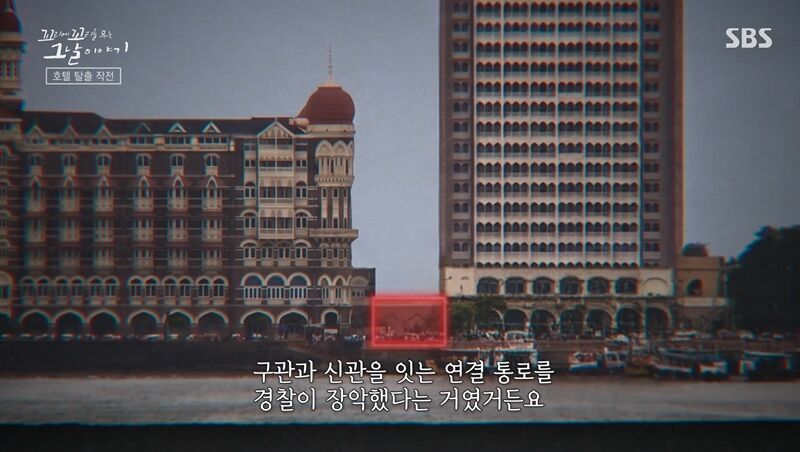
"What was shared with us at the time was that police had secured the corridor connecting the old and new wings. The old wing and the new wing were firmly separated by police forces."
— Kang Ki-taek, then-consul at the Korean Consulate General in Mumbai
Immediately, the security team contacted the hotel's chief of security. Because cricket players were scheduled to stay at the hotel, they had already established communication with the hotel security team beforehand. They asked the hotel security chief, "We are planning to escape via the emergency stairs, but since there are so many people, we need to verify if it's safe. Could you come up to the 19th floor?"
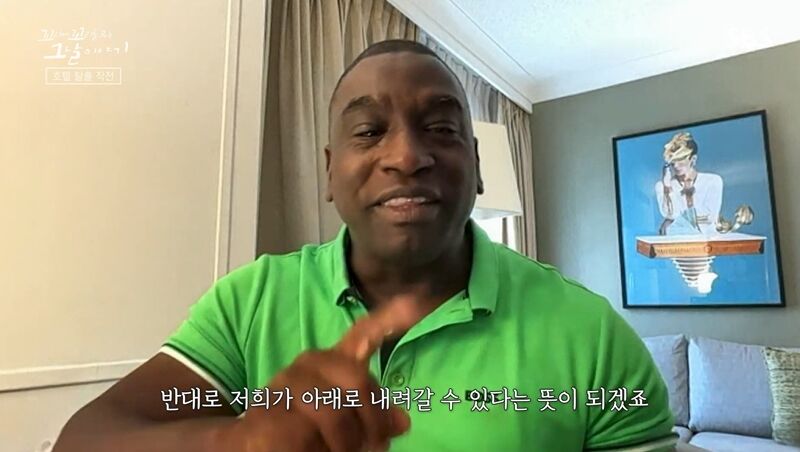
"If Sunil [the head of security] could make it up safely, it would mean we could go down."
— Faizel Nagle, then-security detail for the cricket tournament
Would the security chief make it up safely? Five minutes, ten minutes passed. Right at that moment, someone knocked on the emergency stairwell door barricaded by furniture. It was the hotel security chief. A green light had been given for their escape.
Now, the escape began. A massive group of over 100 people started to move. The last person inspecting every corner of the banquet hall was Consul Kang Ki-taek. As a consul responsible for the safety of citizens, Kang ensured no one was left behind before exiting last. Even though the passage between the old and new wings was blocked, the situation could deteriorate at any moment; if the mass escape was discovered, terrorists might force their way into the new wing. Kang recalled thinking:
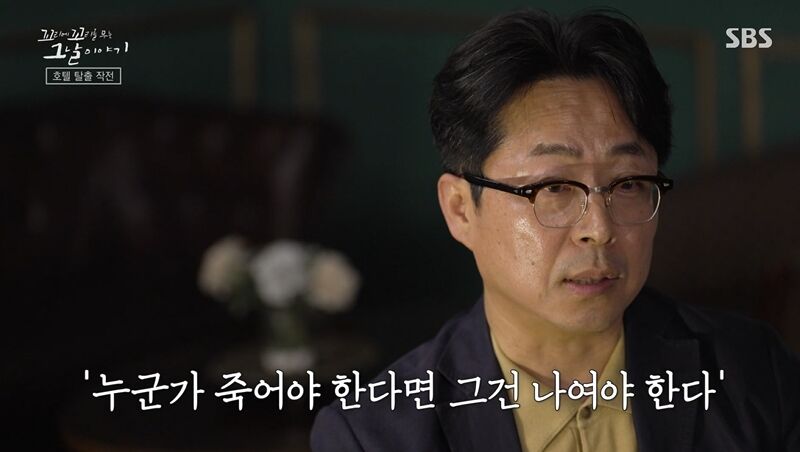
"If someone has to die, it should be me... But I don't think that mindset is unique to me. I believe it's the kind of thought commonly shared by those who consider protecting the people their duty, whether firefighters or soldiers."
— Kang Ki-taek, then-consul at the Korean Consulate General in Mumbai
Yet, despite more than 100 people evacuating, not a single sound was made. Here is a look at the scene of the escape that day.
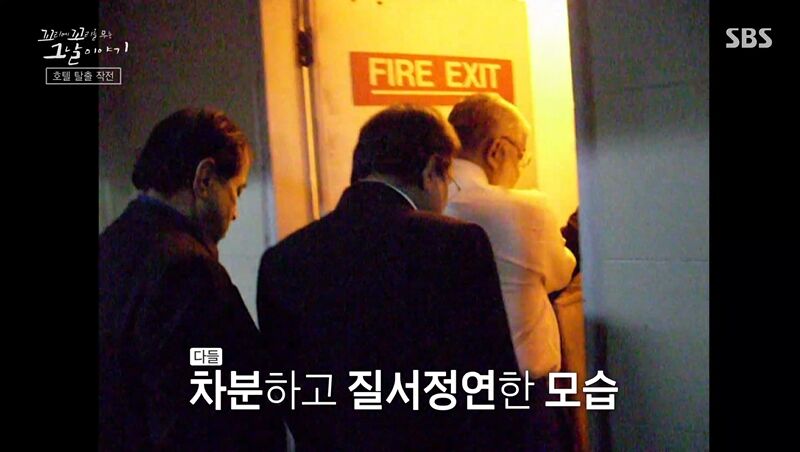
The scene was calm and orderly. No one shouted "Let me go down first" or urged others to "Hurry up." Though they did not share a common language—coming from Korea, India, the United States, France, Thailand, and beyond—they were united in heart and purpose: move as carefully as possible, and let's all survive together. Down they went: the 15th floor, 10th floor, 5th floor. The security team went down several floors ahead to check for safety before coming back up to guide the group. Then the 3rd floor, 2nd floor, 1st floor. Finally, the exit door appeared before their eyes. Yet, they could not step outside immediately.
"Another problem arose. We couldn't go straight outside. People were trapped inside the building due to the terrorist attack, and outside, police and military forces had set up perimeters to weed out the terrorists. If we simply opened the door and walked out blindly, we could have been mistaken for terrorists and taken under fire."
— Faizel Nagle, then-security detail for the cricket tournament
They waved a white handkerchief toward the outside.
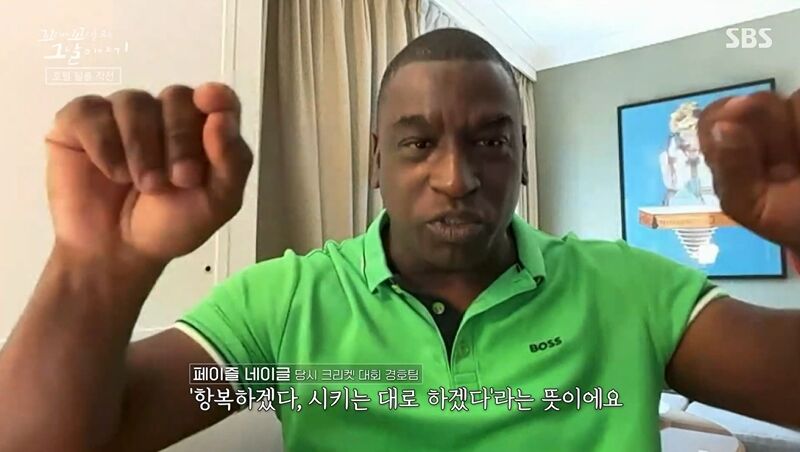
"'It means we surrender, we will comply with whatever you tell us.' So we gave a white handkerchief to a staff member and told them to display it to the police and military."
— Faizel Nagle, then-security detail for the cricket tournament
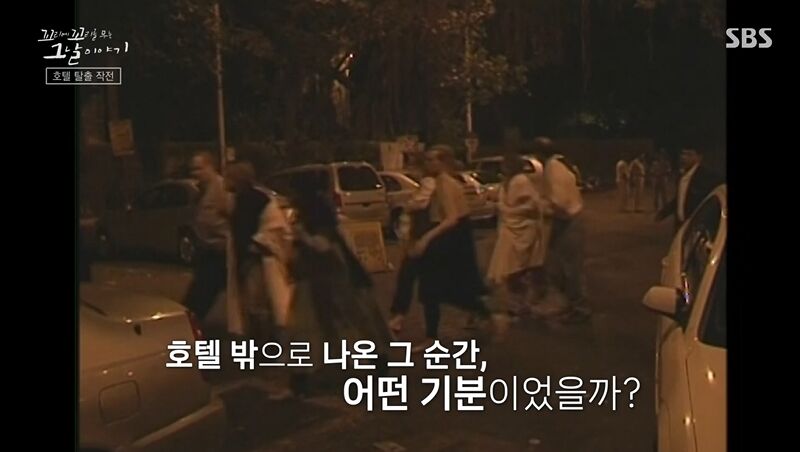
Thus, five hours after the terror attack began, one by one, they finally set foot outside the hotel. How did it feel the moment they stepped outside?

"I thought, 'I survived.' The dawn air, the cool air... A wave of immense relief washed over me. The words 'I'm alive' just spilled from my lips."
— Kim Jung-hyun, then-employee at KOTRA
"It was a moment of joy for everyone. After being trapped inside the building, stepping outside, and seeing the ordeal end, I finally felt free and was truly thrilled. Seeing people walk away safe and alive made me happy."
— Faizel Nagle, then-security detail for the cricket tournament
They had spent hours under extreme tension. It was time to head to a safe place, or home to waiting, worried families. Yet Consul Kang did not head home; he kept his eyes fixed on the hotel. Four Koreans, including Hyun Dae-sik, were still trapped inside. His duty was not yet finished.
Word of the escape from the 19th-floor banquet hall also reached those hiding in the Chambers club of the new wing. They too made a decision: to escape. The plan was to slip out using staff service corridors. The hotel staff moved the guests tightly against one side of the hallway walls. And the staff linked arms with one another, forming a line in front of the guests.
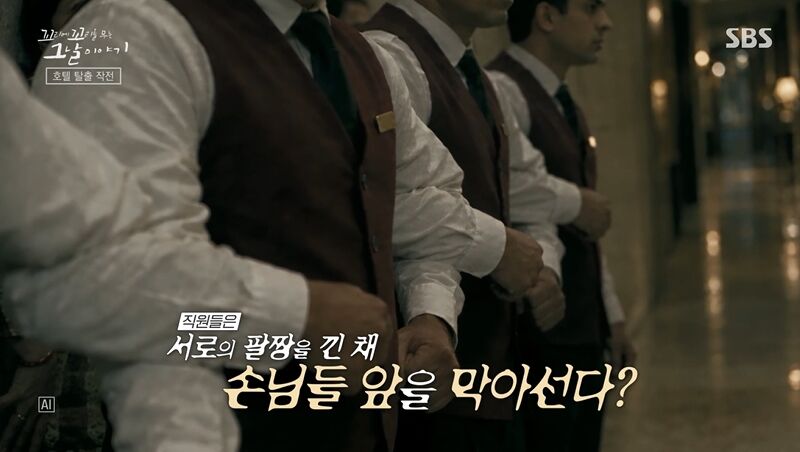
"Guests, please do not worry. If anyone gets shot, we will be the first to take the bullets."
The staff had formed a human shield to minimize the guests' exposure. Hotel employee Chawla recalled an unforgettable scene: staff members who had safely escorted a group of guests all the way outside heading right back inside. Just as nearly half of the people in the Chambers had safely escaped, gunshots rang out. The terrorists appeared at the Chambers.
The Chambers was the hotel's most private and secure sanctuary. How did terrorists manage to appear there? Behind it lay an unbelievable story.
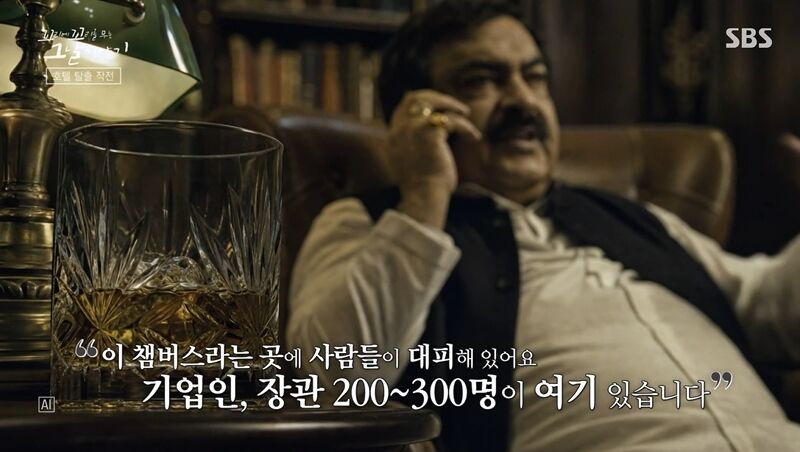
"People are currently sheltering here in a place called the Chambers. There are business leaders, ministers—around 200 to 300 people are here."
A politician sheltered in the Chambers had given a live telephone interview to the news. What happened next?
Terrorist handler: "There are three ministers and a secretary-general at the hotel."
Terrorist gunman: "That is very good news. Couldn't be better."
Having tracked down even the staff passageways, the terrorists crossed into the new wing and arrived at the Chambers. As soon as gunfire echoed, hotel staff ushered the escaping people back into the Chambers and told the guests to lock the doors. The staff then began running in the opposite direction to divert the attackers' attention. The terrorists pursued the staff, opening fire. Tragically, seven hotel staff members lost their lives in the process.
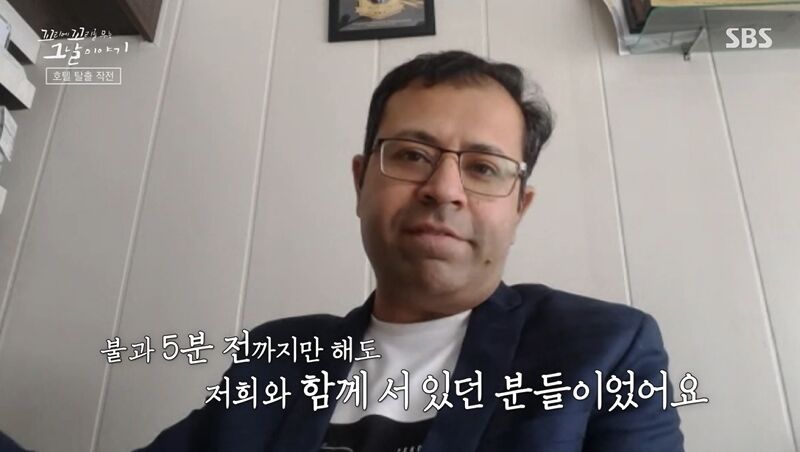
"To be honest, it was heartbreaking. They were people who had done nothing wrong. The colleagues who were shot and died on the spot were standing right alongside us just five minutes earlier."
— Ankur Chawla, then-Taj Mahal Hotel employee
As life and death hung in the balance for so many, seven hours had passed since the terror attack began. Not only the Koreans, but everyone inside the coffee shop showed clear signs of exhaustion. But at that moment, a clanking sound was heard outside the window. Feeling something hooking onto the exterior, they looked out, and a man's face appeared. It was a firefighter.
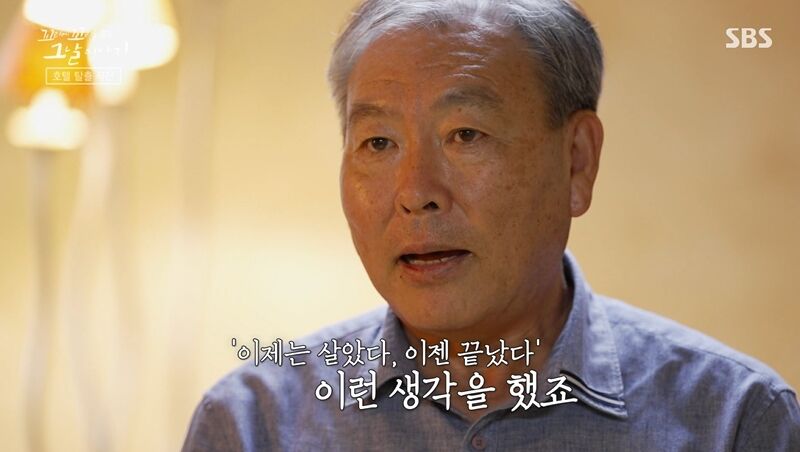
"A fire truck ladder was hooked right there, and a firefighter was climbing up. I thought, 'Now we've survived. Now it's over.'"
— Hyun Dae-sik, then-branch head of an auto parts company
Now was the moment to escape. The Koreans, including Hyun, reached the window first. And they reached out their hands—to whom? To those attempting to board the ladder truck. The Koreans reportedly stayed to help until every guest in the coffee shop had made it down. That was how the Koreans exited the coffee shop last. All Koreans trapped in the hotel had safely escaped.
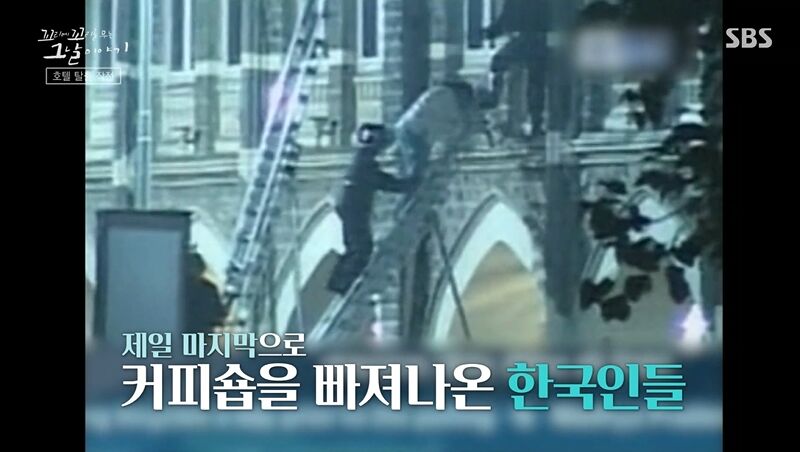
And outside the hotel stood the man who had waited for word of their escape more anxiously than anyone. Only then did Consul Kang Ki-taek leave his post outside the hotel. Kang headed straight for the Consulate General. The attack itself was far from over, and at the time, more than 300 Korean residents lived in Mumbai. He wanted to verify the safety of all Korean residents to the very end.
▲ What the Mumbai Attacks Left Behind
The next morning dawned with gunfire still echoing. Only then did operations begin for the Black Cats counterterrorism unit. Hotel employee Chawla and traveler Dara Huang were safely rescued only once morning arrived. Yet the tragedy was not easily brought to an end. Final operations suppressing the attacks across the city were completed only after an agonizing 60 hours. The terror attacks claimed some 170 lives and injured more than 300 people.
Of the 10 terrorists, nine were killed and one was captured alive. The captured attacker was 21 years old. He reportedly made the following statement:
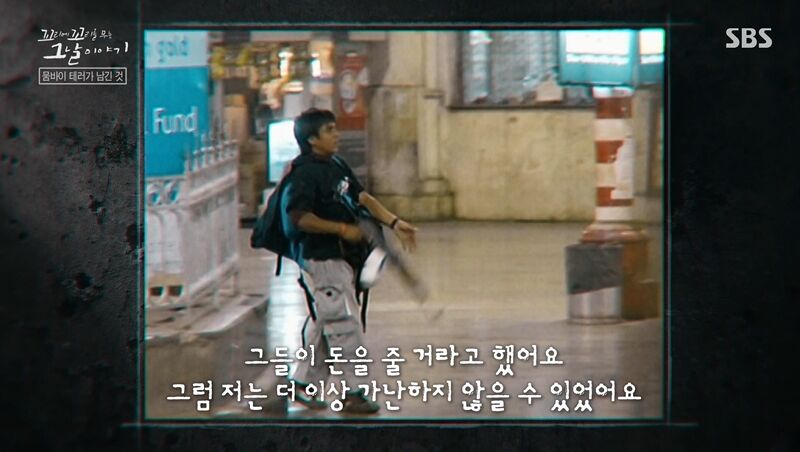
"They said they would give me money. Then I wouldn't have to be poor anymore. I answered that anything was fine as long as I could make money."
Some people killed others for their own purposes. But others struggled to help and save people for no reason at all. Consul Kang Ki-taek, who believed, "If someone has to die, it should be me."
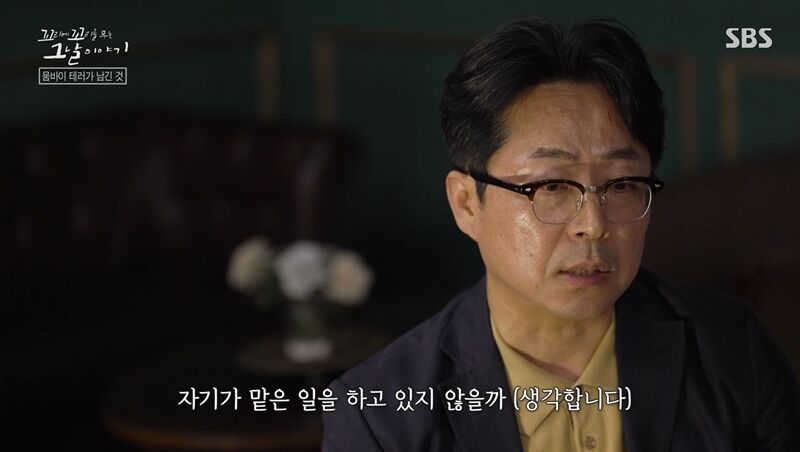
"Because that's my job. I suppose many people who do that kind of work carry out their duties with such a resolve."
-Kang Ki-taek, then-Consul at the Consulate General of the Republic of Korea in Mumbai
Kim Jung-hyun, who went out of his way to look out for the well-being of others.
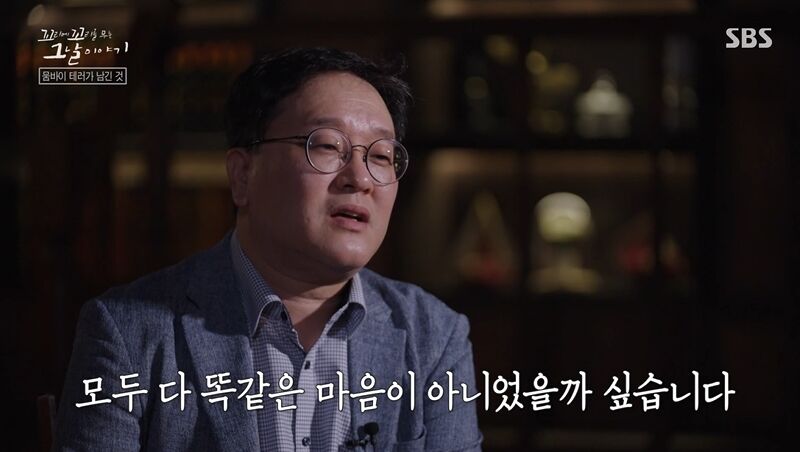
"I think I tried hard to act nonchalant at the time. When many people reached out with concern, I felt everyone probably shared the same mindset of saying, 'I'm okay, nothing happened.'"
-Kim Jung-hyun, then-employee of the Korea Trade-Investment Promotion Agency (KOTRA)
Hyun Dae-shik, who considered others first even in the moments of escape.
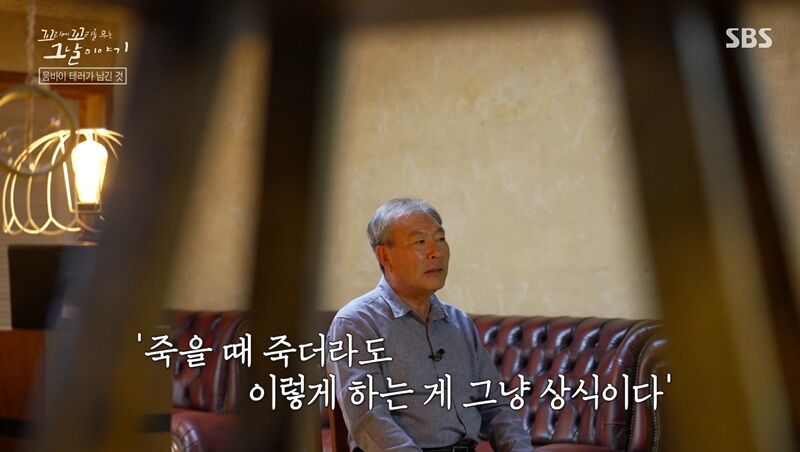
"In our minds, we thought, 'Even if we die, doing it this way is just common sense,' and 'It's something we fundamentally have to do.'"
-Hyun Dae-shik, then-head of an automotive parts company branch
Furthermore, the hotel staff could have easily escaped if they had wanted to, but chose to stay behind with the guests. And there is someone else we remember. Peisel and the security team. "Kkokkomu" delivered a small gift to him: a video letter from Kim Jung-hyun, a survivor from the 19th floor of the new building. Upon watching this video, Mr. Peisel was deeply moved and shed tears.
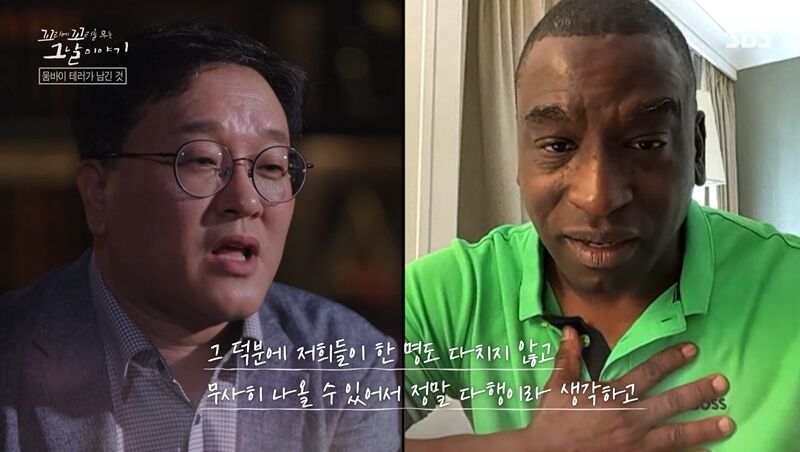
"I sincerely thank those people who stepped up and helped many others. Thanks to them, I think it is truly fortunate that all of us were able to come out safely without a single injury, and I express my sincere gratitude once again."
-Kim Jung-hyun, then-employee of the Korea Trade-Investment Promotion Agency (KOTRA)
"That's amazing, thank you so much. It's truly wonderful to meet someone in person who was there on that night. At the time, I didn't feel any particular emotion and simply acted as I was trained. But now, seeing the face and hearing the voice of a survivor in person, it finally feels real. Seeing you like this makes emotions well up. We could never have pulled this off if you hadn't trusted us. I sincerely thank everyone who worked together with us as one team. Thank you so much."
-Peisel Nagle, then-security team member for the cricket tournament
Mr. Peisel was asked, "If you could go back to that night, would you make the same choice?" To this, he replied:
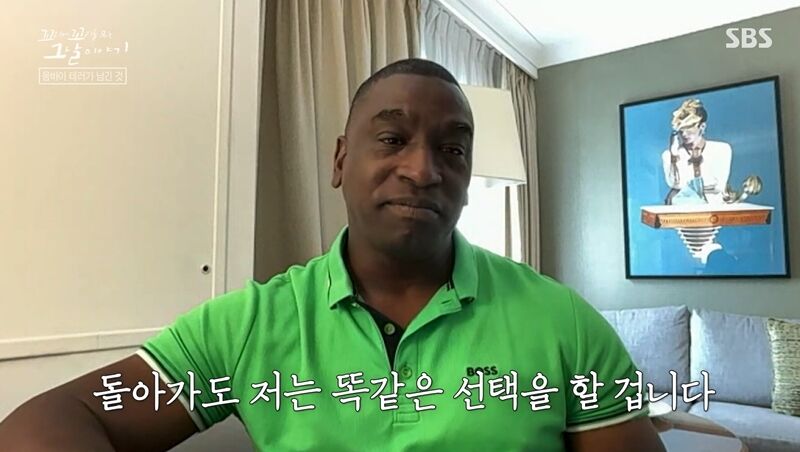
"Even if I go back, I will do the same. But I will do it faster. I will rescue people more quickly so they suffer less stress. Even if I go back, I will make the exact same choice."
-Peisel Nagle, then-security team member for the cricket tournament
Peisel shared what he felt on the day of the terror attack.
"For me, that night was the very embodiment of the sanctity of life, and the importance of solidarity and cooperation between human beings."
Today, as conflicts and disputes persist and extreme incidents occur day after day, why don't we take a moment to reflect on these precious values?
What are your thoughts today after hearing the story of 'that day'?
(SBS Entertainment News Reporter Kang Sun-ae)
※ Please note: This article was translated by AI and may contain errors.


 Video News
 Video News
 Video News
 Video News
 Video News