
 KOR
KOR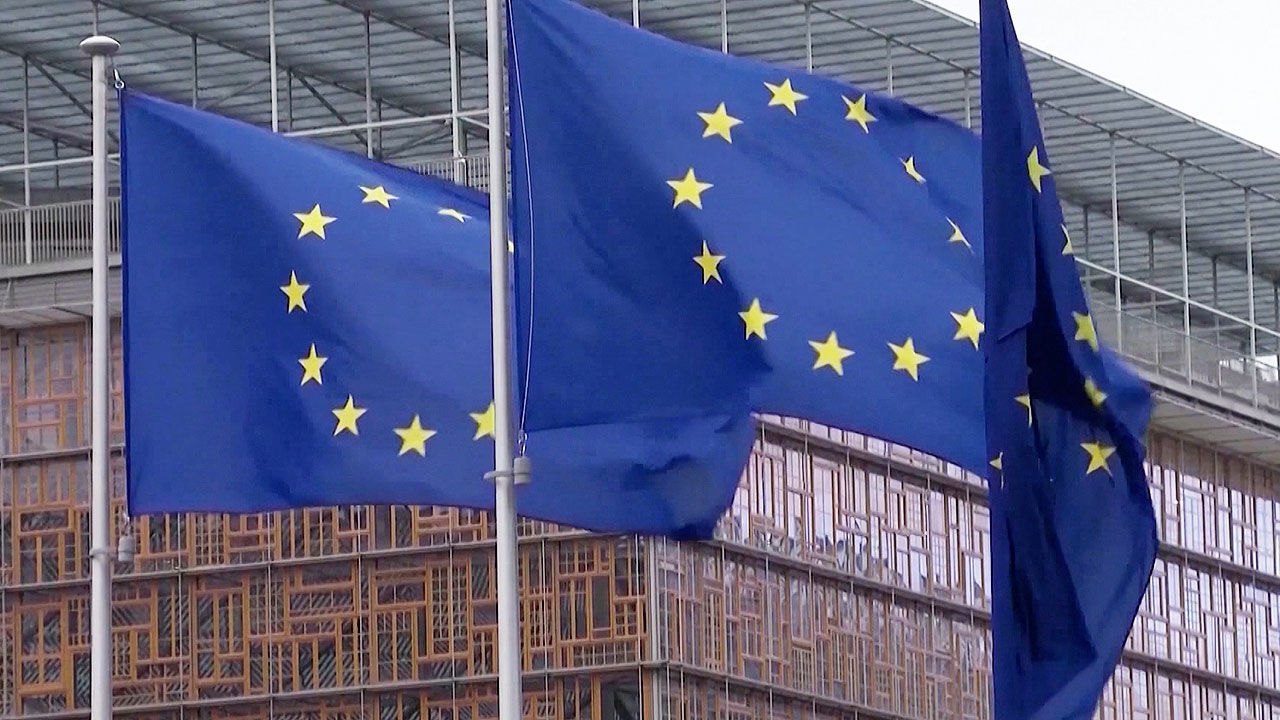
▲ European Union (EU)
A direct collision between France and Germany over the European Union's (EU) next long-term budget (2028–2034) is casting a shadow over reaching an agreement within the year.
While six countries led by Germany are demanding hundreds of billions of euros in budget cuts, France is pushing back, arguing that sufficient financial resources are needed to strengthen defense capabilities and secure economic competitiveness.
According to AFP on October 10 (local time), the seven-year long-term budget proposed by the European Commission amounts to approximately 2 trillion euros (approx. 3,011 trillion won).
This represents an increase of about 60% compared to the 2021–2027 long-term budget of approximately 1.2 trillion euros.
Germany, the bloc's largest economy, along with Austria, Denmark, Finland, the Netherlands, and Sweden, is arguing that hundreds of billions of euros must be cut from the next long-term budget.
These six net contributors—whose financial contributions to the EU budget exceed the funds they receive—take the stance that it is unaffordable to dramatically increase the EU budget alone at a time when member states have embarked on austerity to achieve fiscal consolidation.
In a recent letter sent to the EU, they emphasized that the EU budget, much like those of member states, should adjust spending priorities and concentrate financial resources on core areas such as defense and security, economic competitiveness, and migration management.
Conversely, France, the EU's second-largest economy and a net budget contributor, takes the position that bold financial investment is necessary to respond to the security and economic challenges facing Europe.
French President Emmanuel Macron emphasized last month that "we need an ambitious European budget" and that "we must defend a much stronger European budget" to back the EU's core tasks, including defense.
However, France is also experiencing severe financial difficulties, and Marine Le Pen, a lawmaker from the far-right National Rally (RN) and a leading presidential candidate, has argued for cutting France's EU budget contributions to reduce national debt.
Furthermore, 17 Central, Eastern, and Southern European countries formed an alliance called the "Friends of Cohesion" to demand increased support for agriculture and regional development, making the budget negotiations even more complex.
While the EU's goal is to reach an agreement by Christmas this year, the differences in positions among member states are so wide that possibilities have been raised that negotiations could spill over into next year.
Ireland, holding the rotating presidency of the Council of the EU, presented a revised budget proposal roughly 8% lower than the EU budget proposal on this day in an effort to narrow differences, according to Bloomberg and Reuters.
This is 160 billion euros lower in real terms and 141 billion euros lower in nominal terms than the European Commission's budget proposal.
It still remains over 30% higher than the 2021–2027 budget.
Thomas Byrne, Ireland's Minister of State for European Affairs, stated, "We have listened to the views of all member states and worked to identify their top priorities," adding, "Nobody gets everything they want."
Fierce negotiations are expected to take place at the EU summit to be held in Brussels on October 15–16.
The EU's push to reach an agreement a year ahead of the 2027 statutory year-end deadline stems from concerns that negotiations could become even more difficult if forces skeptical of European integration win elections in countries like France next year.
Spain's decision to hold a snap general election next month is also amplifying political uncertainty.
Securing new revenue sources to alleviate the financial burden on member states is another contentious issue.
The European Commission has proposed corporate taxation, electronic waste fees, and higher tobacco-related taxes, while the European Parliament is even demanding taxation on giant digital companies and online gambling.
However, some member states oppose the introduction of new taxes, and friction surrounding the raising of financial resources is anticipated.
※ Please note: This article was translated by AI and may contain errors.


 Video News
 Video News
 Video News
 Video News
 Video News