
 KOR
KORNot a single reporter had arrived yet. As I settled into the second row and opened my laptop, a familiar middleman suddenly crept, peeked, and meandered out of the partition behind the press conference room, which is supposed to be restricted to directors and cast members. Moreover, a few young ladies followed behind him hesitatingly. Uh, isn't that area off-limits to the general public...?
Ah, Director Hirokazu Kore-eda?! Kore-eda had slipped out of the waiting room without permission(?) to use the press coffee machine set up at the back of the press conference room. True to a pro-Korean director who has visited the Busan International Film Festival more than ten times since bringing his debut film there 30 years ago, he acted as if Busan was his own backyard. Seeing him accompanied by the actresses felt like a papa bear, and the corners of my mouth curled up before I knew it.
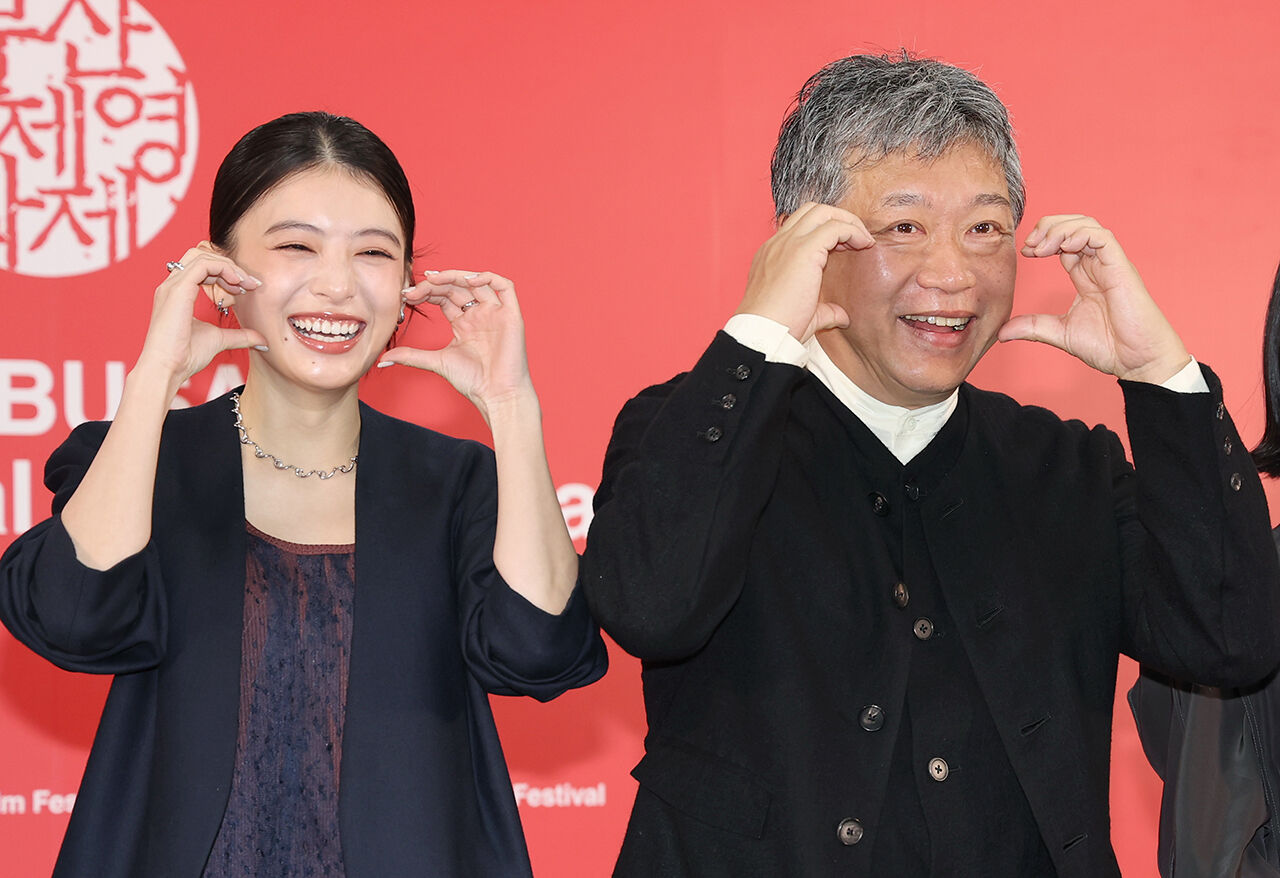
While Director Kore-eda has grown into a global master who won the Cannes Palme d'Or, the Busan International Film Festival has also grown tremendously into Asia's representative film festival. This is truly what you might call "co-growth."
The most striking advertisement at this year's Busan International Film Festival is Director Lee Chang-dong's "Possible Love". It was plastered in a quite large size on the building across from the Cinema Center. I heard that Netflix spent tens of millions of won just on this advertisement. Director Lee Chang-dong's "Possible Love" and Director Hirokazu Kore-eda's "Look Back" were simultaneously invited to the competition section of the Venice Film Festival last month. "Possible Love" won an award, but "Look Back" probably wasn't a film aiming for an award at one of the world's top three film festivals. (That does not mean "Look Back" is inferior to "Possible Love".)
I sat down across from Director Lee Chang-dong before he left for Venice. As a notoriously prolific-sparse director, you have to wait almost 10 years just to get one interview. He was a cautious and thoughtful person, just like his films. Ultimately, every film is the director himself. Not just films, but any expression by anyone—whether the platform is a screen, Instagram, X, YouTube, Shorts, Reels, a parliamentary audit room, or a press conference room.
I casually threw my first question to the director of "Possible Love," which deals with labor issues, asking if his "productivity" wasn't too low, releasing a film at eight-year intervals.
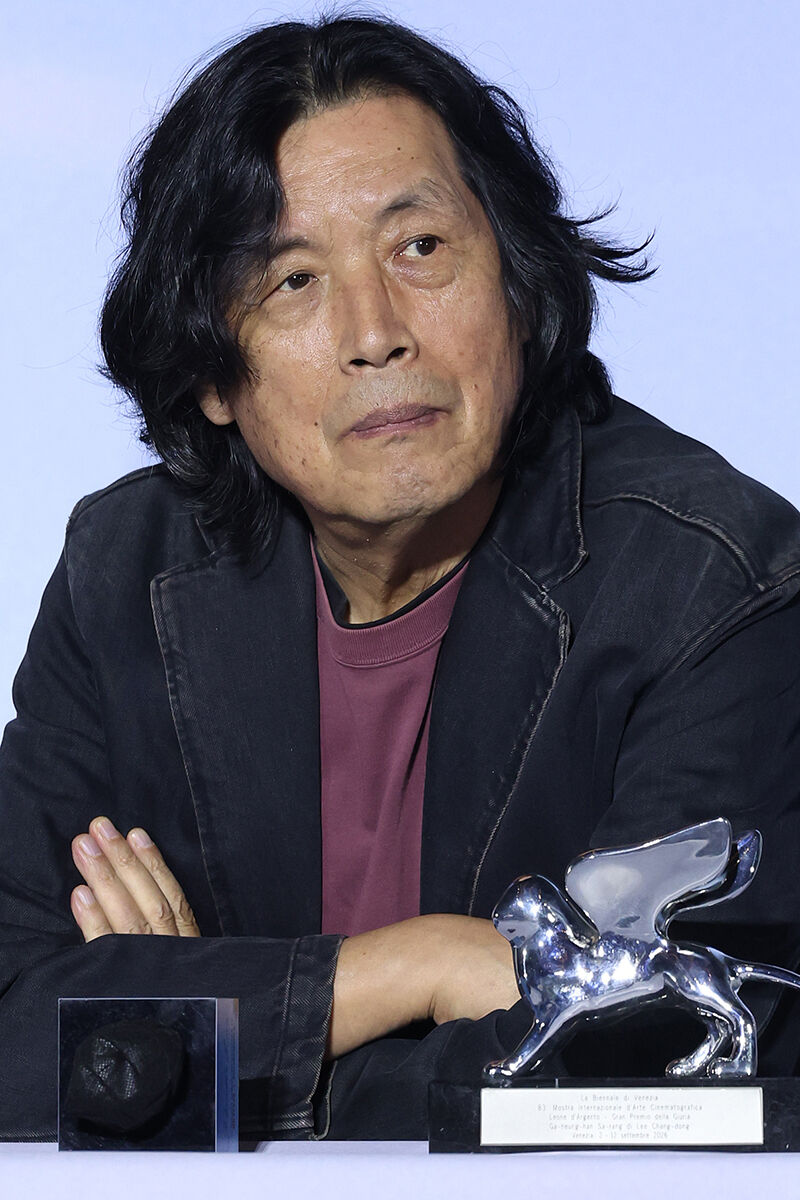
"I always self-reproach about my own productivity as well (laughs). Rather than it simply being my own laziness, it seems that strangely, as I grow older, my concerns keep deepening regarding what a movie is, or the relationship between film, this world I live in, and my life."
Because of those concerns, "Possible Love" took around 10 years to reach its release. Actor Jeon Do-yeon, who received an offer to star, said she couldn't believe the movie would actually be made until she saw the script, because the director kept writing and discarding it so many times.
Director Lee's hesitation and deliberation were the "pain of creation," or more specifically, the "ethical pain of a creator."
"For a creator like me who depicts the lives of others, the fundamental concern is always, 'How much can I tell their stories as themselves?' Whether I can tell their stories without using them merely as materials to make a film is a question I have asked myself all my life." (Press Screening and Conference)
"Possible Love" deals with the story of laid-off workers whose hearts were wounded deeper than their bodies in the process of resisting mass layoffs by a large corporation. Director Lee said it took him many years to release this film because he wasn't sure if he had to make it into a movie himself, given that there are already honest documentaries dealing with the lives of laid-off workers.
"Before making a film, I always ask myself, 'Do I really have to make this film?' If I cannot be convinced that it has meaning for myself, for the audience, and for the film itself, I cannot push the film through to the end—I have a sort of, shall we say, eccentricity? I tend to have that." (Production Presentation)
"Look Back" was an animated film that made my heart race when I stepped into a theater without much expectation two years ago. So on one hand, I even hoped it wouldn't be live-actioned, but hearing that Hirokazu Kore-eda was directing it left me with mixed feelings of relief, anticipation, and concern.
"Look Back" features cute little elementary school kids who are devoted to manga creation to what might seem an excessive degree. Their serious attitude and posture toward creation are enough to rival adults. No, they might even be better than adults because they have both "sincerity" and "beginner's mind." They collaborate, compete, strive, and grow into adult manga artists. I imagine Hirokazu Kore-eda, who happened to see this manga while visiting a bookstore, must have found it hard to just pass by without making a movie. Director Kore-eda said at the BIFF press conference:
"I can't forget the shock I felt when I brought it home and read it that night. At that time, I began to ponder, 'Why do people write stories, why do people create?' Applying it to myself, I began to ask, 'Why do I make movies?' I continued making films while keeping such questions constantly in my mind."
The hearts of the veteran directors were the same. Eventually, everyone gets older. Doesn't getting older mean arriving at questions like these? These questions might sound like relaxed talk from veterans. We are living in an era where we half-willingly and half-unwillingly receive "contents" where we don't even know why we have to look at such things.
※ The interview contents in this article combine and edit the terrestrial TV interview with Director Lee Chang-dong that the writer personally participated in, along with press screening and production presentation press conferences in Korea, but the overall context of Director Lee Chang-dong's remarks has been preserved as much as possible.
※ Please note: This article was translated by AI and may contain errors.




 Video News
 Video News
 Video News