
 KOR
KOR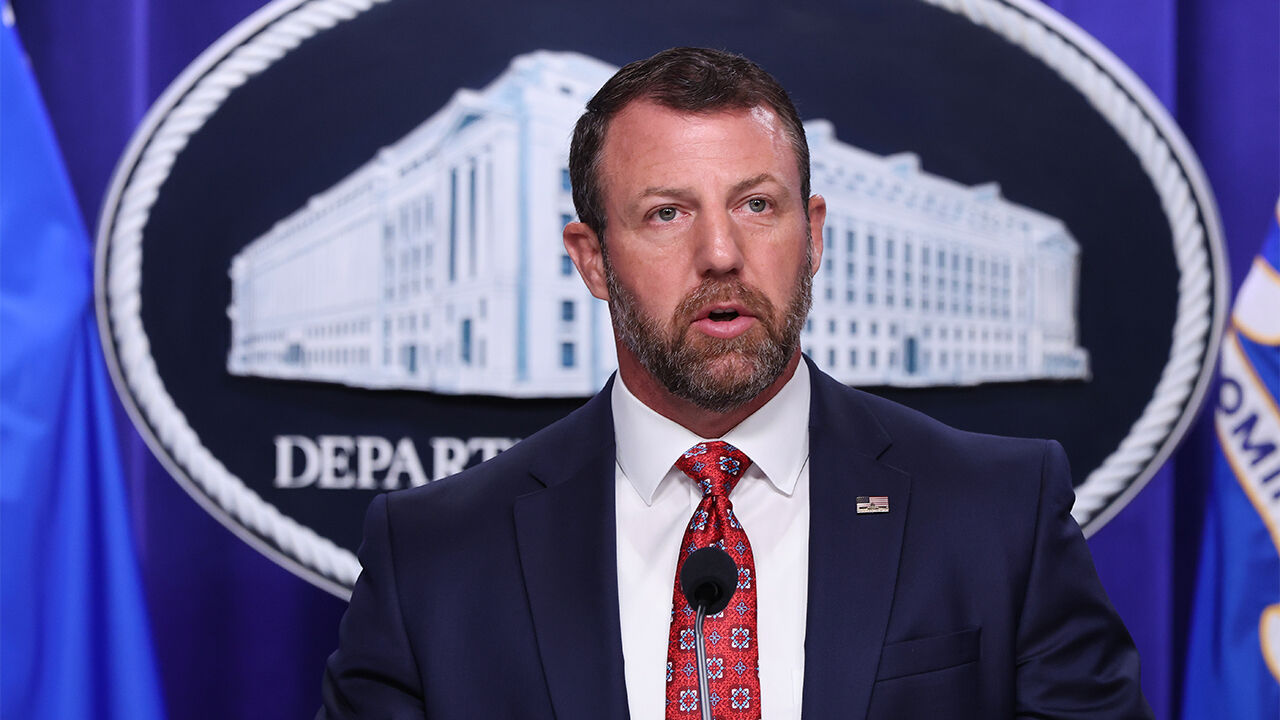
▲ Markwayne Mullin, U.S. Department of Homeland Security
The Donald Trump administration announced a policy on October 7 local time to levy a fee close to 100 million won on foreign graduates from local universities seeking employment in the United States.
The U.S. Department of Homeland Security (DHS) announced in a press release that day that it has introduced a regulatory proposal to impose new fees on nonimmigrant students holding F-1 visas who participate in Optional Practical Training (OPT), a temporary employment authorization linked to their fields of study.
According to the proposal, F-1 visa holders would be charged 70,000 dollars—approximately 93.8 million won—when first applying for OPT, and 30,000 dollars (about 40 million won) for subsequent applications.
A DHS spokesperson stated that OPT is neither "a backdoor into the U.S. labor market, a subsidy for cheap labor, nor a reward for those who abuse the system," adding, "American workers should not have to compete with a program that has devolved into a pipeline for low-cost foreign labor."
OPT is a program that allows foreigners who have attended U.S. undergraduate and graduate schools to work using only their existing F-1 visa without obtaining a new work visa.
Generally, applying for OPT allows a one-year stay extension, but those in science, technology, engineering, and math (STEM) fields have been allowed an additional two years, for a maximum stay of three years.
DHS explained that the announcement of this regulatory proposal follows the detection of fraud and abuse related to OPT by the Student and Exchange Visitor Program (SEVP) under Immigration and Customs Enforcement (ICE).
It further stated that the new fee policy is "believed to help reduce fraudulent activities and strengthen the integrity of the program by encouraging schools to apply stricter oversight and screening standards when recommending F-1 nonimmigrant students for OPT."
DHS specified schools as the subject of fee payment, stating, "If schools do not pay the required fees, U.S. Citizenship and Immigration Services (USCIS) will not grant employment authorization to F-1 nonimmigrant students."
However, as universities are unlikely to pay the OPT program applicant fees on their behalf, these fees are widely expected to be borne in practice by the students or companies looking to hire international graduates.
The proposal is scheduled to be finalized and implemented following a 60-day public comment period and other procedures.
That said, the Associated Press reported that implementation could be delayed if universities or business-related organizations file lawsuits.
AP noted regarding this measure that "these changes would be a blow to U.S. universities and some companies," adding, "U.S. universities actively recruit international students as a source of tuition revenue. Tech companies and other industries also hire many international students for technical positions."
Doug Rand, who served as a senior advisor at USCIS during the previous Joe Biden administration, told AP that he expects this fee to also be invalidated in court, criticizing, "If we educate international students at our universities and they exercise their talents here after graduation, we should naturally welcome them, not drive them away with exorbitant fees."
(Photo: Getty Images)
※ Please note: This article was translated by AI and may contain errors.


 Video News
 Video News
 Video News
 Video News
 Video News