
 KOR
KOR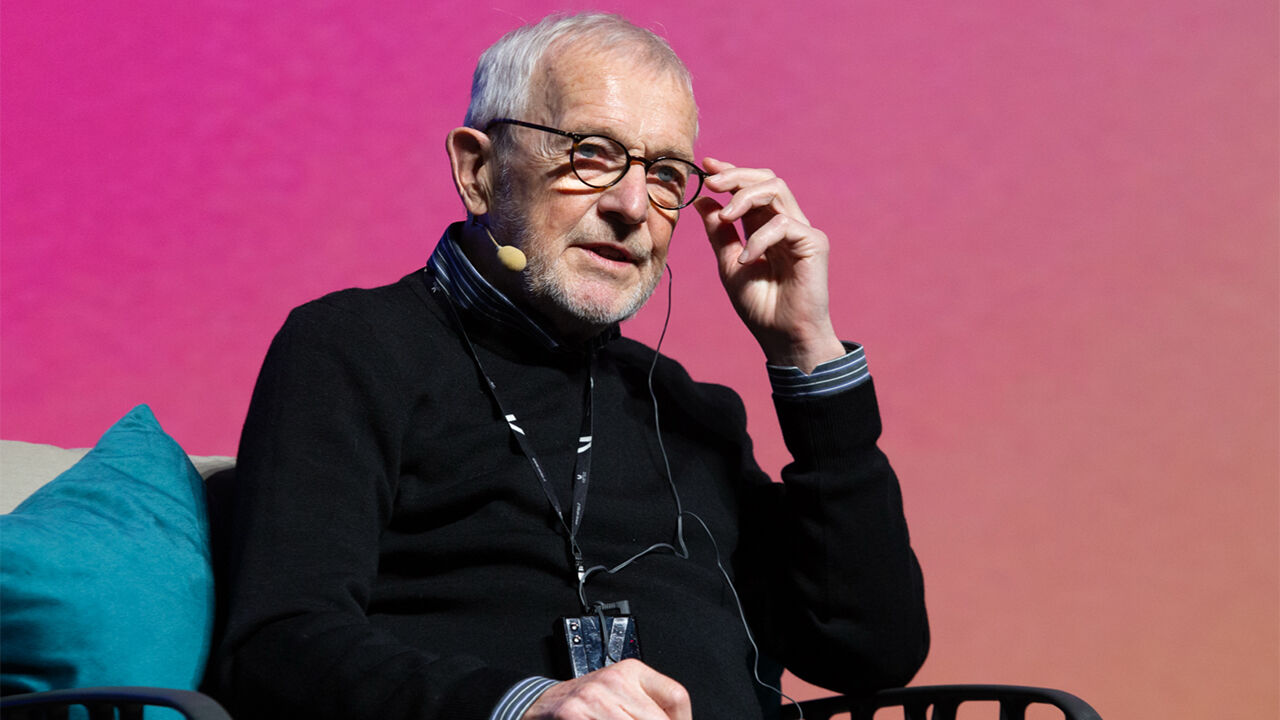
▲ Belgian physicist Francis Halzen, laureate of the Nobel Prize in Physics
The 2026 Nobel Prize in Physics has been awarded to Belgian-born American physicist Francis Halzen, 82, who laid new foundations for observing cosmic phenomena through neutrino observation research.
The Royal Swedish Academy of Sciences' Nobel Committee announced on the 6th (local time) that it decided to award the Nobel Prize in Physics in recognition of his "decisive contributions to the IceCube Neutrino Observatory and the discovery of high-energy neutrinos of astrophysical origin."
Halzen is the lead researcher of the IceCube Neutrino Observatory located at the Amundsen-Scott South Pole Station in Antarctica.
The observatory is the world's largest neutrino detector and began operations in 2010.
Halzen currently serves as a professor emeritus at the University of Wisconsin-Madison and director of the university's Wisconsin IceCube Particle Astrophysics Center.
The committee explained that the observation of ultra-high-energy neutrinos flying from space has opened the way to uncover previously unknown cosmic phenomena.
Unlike other particles, neutrinos hardly interact with ordinary matter, meaning they reach Earth from the distant universe without changing direction or losing energy.
Because of this, neutrinos can provide invaluable information that cannot be obtained through other methods, but observing them is correspondingly extremely difficult.
Since neutrinos rarely interact with ordinary matter and almost all of them simply pass through, observing them requires precisely monitoring a massive amount of ordinary matter and detecting precise signals with sensors.
The research team led by Halzen used large-scale observation facilities to discover high-energy neutrinos for the first time, and a few years later was able to announce the discovery of neutrinos with a definite origin far beyond the solar system.
The committee noted that this served as an opportunity for the full-scale search for the sources of cosmic neutrinos to begin.
Halzen was unusually selected as a sole laureate. He is the first single recipient of the Nobel Prize in Physics in 34 years since Georges Charpak, a Polish-born French physicist who was recognized in 1992 for inventing the multiwire proportional chamber.
This year's total prize money for the physics prize is 12 million Swedish kronor (approx. 1.61 billion won), and Halzen, as the sole laureate, is entitled to the entire award.
During the press conference for the announcement of the laureates held in Stockholm, Sweden, the Nobel Committee played a phone call connected with Halzen, who is in Italy.
Halzen said he was "greatly surprised and naturally did not expect it at all," adding that although there had been predictions before that he might win the Nobel Prize, hearing the actual announcement still felt "surreal" (bizarre).
He said, "I am currently working on a proposal, and I hope this award will help that proposal get approved," which brought laughter from the press conference room.
The announcements for this year's Nobel Prize laureates took place with the Physiology or Medicine prize on the 5th and the Physics prize on the 6th, with remaining announcements scheduled for the Chemistry prize on the 7th, Literature prize on the 8th, Peace prize on the 9th, and Economic Sciences prize on the 12th.
(Photo: AP, Yonhap News)
※ Please note: This article was translated by AI and may contain errors.


 Video News
 Video News
 Video News
 Video News
 Video News