
 KOR
KOR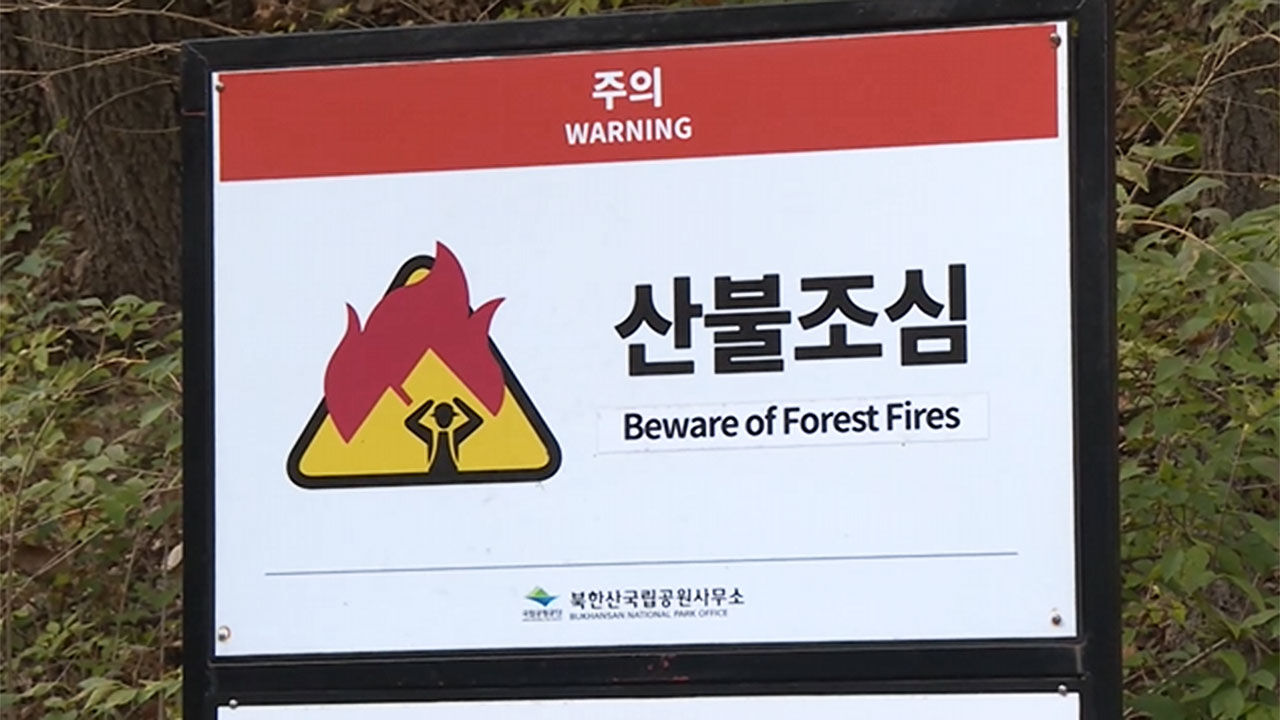
▲ A wildfire warning sign in the mountains
A former wildfire watchman who turned to arson out of resentment after failing to secure a job has been put behind bars.
The Jeonju Branch of the Gwangju High Court (Presiding Judge Jeong Moon-kyung) announced today (October 6) that it overturned a lower court ruling sentencing A (58), who was indicted on charges of violating the Forest Disaster Prevention Act and property damage, to two and a half years in prison, and instead sentenced him to two years in prison.
A was indicted on charges of setting fires six times between February 8 and 15 in Namwon, Jeollabuk-do, by throwing burning tissue paper and other items into fields.
At the time, the fires started in dry fields amid dry weather and spread to nearby forests driven by the wind.
The fires destroyed 1,695 square meters of land, but thanks to the swift deployment of firefighters, police officers, and wildfire watchmen, they were extinguished early with no injuries reported.
A month later, on March 8 of this year, A also damaged the tires of a vehicle belonging to another wildfire watchman, B, by scattering screws in front of the car.
It was revealed that A had worked as a wildfire watchman in Namwon from 2016 to 2025, but decided to set fires in the mountains out of resentment after failing to be hired this year.
The appellate court pointed out, "The defendant knew well the dangers of wildfires having previously worked as a wildfire watchman, yet repeatedly set fires to forests, making his culpability high," adding, "Furthermore, a considerable amount of human and material resources was consumed as numerous firefighting personnel and vehicles were dispatched due to the defendant's crimes."
The court further stated, "In addition, the timing of this crime coincided with the intensified wildfire prevention period, and with dry conditions and strong winds, there was a high likelihood of a large-scale wildfire occurring," and ruled, "Even considering that the fires set by the defendant did not spread extensively, a prison sentence is inevitable."
※ Please note: This article was translated by AI and may contain errors.




 Video News
 Video News
