
 KOR
KOR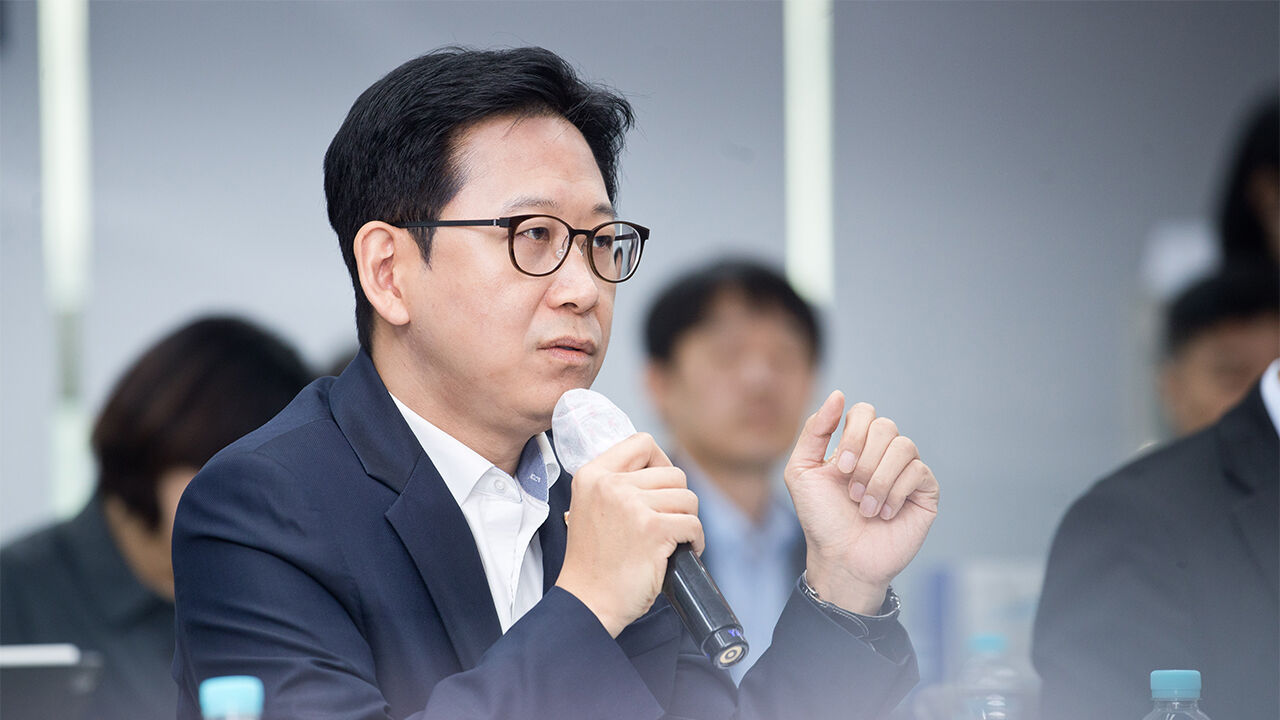
▲ Deputy Prime Minister Bae Gyung-hoon
Science and technology ministers from about 10 major countries, including the United States and South Korea, have gathered to announce the "Kyoto Vision," calling for opening a new era of prosperity through scientific discovery.
The Ministry of Science and ICT (MSIT) announced today that Deputy Prime Minister and Minister Bae Gyung-hoon, together with science, technology, and innovation ministers from major nations including the U.S., announced the "Kyoto Vision for a Golden Age of Science" at the 23rd Science and Technology in Society (STS) Forum held in Kyoto, Japan, yesterday (October 4).
The STS Forum is an international gathering where leaders from governments, academia, research institutions, and industries around the world discuss the social roles and issues of science and technology.
This Kyoto Vision was spearheaded by the White House Office of Science and Technology Policy (OSTP) of the United States, with representatives from about 10 countries, including Japan, the United Kingdom, and Germany, participating.
The Kyoto Vision outlines responses to changes in the scientific research environment such as AI advancement, aiming to enhance researchers' productivity, reduce unnecessary administrative burdens so that scientists can focus on their research, and ensure that funding systems reward ambitious and innovative ideas.
The vision also calls for recognizing the diversity of scientific objectives, establishing various funding instruments such as long-term research grants, and encouraging experimentation with new research institution models.
It proposes maintaining the highest standards of scientific integrity and government support and utilization of science, while also recognizing "null results."
The document also includes content emphasizing the need to thoughtfully integrate AI into scientific research, secure infrastructure, and make efforts to cultivate the next generation of talent.
Following the joint announcement of the Kyoto Vision, the MSIT stated its plan to continue institutional and policy innovations to accelerate the pace of scientific discovery and technological innovation and drive tech-led growth, while actively participating in related international cooperation discussions.
At the science and technology ministers' meeting hosted by the Cabinet Office of Japan, Deputy Prime Minister Bae emphasized the need to shift science and technology policies in response to the AI era and introduced initiatives such as the seven major seed projects and the K-Moonshot project.
He stated, "With the internal and external environments surrounding the research and development (R&D) ecosystem rapidly changing due to AI technological innovations and industrial paradigm shifts, it is time for a major transformation in science and technology policies," adding, "We will double our efforts in science and technology policy innovation to strengthen the constitution of our R&D and revitalize the research ecosystem."
Meanwhile, Deputy Prime Minister Bae held a meeting with Michael Kratsios, Director of the OSTP, to exchange views on the direction of science, technology, and AI policies of both countries, including the Kyoto Vision.
They also discussed ways to expand science and technology cooperation, such as follow-up measures to the South Korea-U.S. Memorandum of Understanding on Technology Prosperity signed following the bilateral summit in October of last year.
(Photo: Provided by the Ministry of Science and ICT, Yonhap News)
※ Please note: This article was translated by AI and may contain errors.


 Video News


 Video News
 Video News