
 KOR
KOR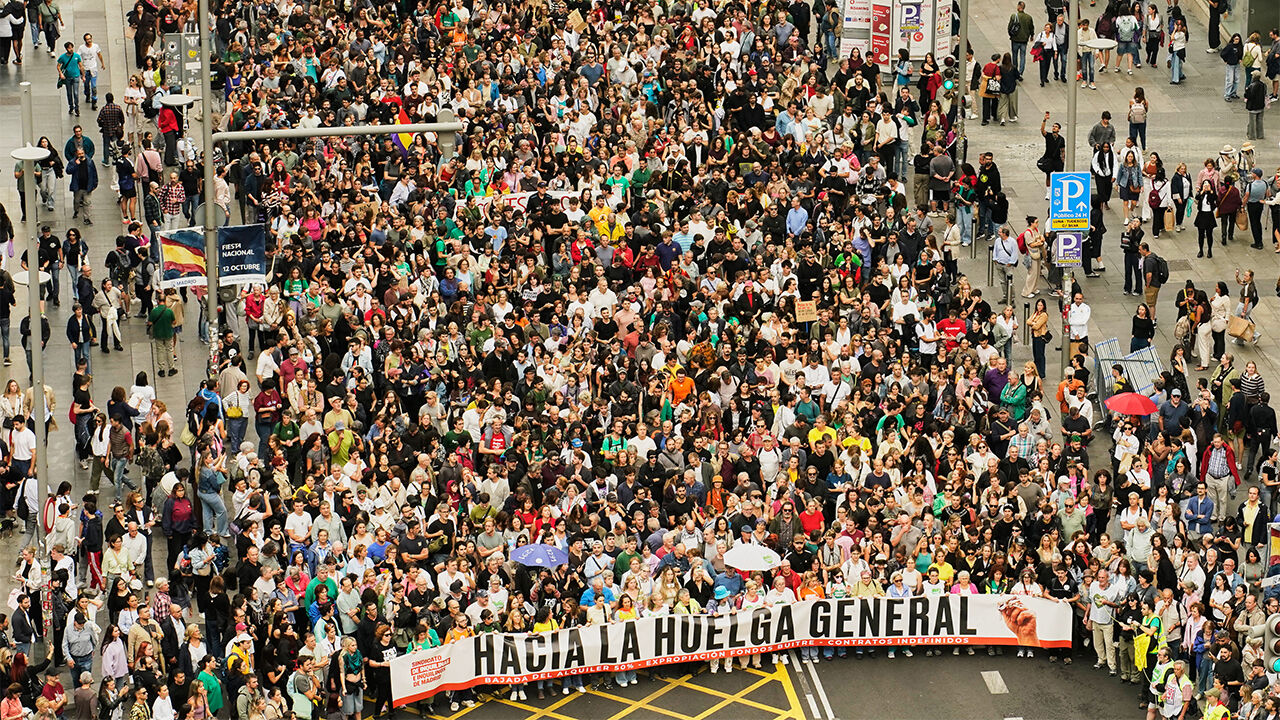
▲ Protests against the housing crisis in Spain
Rallies and protests demanding measures to address the housing crisis are spreading across Spain.
An estimated 70,000 people according to authorities, and 50,000 according to organizers, gathered in the capital city of Madrid alone.
On the 3rd local time, protests demanding housing crisis solutions were held in about 40 major cities, including Madrid and Valencia.
Rallies were postponed in some areas such as Barcelona, which suffered flood damage from torrential rain.
In Madrid, about 2,000 people have pitched tents in Puerta del Sol square for a sit-in protest that has entered its seventh day.
In Valencia, as the protests intensified, some police officers were seen taking cover, and police used tear gas and rubber bullets to forcefully disperse the demonstrators.
Participants marched holding placards calling for rent caps and a general strike.
Valeria Racu, a spokesperson for the Madrid Tenants Union, said they are discussing schedules for a general strike with other organizations.
"Power has returned to the streets," she said, adding that "we will continue protesting until everything changes."
The protests were triggered when 87-year-old Mari Carmen Abascal was forcibly evicted from the Madrid apartment where she had lived for over 70 years.
The scene of her being carried out on a stretcher and police violently cracking down on protesters trying to block the eviction was broadcast live on TV, causing massive controversy.
Tenant groups claimed that a real estate company that purchased the apartment in 2018 raised the monthly rent from 500 euros (approx. 760,000 KRW) to 2,650 euros (approx. 4.02 million KRW), and later adjusted it to 1,650 euros (approx. 2.5 million KRW).
According to local media reports, an average of three forced evictions are carried out every day in Madrid alone.
The Spanish government hastily introduced tenant protection legislation to automatically extend lease agreements until 2028, restrict the eviction of vulnerable tenants, and tighten regulations on short-term rentals, but it was voted down in parliament due to opposition from the opposition parties.
(Photo: AP, Yonhap News)
※ Please note: This article was translated by AI and may contain errors.


 Video News
 Video News
 Video News
 Video News
 Video News