
 KOR
KOR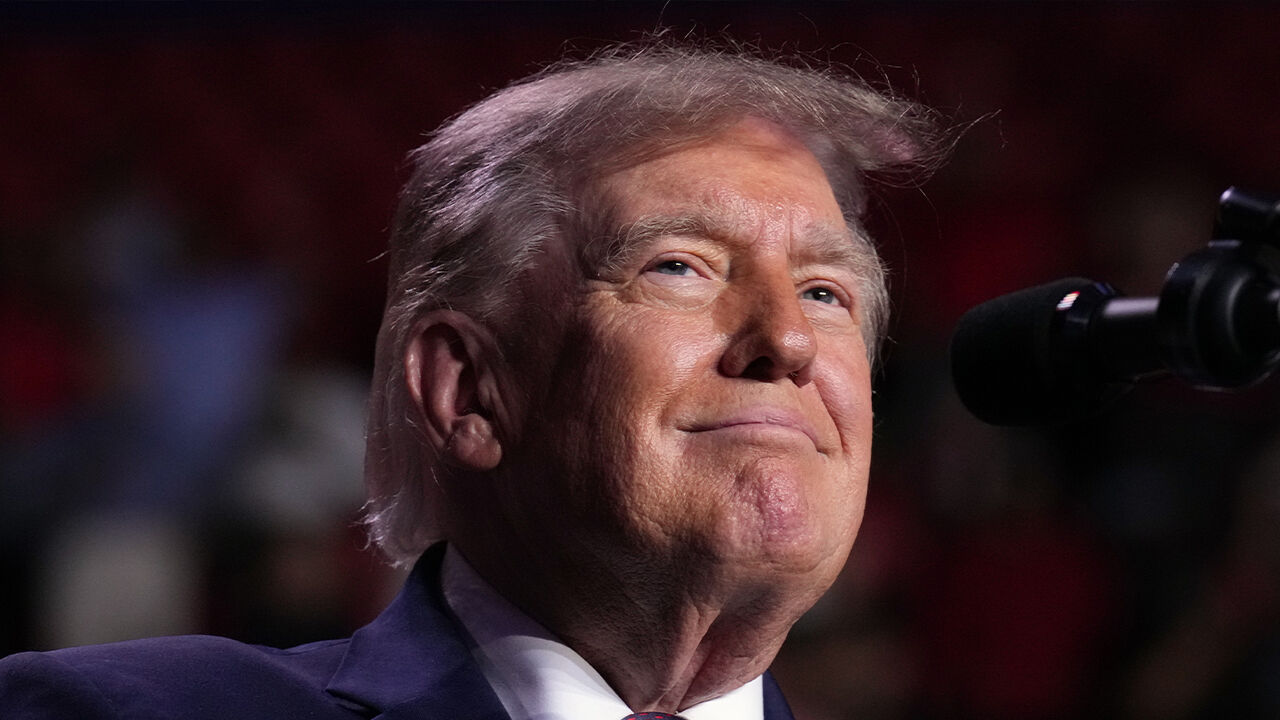
▲ US President Donald Trump
US President Donald Trump is overtly leveraging and pressuring allies in an effort to turn around the upcoming November midterm elections, where the Republican Party is facing a bleak outlook.
In particular, even on issues where no bilateral agreement has been reached, such as the Alaska liquefied natural gas (LNG) development project, he is aggressively pushing for an agreement by threatening to impose a twofold burden on South Korea.
Speaking to reporters at the White House on the 2nd (local time), President Trump was asked about his unilateral announcement on September 30 regarding South Korea's investment in the Alaska LNG development project.
South Korea's position is that the project is still under review and has merely been left as a matter for future consultation, without any confirmed participation. The core of the question was whether the announcement specifying a concrete investment amount of "more than 50 billion dollars (approx. 67.35 trillion won)" was too hasty.
In response, President Trump said, "I didn't announce it hastily," adding that if South Korea does not participate, "we can just charge them more."
He also added, "Did they say they didn't agree? Tell them that if they don't agree soon, I'll double it."
While President Trump did not specify what would be doubled, observations suggest he is likely to utilize tariffs, a card he frequently wields like a "secret weapon."
Last year, reciprocal tariffs imposed by President Trump on South Korea and other trading partners worldwide under the International Emergency Economic Powers Act (IEEPA) were invalidated by a ruling of the US Supreme Court. However, the authority to impose tariffs through Section 301 investigations of the Trade Act still remains.
Based on Section 301 of the Trade Act, the Office of the United States Trade Representative (USTR) initiated investigations in March into 16 economic blocs, including China, South Korea, the European Union, Japan, and India, regarding overproduction and forced labor.
This was a procedure to reorganize tariff policies following the ruling that invalidated reciprocal tariffs.
Subsequently, the USTR imposed tariffs related to forced labor in July, with a rate of 12.5% applied to South Korea.
However, the tariff imposition procedures based on the overproduction investigation results are still pending.
The South Korean government has stated that while consulting with the Trump administration on US-bound investments, it confirmed the US side's stance to keep the tariff rate from exceeding 15%. However, given President Trump's tendency to overturn even bilateral agreements on a whim, it remains uncertain whether this agreement will be upheld.
If President Trump doubles the tariffs on South Korea, the rate would become precisely 25%.
Although President Trump's remarks on this day were limited to the Alaska LNG development project, he made another unilateral claim in a Truth Social post on social media that morning, stating that South Korea had decided to invest 8.4 billion dollars in an Enhanced Oil Recovery (EOR) project.
As the South Korean government maintains that this EOR project has not been agreed upon with the US either, there is a possibility that President Trump may pressure for an agreement on this matter as well.
There are other tariff cards that President Trump can use retaliatorily against trading partners.
Amid a trade war with Canada on September 9, President Trump even issued an import ban on certain Canadian items based on Section 338 of the Tariff Act.
Section 338 of the US Tariff Act grants the president the authority to impose tariffs of up to 50% or completely ban imports from countries that discriminate against commercial transactions with the United States.
It is also noteworthy that President Trump has a precedent of pulling out the tariff card to pressure South Korea into US investments.
On January 26 of this year, criticizing the delay in the passage of the Special Act on US Investment in the South Korean National Assembly, he threatened to raise reciprocal tariffs on South Korea back from 15% to 25%.
President Trump's pressure on South Korea using the Alaska LNG development project contains political motives to win back voter sentiment in the midterm elections, where defeat already seems likely.
The intention is reportedly to highlight that the Trump administration contributed to realizing this long-cherished project for Alaska, at a time when incumbent Republican Senator Dan Sullivan is locked in a tight race against Democratic candidate and former Representative Mary Peltola in the Alaska US Senate election.
South Korea is not the only ally President Trump has utilized for midterm election purposes.
As diesel prices in the US nearly doubled compared to a year ago in the aftermath of the Iran and Ukraine wars, causing cracks in voter sentiment among his rural base, he pressured European allies on this day as well, ultimately extracting a decision from Europe to release its strategic diesel reserves.
The move aimed to lower domestic US diesel prices through the stabilization of global oil prices by releasing Europe's reserve diesel, for which President Trump had pressured Europe using the card of a "ban on US diesel exports."
(Photo: AP, Yonhap News)
※ Please note: This article was translated by AI and may contain errors.



 Video News
 Video News
 Video News