
 KOR
KORThat day, the reporting team conducted a survey among the parents to ask how much money they spend each month on their children's rehabilitation and therapy. Thankfully, many of them took the time to write detailed and thoughtful responses. While reviewing the completed questionnaires on the train back to Seoul, I discovered a lengthy note written by a mother in the blank space on the back of her survey sheet. Her note began with the words: "Before my child entered elementary school, I spent over 100 million won on therapy alone...(this is common among families around me)."
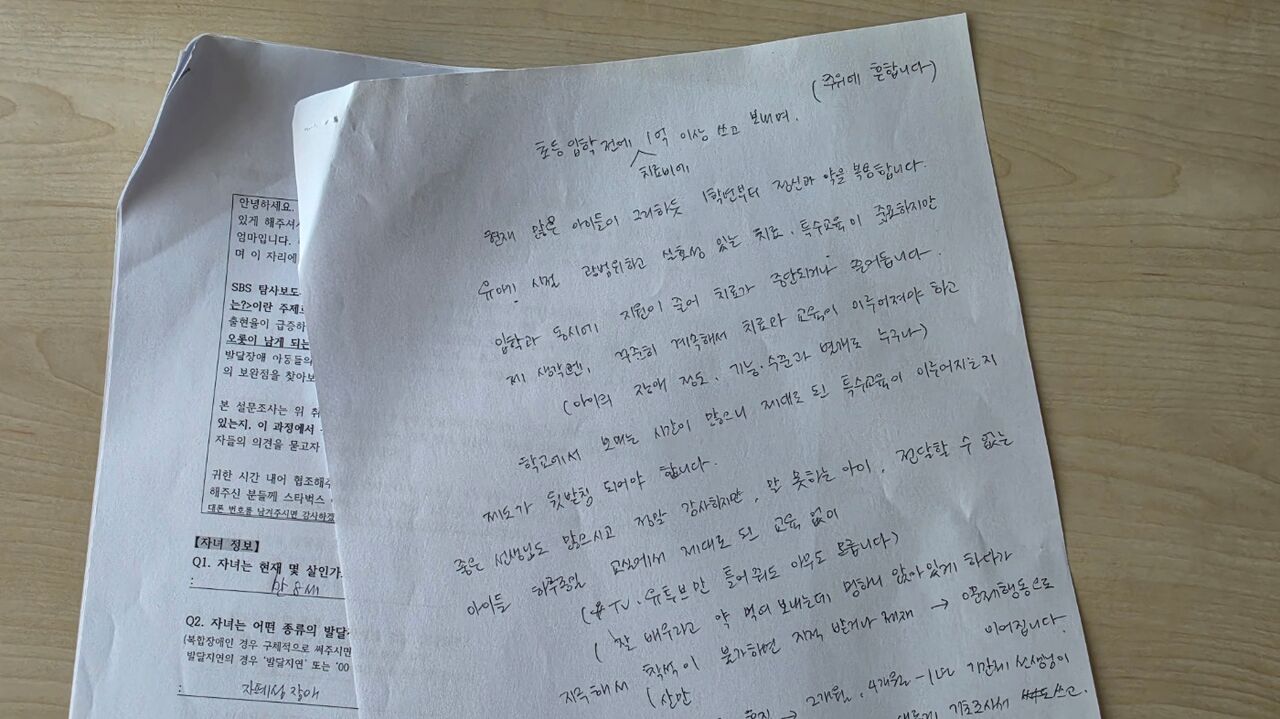
She was the mother of an 8-year-old child diagnosed with autism spectrum disorder. She went on to write that although she had spent more than 100 million won on therapy before elementary school, heartbreaking setbacks in her child's development began multiplying once school started, as public support dwindled and therapies were disrupted. Sharing that her child had even been prescribed psychiatric medications after entering school, she wrote, "Therapy and education must continue steadily and consistently for everyone, regardless of the severity, functioning, or level of a child's disability."
Because she did not leave her name or contact information, it was impossible to follow up and ask about her exact circumstances or the full meaning behind her words. However, I understood her message as a desperate appeal: that despite spending enormous sums of money from an early age to support an autistic child, families and parents are left to hold out entirely alone, which is unsustainable, and the current public education system and schools fail to fill the gap. Her long note, filling an entire sheet of A4 paper, concluded with the sentence: "I feel sad and hopeless."
While preparing this broadcast, I tried not to dwell excessively on the outward displays of suffering in families raising autistic children. Even without tears or dramatic outpourings of emotion, I believed the quiet, straightforward facts parents recounted already conveyed the full, crushing weight of their reality. Even so, throughout the reporting process, emotions welled up at times, and there were moments during interviews when tears made it hard to ask the next question. Reading that final sentence—"I feel sad and hopeless"—on the train was one of those moments.
Survey of 517 Parents of Children with Developmental Disabilities Highlights the Gap Between Reality and Policy
Respondents reported that their children were undergoing an average of 3.9 therapies at the time of the survey. Families spending between 100,000 and 500,000 won per month on therapy enrolled in an average of 2.29 programs, while those spending 3 million won or more were enrolled in 5.37 programs. In households with exceptionally high expenditures, Applied Behavior Analysis (ABA) was frequently included in the regimen. Starting from the spending bracket of 2 million won and above, the proportion of families utilizing ABA surged sharply to over 40%.
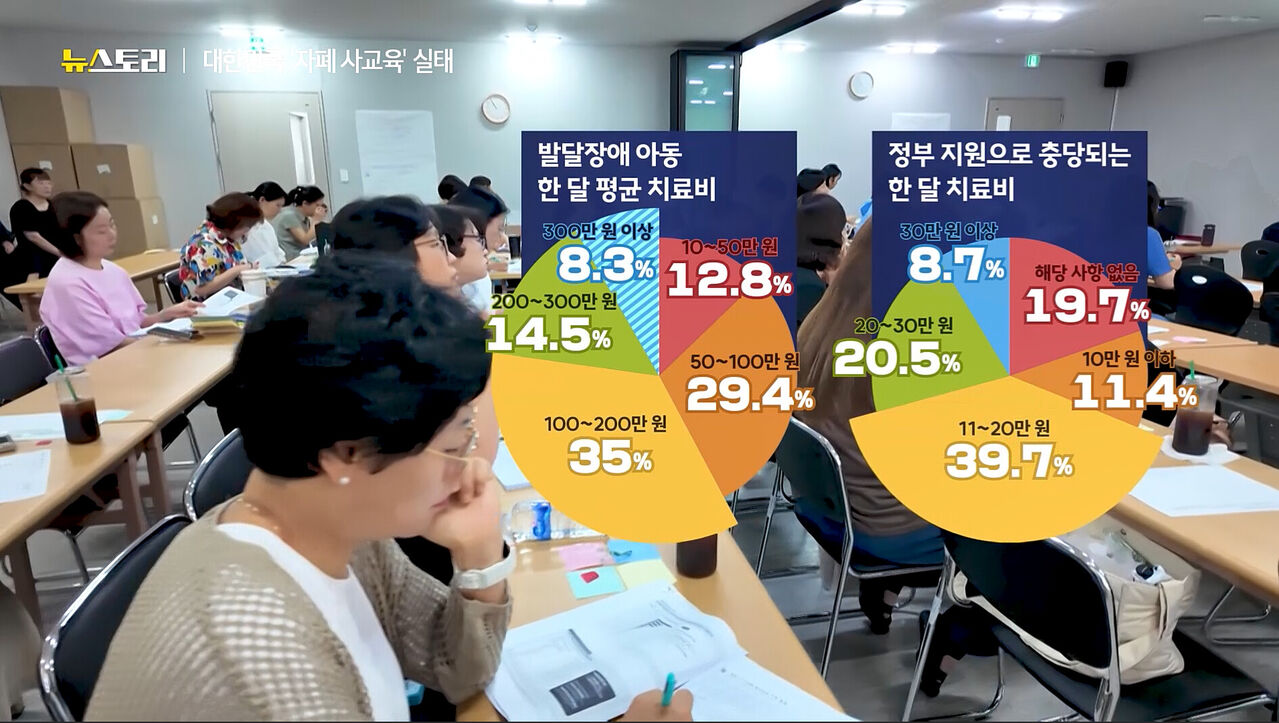
ABA is widely considered the top priority, evidence-based intervention for autism spectrum disorder, yet in South Korea, it remains one of the costliest non-reimbursable treatments. Because it often involves one-on-one sessions or multiple specialists assigned to a single child, fees are steep, and the proportion of ABA programs not covered by government developmental rehabilitation vouchers is higher than that of other therapies.
The developmental rehabilitation service voucher is a state subsidy program provided under the Act on Welfare Support for Children with Disabilities to ease financial burdens and foster cognitive, sensory, and behavioral development in children under 18. However, eligibility and benefit tiers are determined by household income rather than the severity of a child's disability. Only households earning 180% or less of the median standard income qualify, with monthly subsidies graded between 180,000 and 260,000 won; except for basic livelihood security recipients, all eligible tiers require out-of-pocket co-payments of 20,000 to 80,000 won per month. Because applicants are numerous and fiscal resources are limited, eligible families often face long waiting lists before receiving benefits, and the gap between actual market therapy rates and voucher amounts remains vast.

Why Families Cannot Let Go of Therapy Even as Finances Collapse
Cheon Keun-ah, a professor of child psychiatry at Severance Hospital, explained: "The concept of a 'golden window' doesn't mean dragging a child from one clinic to another all day long. It refers to direct intervention by the parents. Among my patients, there was a child who had attended therapy centers since 18 months of age, but by the time I met the child at age 5, they seemed utterly dazed." She emphasized: "Parents need to look closely at whether the therapist truly understands the child's specific developmental deficits and is tailoring the intervention to those precise targets, rather than just tallying up hours and frequencies like three speech sessions a week or 12 hours of behavioral therapy."
The household receiving "ten different therapies" was a single-income family spending an average of about 3 million won each month on their child's treatment. The parent noted that "our household finances have fallen into severe hardship." The child's schedule included speech, cognitive, occupational, sensory integration, play, art, music, adaptive physical education, ABA, and transcranial magnetic stimulation (TMS). Considering that therapy sessions typically require a minimum of two visits per week, both the child and parents likely spent their days shuttling between clinics on a punishing timetable without a moment of rest.
Why, then, do such families feel unable to stop therapies even when facing financial ruin? While I could not speak with that mother directly, answers emerged from responses provided by other parents in the survey.
"The more severe the condition, the greater the risk of regression, so we cannot afford to let go of therapy, but state assistance is ridiculously insufficient. In our home, two children are on the autism spectrum, and even after cutting therapies to the absolute bare minimum, our livelihood is under strain. Still, we cannot stop, because we know that if they regress, they won't be able to live in society. People say we should go out and earn more money, but caring for disabled children takes so much hands-on effort that double-income employment is almost impossible. Special schools are far too few, and their barriers to entry are high. My children are non-verbal and severely disabled, yet they attend a regular school, which means after-school care is an impossible dream. Private therapies are unthinkably expensive, and voucher amounts are set far too low. I truly believe this is a brutal country to raise a disabled child in." (A mother raising two children with severe autism)
Swayed by the Words: "Kids with Potential Improve Quickly. They're Diamonds in the Rough"
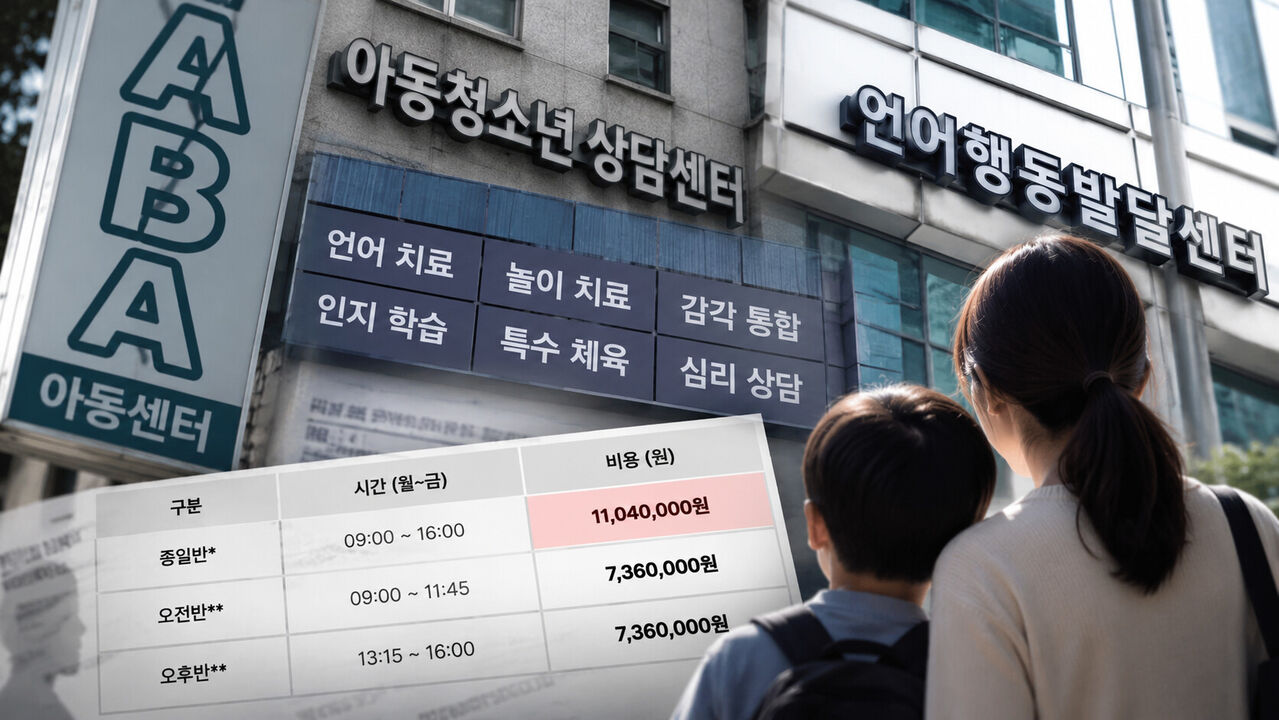
During the course of reporting, I visited a well-known behavioral therapy center in Gangnam for a consultation. As a parent raising a child on the autism spectrum myself, I had frequently heard of the center's reputation, and since it was a type of class my own child had never tried, I was curious about what they would say. While listening to my description of my child, the therapist conducting the consultation said: "Children who have potential improve very quickly. Those kids are diamonds in the rough."
Being told that your child has greater potential than others and can improve quickly—is there any parent who would not be swayed by such words? Even though I was visiting for journalistic purposes, I was honestly shaken. I even felt a fleeting sense of joy. The therapist continued: "In our early intervention program, we have two classes of four children each, and one child in one of the classes is leaving next month. That leaves an open spot, and the kids who recently joined that class are all great. Your child would be a wonderful fit there." Unlike standard sessions running 40 to 50 minutes at a time, these early intervention classes involve intensive sessions lasting three to four hours a day. At this center, attending such classes twice a week cost approximately 1.5 million won per month.
Of course, private clinics are not the only places providing such programs. Community welfare centers for the disabled established by local governments also run therapy sessions for children with developmental disabilities, and programs are available at public hospitals like Seoul Pediatric Hospital, as well as Behavioral Development Centers within designated regional hub hospitals. Therapy programs at welfare centers and public hospitals are significantly cheaper. However, vacancies are scarce and waiting lists are notoriously long. "If you just sit around waiting for a welfare center spot, the early intervention window and the golden time will both pass you by," remarked one parent with bitter resignation during our reporting. Furthermore, the shortage of welfare facilities and private clinics worsens outside the capital region, prompting some families to rent studio apartments in Seoul during vacations or school breaks for what is known as "therapy study abroad."
How Many Private Therapy Centers Exist, and What Are Average Costs?…Health Ministry: "No Such Statistics"
Our reporting team attempted to conduct our own sampling survey to obtain at least some baseline average data, but it proved difficult. One major reason is that private clinics cover diverse specialties and are most commonly registered under vague business classifications such as "Other Personal Services" or "Other Educational Support Services." Because they are not subject to specialized government licensing or permits, the pool of establishments is vast, making systematic data collection extremely challenging.
While the absence of official government data is understandable to a degree, public funds are being poured into support programs like the developmental rehabilitation voucher. To verify whether these policies are genuinely reaching and benefiting the families who need them most, a thorough government study into the scale and pricing structures of private therapy clinics seems essential.
※ You can watch the full News Story broadcast and read Part 1 of the Reporter's Notebook series via the links below:
▶ [News Story] The Reality of "Private Autism Tutoring" in South Korea: A Country Where Therapy Has Become Shadow Education
▶ [Reporter's Notebook] On the Question: "What's the Point of Treating Autistic Children?"
※ Please note: This article was translated by AI and may contain errors.




 Video News
 Video News
 Video News