
 KOR
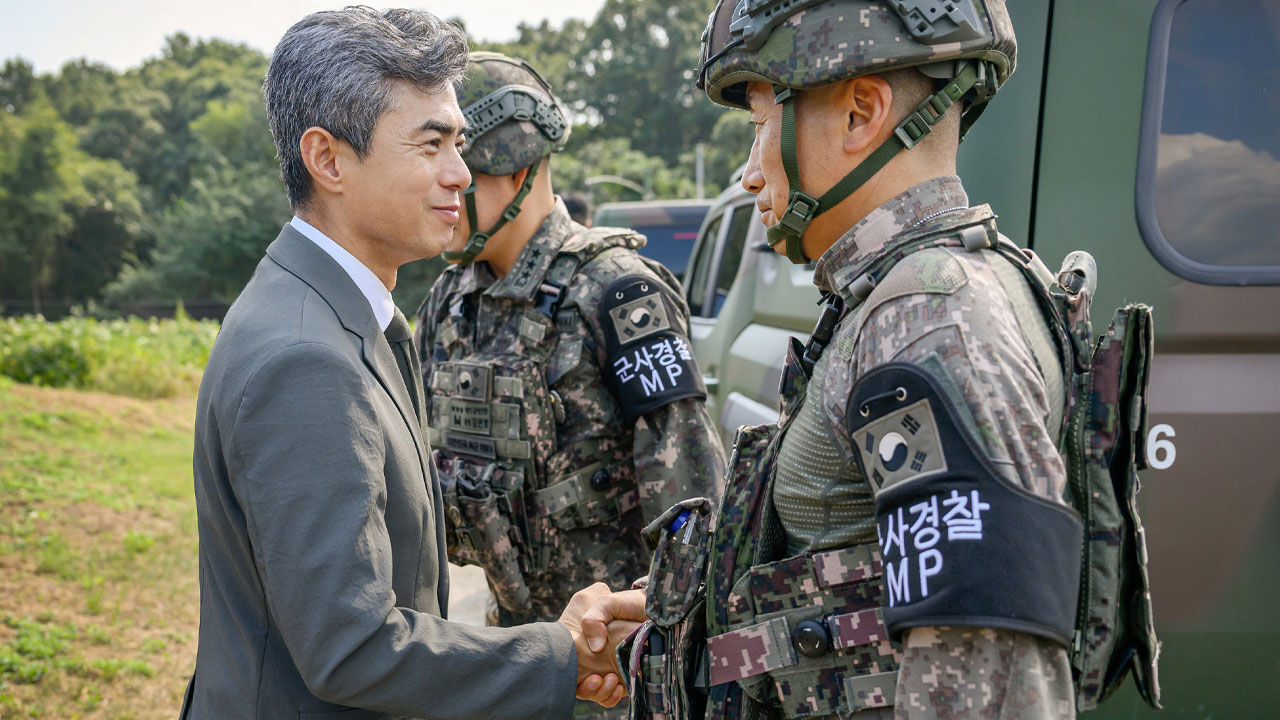
KORHowever, an unexpected controversy erupted following the on-site visit. Minister Kang's attire came under scrutiny. The question was whether it was appropriate for the head of the Ministry of National Defense to visit a frontline unit where soldiers had been injured wearing a gray business suit instead of a military uniform.
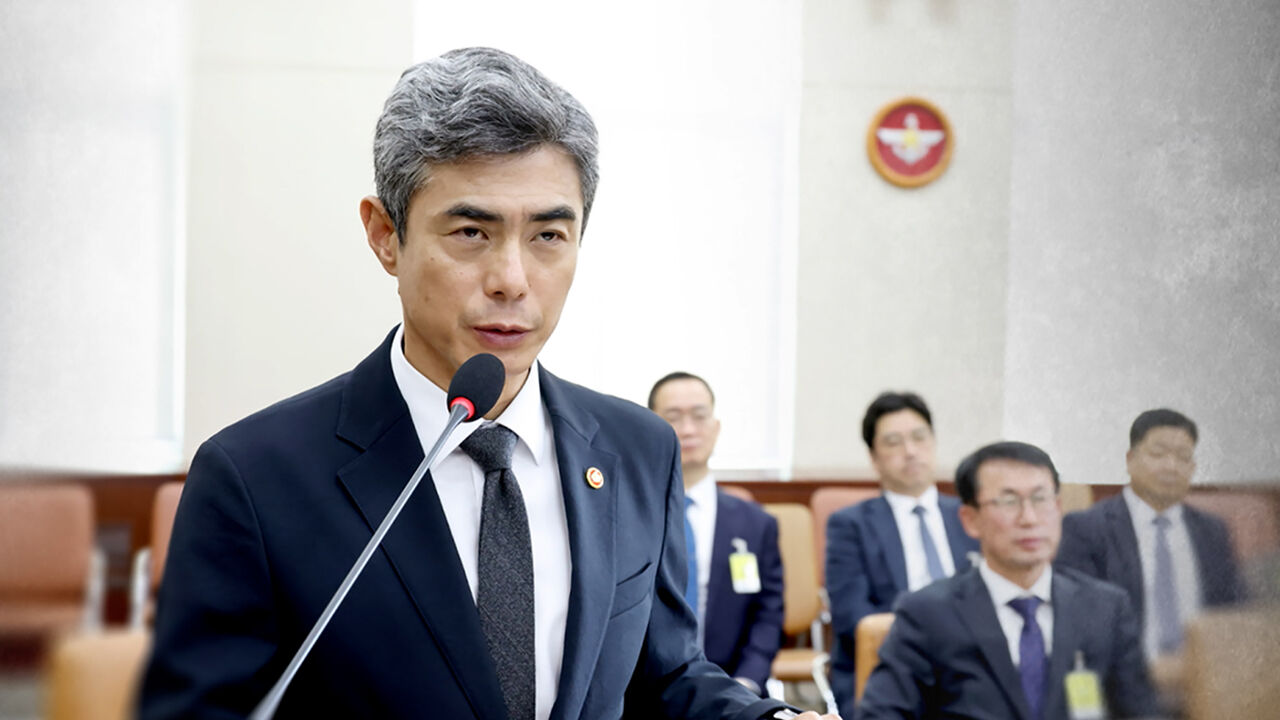
This issue was also brought up during a plenary session of the National Assembly's National Defense Committee on September 29.
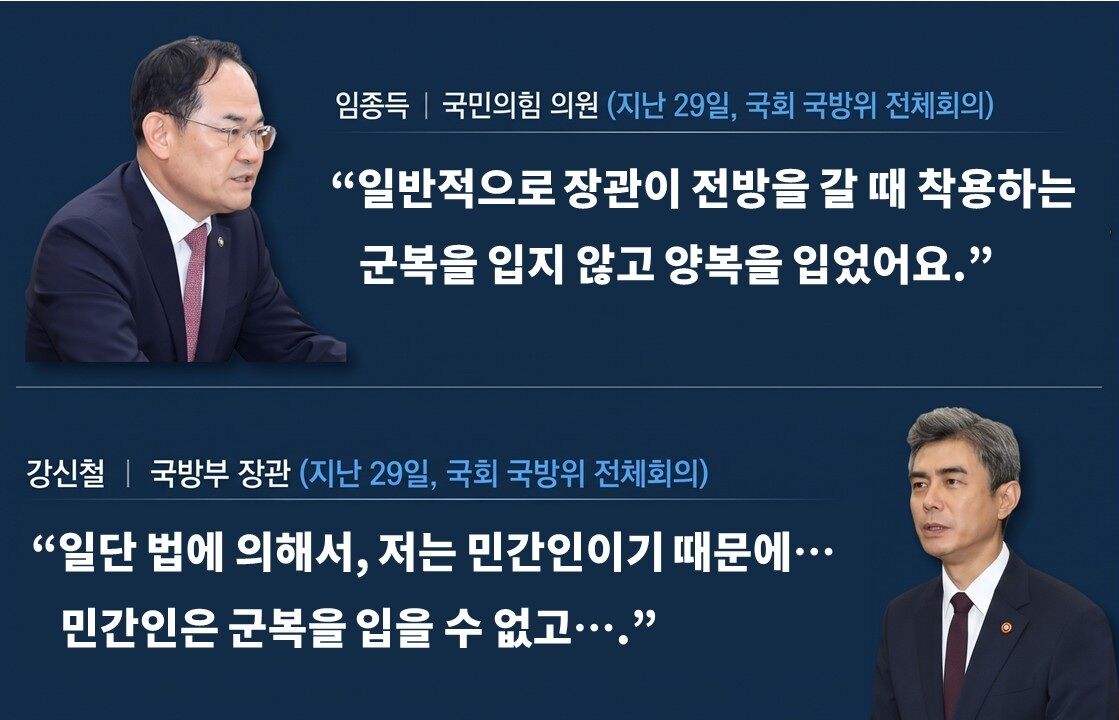
Defense Minister Kang Shin-chul explained based on "regulations." His point was that because the defense minister is a civilian rather than an active-duty soldier, he cannot wear a military uniform under existing regulations.
However, in this process, another controversy arose. Under that logic, it could be interpreted that all past defense ministers had broken the law. In response, Minister Kang answered that most of his predecessors had also visited in civilian clothes.
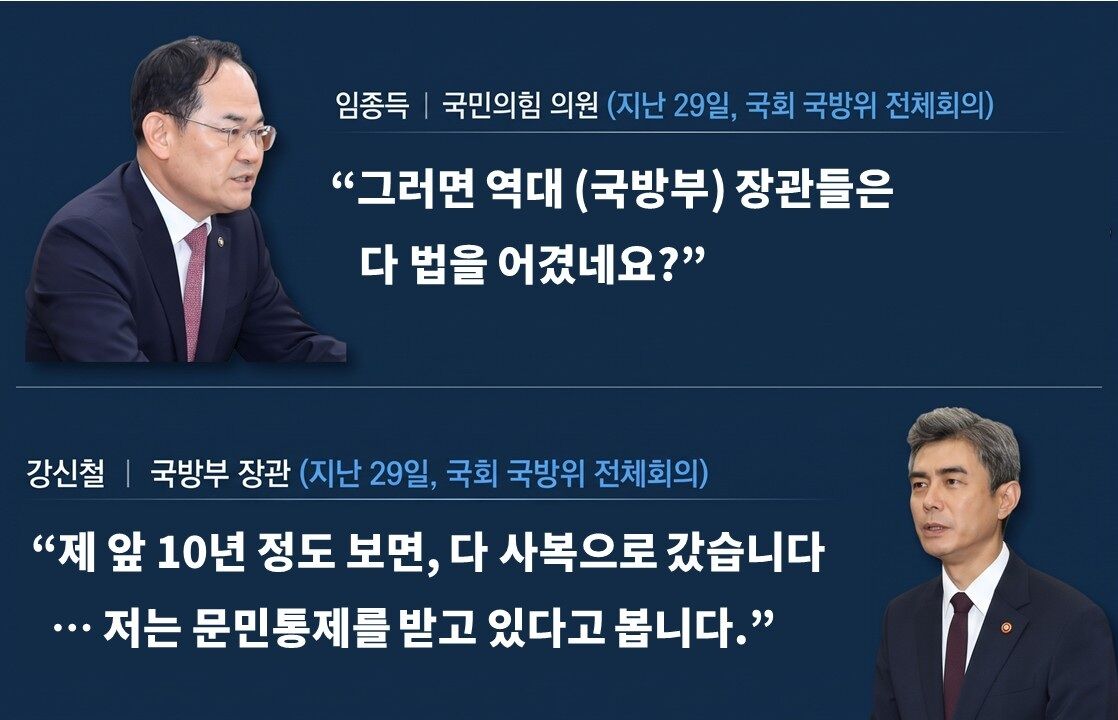
So what exactly do the legal provisions state? And what did previous ministers wear when visiting military units—more specifically, frontline units?
The SBS Fact Check "Fact Is" team closely examined everything from the exact regulations to past practices.

First, we checked the Constitution.
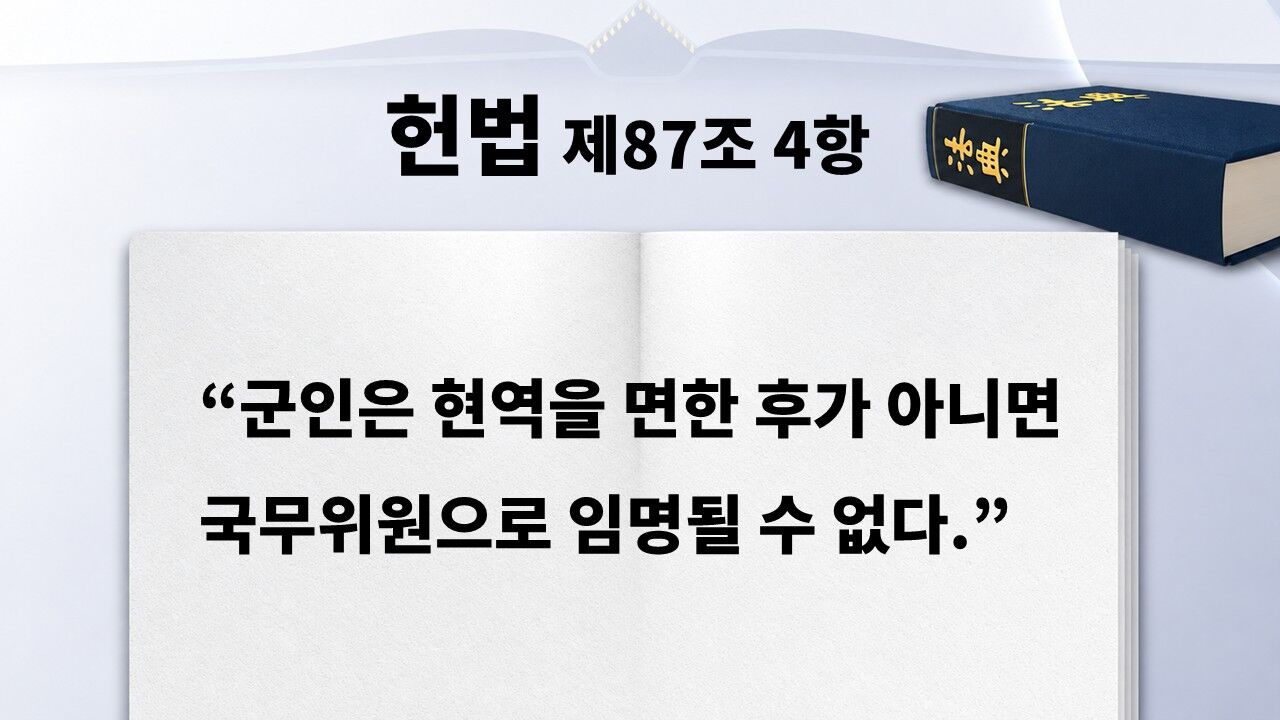
The Minister of National Defense is a member of the State Council. And the Constitution stipulates that active-duty military personnel cannot be appointed as members of the State Council.
Therefore, it is true that the defense minister holds civilian status.
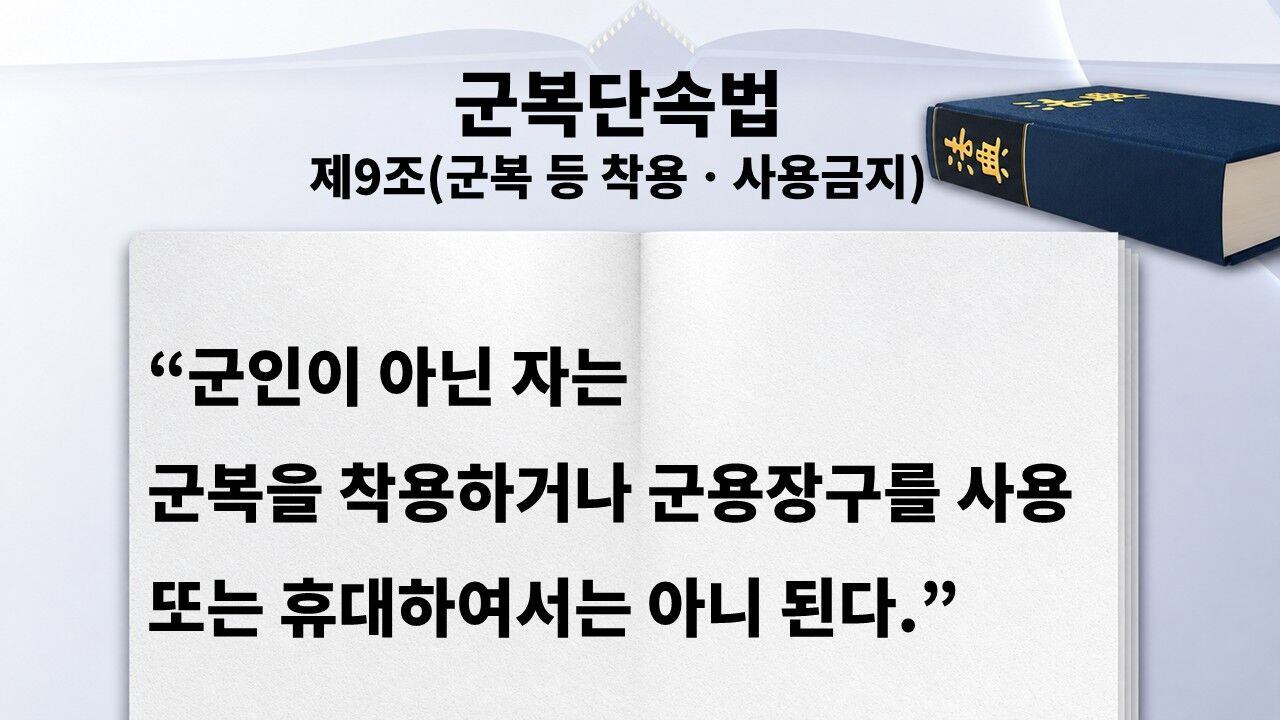
What about civilians wearing military uniforms, then? As the controversy grew, the Ministry of National Defense explained to the press: "As it is stipulated that non-military personnel must not wear military uniforms or use or carry military equipment, under the law it is correct that the defense minister does not wear a military uniform."
Upon checking, there is indeed a law regulating this. The Act on the Control of Military Uniforms and Military Equipment, known as the Military Uniform Control Act, in principle prohibits non-military personnel from wearing military uniforms.
Looking solely at the legal provisions, the answer is relatively clear. A defense minister, as a civilian, not wearing an official military uniform conforms to the principles of the law.
Does that mean, then, that past defense ministers who appeared to have visited military units in uniform all violated the law?
However, there is an important distinction here. It is whether what we have commonly referred to as the "defense minister's military uniform" legally qualifies as a "military uniform."
First, let us look at past defense ministers visiting military units.
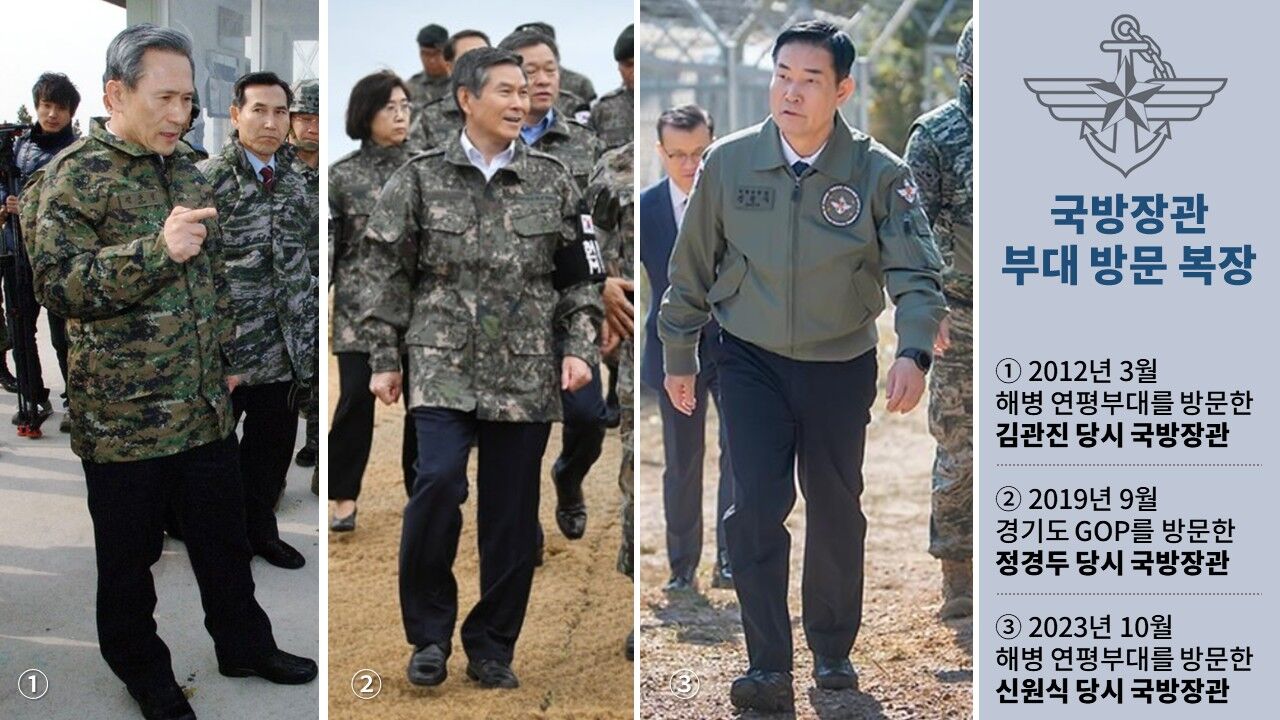
Looking at the photos, they are wearing a suit with an olive-drab jacket, commonly called a "field jacket," thrown over it. When the SBS Fact Is team examined photos of sitting defense ministers inspecting military units on the Ministry of National Defense blog, their attire was all similarly styled.
However, there is also an interpretation that the field jackets worn by past defense ministers can hardly be considered identical to the "military uniform" defined by law.
"The military uniform referred to in current law means an official uniform bearing rank insignia. Since the field jackets worn by past ministers lacked official rank insignia, it can be interpreted that they fall outside the definition of a military uniform under the law."
- Choi Byung-wook, professor of national security at Sangmyung University, in a phone interview with the SBS Fact Check "Fact Is" team on September 29
In fact, the concept of a military uniform under the Military Uniform Control Act includes "rank insignia." However, the field jackets worn by past defense ministers bore no rank insignia. Instead, only a title nameplate reading "Minister of National Defense" or a Ministry of National Defense emblem was attached. While the principle is that defense ministers do not wear official military uniforms due to their civilian status, slipping on an olive-drab field jacket instead of a military uniform during troop inspections or outdoor field visits was essentially "custom."
Therefore, in a strict sense, the statement that "past defense ministers visited units wearing military uniforms" may not be accurate.
Yet it is also difficult to view this garment merely as an ordinary jacket. This is because there were distinct reasons for defense ministers to wear field jackets.
Professor Choi explained, "Past defense ministers wore field jackets due to a combination of symbolism as the top defense official, a sense of unity and shared identity with frontline troops, practicality during on-site guidance, and furthermore, security purposes such as minimizing exposure to the enemy along barbed-wire fences." While not legally a military uniform, it effectively served a symbolic function similar to one in the field. This is why the media customarily reported that "the defense minister visited the unit in military uniform."
Of course, whether it was appropriate for Minister Kang to visit the site in a business suit without wearing a field jacket—the so-called "appropriateness of attire"—is a matter of subjective judgment and cannot be subject to a fact check. Nor does it appear to be an issue to be judged solely by legal provisions. Even as a civilian, the defense minister commands the military administration and operational authority under the orders of the president, and divergent political opinions argue that it was inappropriate not to wear attire showing solidarity with troops, particularly at a site where our soldiers suffered casualties. In other words, it is viewed not merely as a matter of principle, but as a matter of consideration.

Synthesizing the discussions above, the SBS "Fact Is" team rates the claim that "under regulations, it is correct that the defense minister does not wear a military uniform" as "Mostly True." This is because the underlying principle that a civilian defense minister cannot wear an official military uniform is accurate.
However, as mentioned earlier, this principle is not everything. When a defense minister visits the field, political and practical dimensions—such as fostering a sense of unity with soldiers or embodying the symbolic role as the nation's top defense authority—can also serve as important considerations.
In particular, this controversy was partly exacerbated by the Ministry of National Defense repeatedly issuing explanations without clearly defining the concept of a "military uniform," thereby fueling unnecessary debate. Initially, when asked by reporters why Minister Kang wore a suit, the ministry explained along the lines that "an on-site inspection was urgently needed immediately upon taking office," but later adopted a rather definitive stance, stating that "because the defense minister is a civilian, it is correct not to wear a military uniform." Naturally, counterarguments arose asking, "Does that mean all past defense ministers broke the law?" and Minister Kang himself added that "past defense ministers also all wore civilian clothes," leading to even more convoluted justifications.
Could this be a symbolic scene showing how a controversy that begins on the wrong foot complicates even subsequent explanations and ultimately leads to an exhausting debate?
<References>
· Original remarks by People Power Party lawmaker Lim Jong-deuk and Defense Minister Kang Shin-chul: National Assembly Video Record System, 439th National Assembly (Regular Session), 4th National Defense Committee Meeting https://w3.assembly.go.kr/main/player.do?ref=cal&rnum=64&mc=337&ct1=22&ct2=439&ct3=04&
· Constitution: Korea Law Information Center https://www.law.go.kr/lsInfoP.do?lsId=001444#0000
· Act on the Control of Military Uniforms and Military Equipment (Military Uniform Control Act): https://www.law.go.kr/법령/군복및군용장구의단속에관한법률
· Ministry of National Defense Blog: https://blog.naver.com/mnd9090
· Photo of former Defense Minister Kim Kwan-jin visiting Yeonpyeong Unit (Photo courtesy of the Ministry of National Defense): https://www.yna.co.kr/view/AKR20120307156900043
· Photo of former Defense Minister Jeong Kyeong-doo visiting western front GOP (Ministry of National Defense Blog): https://blog.naver.com/mnd9090/221646563018
· Photo of former Defense Minister Shin Won-sik visiting Marine Yeonpyeong Unit (Ministry of National Defense Blog): https://blog.naver.com/mnd9090/223244407806
· Choi Byung-wook, professor of national security at Sangmyung University, phone interview with SBS Fact Check "Fact Is" team, September 29
(Writer: Kim HYOJIN, Intern: Kim JUNGWON)
※ Please note: This article was translated by AI and may contain errors.


 Video News


 Video News
 Video News