
 KOR
KOR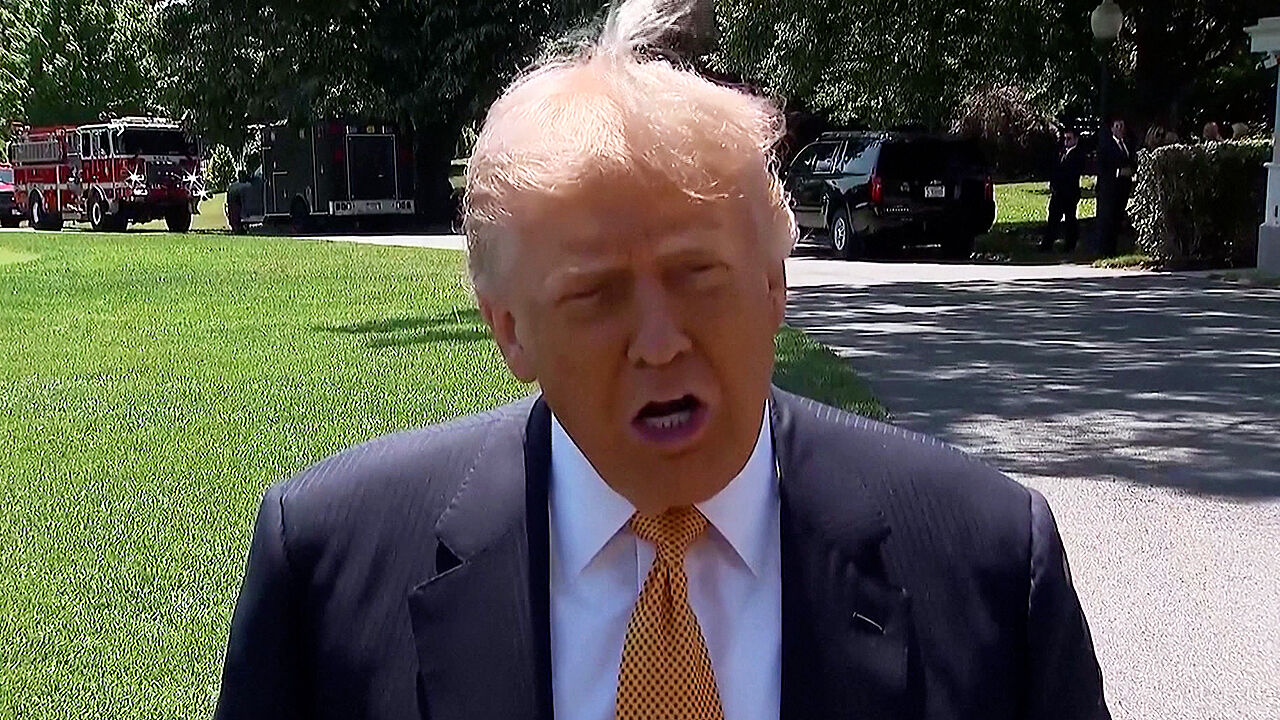
▲ U.S. President Donald Trump
While U.S. President Donald Trump has rejected a 7-day plan proposed by Iran, behind-the-scenes mediation efforts between New York and Washington, D.C. are moving swiftly to restore peace talks and reopen the Strait of Hormuz.
With mutual trust between the United States and Iran at rock bottom, a last-minute standoff is reportedly continuing over the specific implementation sequence of the agreement.
International attention is focused on whether these discussions, taking place several months after the scrapping of the preliminary peace memorandum of understanding (MOU), will serve as a turning point to break the deadlock.
On September 29, local time, the Financial Times (FT) reported that negotiators were set to deliver the latest revised draft of a tentative agreement to the Iranian side on this day, following shuttle mediation between the U.S. and Iranian sides the previous day.
The FT reported this citing two officials briefed on the negotiations.
Reuters reported on September 29 that it remains uncertain whether indirect talks actually took place between the two sides.
The draft tentative agreement under discussion reportedly includes provisions for Iran to allow free navigation in the Strait of Hormuz, in exchange for the U.S. lifting its maritime blockade against Iran.
One official briefed on the talks between the two sides told the FT that while there has been progress in the negotiations, a standoff persists between the U.S. and Iran over the sequence of implementing the agreement.
The official mentioned that the contentious issues concerning the implementation sequence include the restoration of exemptions on Iranian oil sanctions, the unfreezing of some of Iran's overseas assets, and matters related to Iran's nuclear program, including the return of International Atomic Energy Agency (IAEA) inspectors.
However, considerable uncertainty remains over reaching a final agreement, as U.S. President Donald Trump has previously dismissed as fake news media reports suggesting he would be willing to ease sanctions or unfreeze funds if Iran takes concrete steps regarding its nuclear program.
When President Trump signed a peace MOU with Iran last June, he agreed to ease sanctions and unfreeze funds, but faced severe domestic backlash criticizing it as tantamount to surrender.
Consequently, experts predict that President Trump, facing the upcoming midterm elections in November, will seek to secure at least an outward appearance of victory.
Previously, Iran proposed a set of demands to the U.S. last week, which included lifting the maritime blockade against Iran, unfreezing frozen funds, exempting oil sanctions, and halting hostilities on all fronts, including Lebanon.
Iran's stance is that if the United States fulfills these demands, it could reopen the Strait of Hormuz within seven days.

▲ Iranian Foreign Minister Abbas Araghchi
Visiting New York for the UN General Assembly, Iranian Foreign Minister Abbas Araghchi had indirect contact on September 22 in New York with Steve Witkoff, President Trump's special envoy, and Jared Kushner, his son-in-law, through a mediator.
However, President Trump rejected Iran's 7-day plan.
In an interview with U.S. media outlet Axios, President Trump stated, That is not the deal I want, and criticized Iran for making an overreach.
Nevertheless, President Trump left the door open for negotiations by stating that he expects further meetings with Iran this week.
President Trump has indicated that he will not revive the peace MOU signed in June, but will pursue a broader agreement that includes Iranian commitments regarding the nuclear issue.
The current negotiations, sparked by Iran's proposal of the 7-day plan, come amid a situation where military tensions between the two countries are hovering near a critical threshold and domestic political pressure is mounting.
In his keynote address at the UN General Assembly on September 22, President Trump stepped up strong pressure on Iran, stating that it must choose between a deal and annihilation.
High oil prices resulting from a prolonged war with Iran are a factor burdening President Trump and the ruling Republican Party, with the midterm elections just a month away.
Iran is also desperately seeking a breakthrough to provide relief to its economy as public discontent mounts due to deepening economic hardship.
Meanwhile, mediators led by Qatar have shown strong commitment to breaking the deadlock and restoring peace talks.
Majed Al Ansari, spokesperson for the Qatari Ministry of Foreign Affairs, said, We are exchanging messages between the parties and working to establish common ground, adding, Through this, we aim to reach an agreement that saves us all from the fallout of the conflict.
(Photo: AP, Yonhap News)
※ Please note: This article was translated by AI and may contain errors.


 Video News
 Video News
 Video News

 Video News