
 KOR
KOR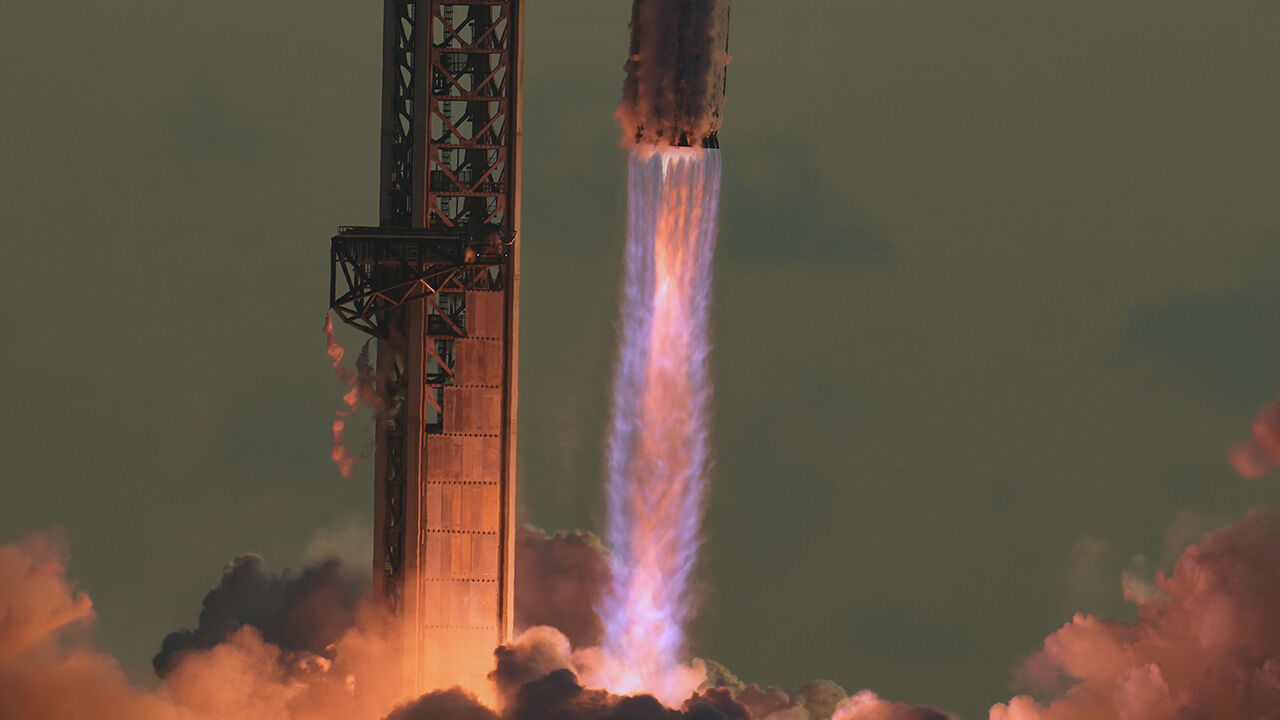
▲ SpaceX's mega-rocket Starship launches for a test flight from Starbase in Texas on September 28, 2026.
US aerospace company SpaceX, led by Elon Musk, successfully placed its massive spacecraft Starship into Earth orbit for the first time on the 28th (local time), overcoming a mid-flight engine malfunction crisis.
According to foreign media outlets including AP, Reuters, and Bloomberg, Starship lifted off for a test flight at 7:49 a.m. central time that day from the Starbase launch site in Texas.
During the launch sequence, one of Starship's six Raptor engines shut down earlier than scheduled, initially appearing to dash hopes of reaching orbit during the live broadcast.
However, SpaceX engineers urgently reviewed flight data and determined that restarting the core engine for orbital insertion was feasible, allowing the mission to proceed.
In this flight, SpaceX successfully deployed 26 next-generation Starlink V3 satellites into orbit.
SpaceX subsequently stated, "All of the satellites we deployed are in good health" and "operating very smoothly."
Initially, Starship was scheduled to circle Earth six times over 10 hours before returning, but due to the engine anomaly and safety considerations, the plan was changed to shorten the flight to two orbits over three hours.
Starship made a vertical splashdown in the Pacific Ocean north of Hawaii, but burst into flames immediately upon hitting the water.
SpaceX explained that there were no plans to recover and reuse the spacecraft for this mission.
The first-stage Super Heavy booster also performed a controlled descent and splashdown in the Gulf of Mexico, though some engines shut down during its descent.
Reaching orbit is considered a critical milestone for rockets.
Following the first test flight in 2023, the previous 13 flight tests were all conducted as suborbital flights for safety reasons.
This flight has drawn particular attention as it went beyond technological verification, aiming directly at expanding actual satellite networks and generating revenue.
The V3 satellites boast more than 10 times the communication capacity of the existing V2 satellites, leading SpaceX to expect a significant increase in telecommunications revenue.
NASA Administrator Jared Isaacman offered congratulations, saying, "It was a truly wonderful launch," and highly praised the company for "getting Starship into orbit and managing the entire process safely, responsibly, and in a particularly inspiring way."
This flight marked SpaceX's first revenue-generating mission since going public, while also serving to verify technology for NASA's Artemis crewed lunar exploration program.
SpaceX plans to use Starship to launch Starlink satellites more efficiently while continuing crewed exploration missions to the Moon and Mars in the future.
(Photo: AP, Yonhap News)
※ Please note: This article was translated by AI and may contain errors.


 Video News
 Video News

 Video News
 Video News