
 KOR
KOR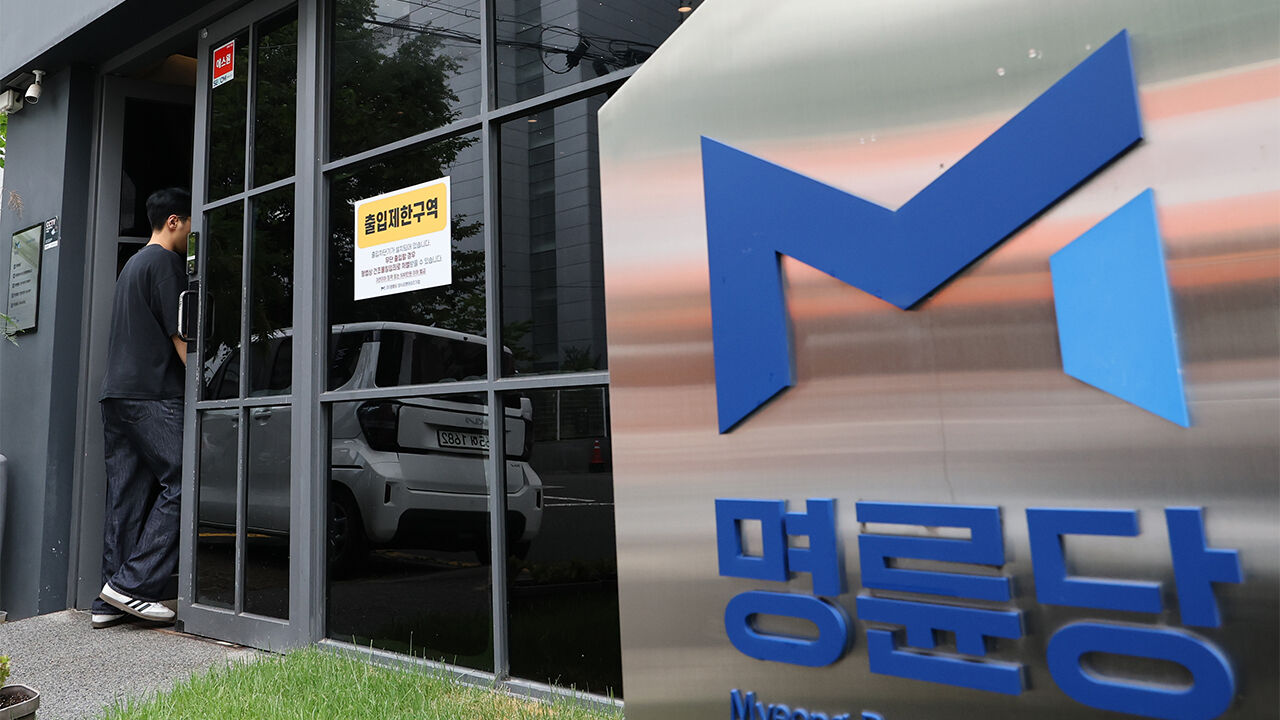
▲ The headquarters of Myeongryundang in Songpa-gu, Seoul, pictured on July 6
Myeongryundang, the operator of the franchise brand "Myeongryun Jinsa Galbi," has been referred for criminal prosecution and slapped with hefty fines for unfairly supporting 14 private loan companies owned by its chairman's family by lending them nearly 300 billion won at low interest rates under the pretext of supporting franchise startup funds.
Authorities also uncovered circumstances indicating that Myeongryundang obtained low-interest policy funds and used them to run a profitable lending business targeting its franchisees.
The Fair Trade Commission (FTC) announced today (September 28) that it has decided to issue corrective orders, impose a tentative fine of 10.472 billion won, and refer Myeongryundang and Chairman Lee Jong-geun to prosecutors for violations of the Fair Trade Act regarding unfair support practices.
In addition, the FTC issued corrective orders and levied a tentative fine of 4.4 billion won for providing false information to prospective franchisees regarding credit provision and brokerage details, as well as concealing its special relationship with the lending companies.
Starting in late 2021, Myeongryundang decided to provide funds to franchise owners with interest, subsequently establishing 14 private loan companies sequentially over a period of about three years.
Rather than directly funding the franchisees, Myeongryundang incorporated the private loan companies controlled by Chairman Lee Jong-geun's family into the funding structure.
Over a period of 4 years and 3 months from December 2021 to April of this year, Myeongryundang lent a cumulative total of 298.3 billion won to the 14 private loan companies at preferential low interest rates of 2.3% or 4.6% per annum, which were significantly lower than normal market financing rates.
The FTC found that the funds lent to these loan companies included 79.4 billion won in policy funds that Myeongryundang had borrowed from the Korea Development Bank at low interest rates of 3% to 4%.
Lee Soon-mi, a standing commissioner at the FTC, explained, "At the time of the loans to the private lenders, Myeongryundang's cash and cash equivalents stood at around 4 billion to 12 billion won, yet the amounts lent to the loan companies far exceeded that. Given this scale, it appears feasible that they secured low-interest policy funds and utilized them for the private lending business."
The loans were executed through a credit-line facility method, allowing the lenders to freely withdraw and repay funds within an agreed limit of 10 billion to 15 billion won per entity.
As a result, the economic benefits gained by the private loan companies through reduced funding costs reached approximately 21.7 billion won.
While the interest the loan companies should have paid under normal market rates totaled about 31.6 billion won, their actual payments amounted to only about 9.9 billion won, according to the FTC.
All 14 private loan companies were established under the direction of Chairman Lee Jong-geun.
It was revealed that Chairman Lee not only directly decided major matters in the process of Myeongryundang lending funds to these companies, but also deeply intervened in their overall operations.
Myeongryundang also stipulated that if franchise owners failed to repay their loans to the loan companies, Myeongryundang would cover the repayments instead, drastically lowering the default risks that the lenders would otherwise have had to shoulder.
Most of the private loan companies did not employ any resident staff.
Their chief executive officers were listed as current or former employees of Myeongryundang or its affiliate "Penple."
To meet the minimum registration requirements under the Moneylending Act, they rented and operated shared offices measuring just around one pyeong near Myeongryundang's headquarters.
The FTC concluded that through these unfair support practices, the 14 private loan companies—which would have otherwise struggled to secure independent financing and enter the market—secured significantly more favorable competitive conditions than rival businesses.
In fact, the combined loan receivables of the 14 private lenders as of 2025 grew to a scale that ranked them 27th out of a total of 8,203 private loan companies nationwide.
Franchise owners utilized loans from these companies at an interest rate of 12% for store renovations and 15% for new business startups.
Following the end of 2024, these interest rates surged to 18%.
It was found that Myeongryundang lowered the interest rate for franchise owners to 4.6% starting late last year after the issue became controversial.
Commissioner Lee stated, "If Myeongryundang's genuine intent was to purely support franchise owners, it should have provided the startup funds interest-free or at least applied the 4.6% rate from the beginning to stay true to that purpose."
Furthermore, although Myeongryundang was arranging loans from these related private lenders, it falsely marked the credit-provision details required in franchise disclosure documents as "not applicable."
The company also concealed crucial facts that heavily influence a prospective franchisee's decision to open a store, including its relationship with the private lenders, specific loan conditions, the linkage between the franchise agreement and loan contracts, and loan repayment methods.
Consequently, prospective franchisees signed contracts without knowing the full truth, likely hindering their ability to properly evaluate whether to open a store and whether the funding acquisition methods were appropriate.
(Photo: Yonhap News)
※ Please note: This article was translated by AI and may contain errors.


 Video News

 Video News
 Video News
 Video News