KOR
KOR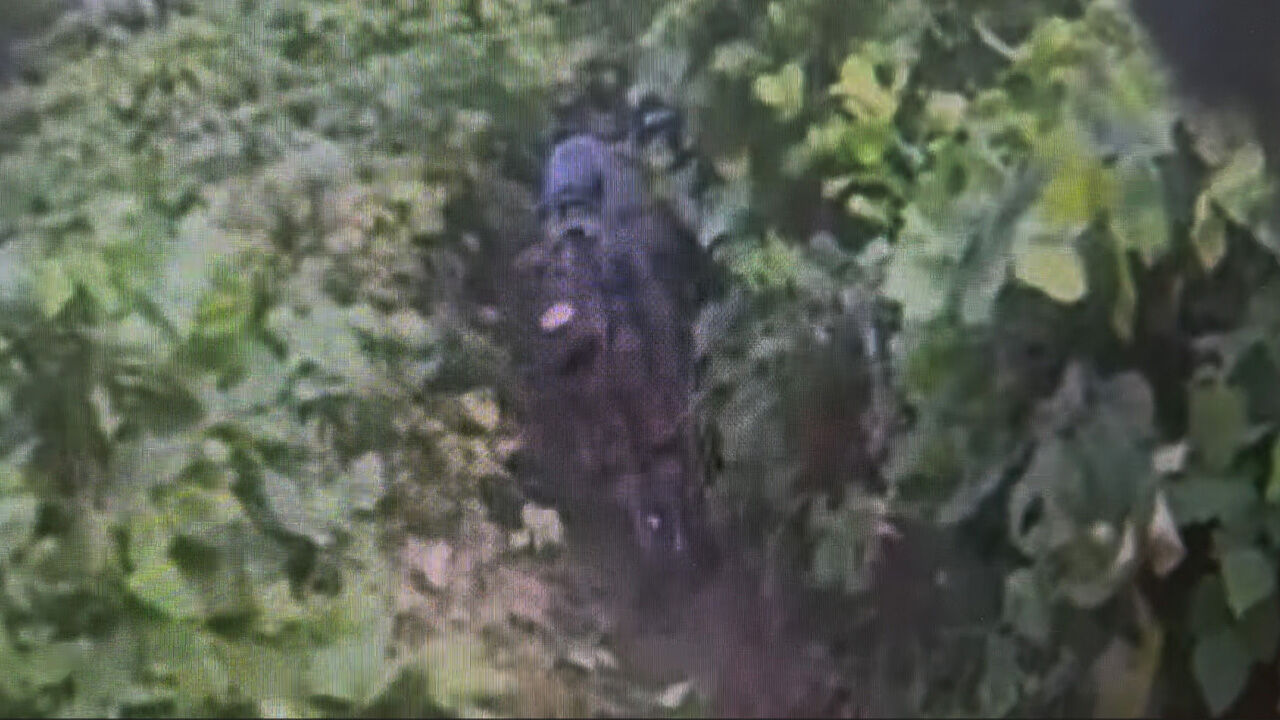
▲ South Korean military personnel and the United Nations Command conduct operations to secure access routes and survey the operational environment in the Demilitarized Zone (DMZ) on September 26 for an on-site investigation into a suspected landmine explosion on the western front.
Troops present at the scene during a suspected landmine explosion in the Demilitarized Zone (DMZ) along the western front on September 21 reportedly testified that they spotted an additional unexploded landmine.
It has been reported that during the military authorities' investigation, statements were made indicating that, in addition to the mines believed to have detonated twice during the incident, one unexploded landmine was present at the scene.
However, with varying testimonies, it remains difficult to determine its specific type, including whether the sighted mine was a wooden-box landmine used by North Korea.
Whether this landmine can be recovered during the on-site investigation is expected to be a crucial factor in securing decisive clues.
When asked about the matter on his way to work, Defense Minister Kang Shin-chul said, "There are several testimonies that make it difficult to specify a particular type of mine," adding, "We will explain to the public after verifying that thoroughly through an on-site investigation."
The South Korean military and the United Nations Command launched an on-site investigation yesterday (September 27), six days after the incident, but only managed to approach the vicinity of the suspected blast point as securing a cleared route took time.
They were unable to reach the actual site where the explosion occurred.
The military concluded operations yesterday at sunset and decided to resume them later, with further on-site investigations expected to follow.
Once they reach the suspected explosion site, the military is also expected to attempt to collect debris from the detonated mines.
The military has also requested the National Forensic Service to conduct a compositional analysis of gear worn by the wounded at the time of the incident, gauze used to collect gunpowder residue, and shrapnel fragments removed during surgery.
The initial appraisal results are expected to be released in the coming days.
In and around the military, a view is also gaining traction that, considering various circumstances, the explosive device responsible is more likely to be a North Korean landmine rather than a South Korean one.
Combining the fact that the accident area is not a zone where South Korean M14 and M16 antipersonnel mines were planted, along with the severity of the casualties' injuries and the explosive power of South Korean versus North Korean mines, the likelihood of it being a North Korean mine is viewed as relatively high.
If it is a North Korean mine, key issues that must be clarified include whether it was washed away along nearby streams or intentionally planted by North Korean troops crossing the Military Demarcation Line (MDL).
The latter case would constitute a clear violation of the Armistice Agreement.
However, observers in and outside the military believe physical evidence must be secured—such as an unexploded mine that may remain at the scene or the analysis of shrapnel removed from the wounded—to definitively determine whether it was a South Korean or North Korean landmine.
Minister Kang also emphasized to reporters after his inauguration ceremony on September 22, "We are not ruling out any possibilities," stressing, "We must secure solid evidence and speak with certainty."
(Photo courtesy of the Joint Chiefs of Staff, Yonhap News)
※ Please note: This article was translated by AI and may contain errors.



 Video News
 Video News
 Video News