
 KOR
KOR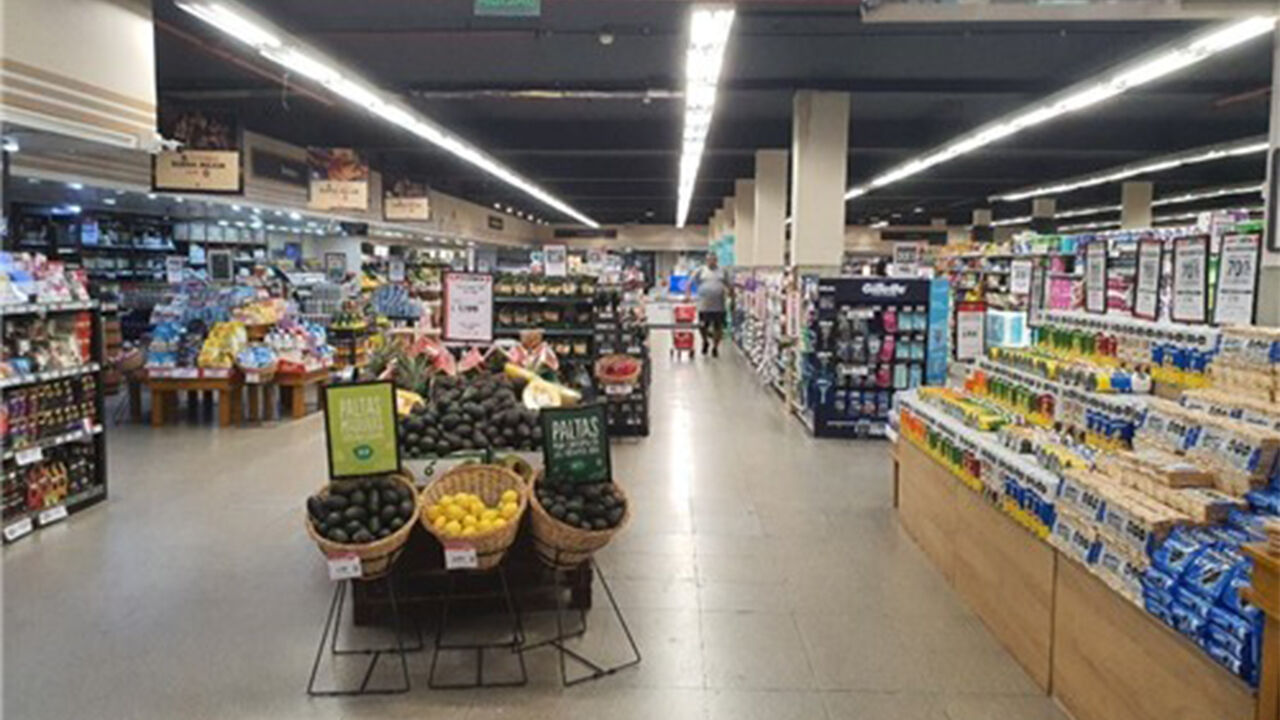
▲ A large supermarket in Buenos Aires, Argentina, appears quiet. (Photo: Yonhap News)
Local daily newspapers such as Clarin and Ambito reported on September 27 (local time) that Argentina's economic activity in July plunged 2.9% from the previous month, heightening concerns over a technical recession.
Argentina's National Institute of Statistics and Census (INDEC) recently announced that the Monthly Estimator of Economic Activity (EMAE) for July decreased by 2.9% from the previous month and 1.4% from the same month last year.
The downturn in manufacturing and construction was prominent, with manufacturing dropping 5.0% and construction falling 4.6% compared to the previous month.
Previously, Argentina's gross domestic product (GDP) for the second quarter also contracted by 0.6% from the previous quarter.
If the decline in economic activity continues into the third quarter, the country will enter a technical recession defined by two consecutive quarters of negative growth.
Projections that the possibility of a recession could become a reality are emerging one after another in the market.
The leading economic indicator from Torcuato Di Tella University (UTDT) estimated an 82% probability of entering a recession within the coming months as of August.
Consumption and investment are also showing sluggish trends.
Consumption fell by 2.4% from the previous quarter in the second quarter, while investment has declined for five consecutive quarters since the second quarter of 2025.
Analysts noted that sluggish real wages and employment are constraining consumption, while corporate investment remains contracted.
The economic slowdown is also affecting tax revenue.
National public sector revenue in August decreased by 1.0% in real terms compared to the same month last year, and expenditures fell by 0.4%.
However, the Argentine government maintained a cumulative primary fiscal surplus of 1.1% of gross domestic product (GDP) and a total fiscal surplus of 0.2% for the year.
The government now faces the challenge of preventing an economic slowdown while maintaining fiscal surplus.
Discussions regarding the need for economic stimulus measures are also arising in the market.
Critics point out that while net exports are improving due to increased exports and decreased imports, the recovery is concentrated in certain industries such as energy and agriculture, failing to sufficiently spread to domestic demand sectors like manufacturing and construction.
Anxiety is also growing in the financial market.
The overseas yields on Argentine government bonds recently climbed to 11%, and the country risk index surged from the 400-point range to over 570 points in about two and a half months.
Consequently, outlooks suggest that pressure on the government's fundraising plans for next year could increase.
In particular, if issuing about 5 billion dollars (approx. 6.8 trillion KRW) in U.S. dollar-denominated government bonds next year proves difficult, there is a possibility that alternative financing methods, such as issuing local bonds, will need to be sought.
The market believes that as fundraising conditions in international financial markets worsen, the burden on the central bank's foreign exchange reserves will also grow.
Since taking office, the government of Javier Milei has pursued fiscal surplus and price stability as its core economic policies.
However, with recent economic activity, consumption, and investment shrinking consecutively, analysts note that the administration is placed in a situation where it must simultaneously manage the economic slowdown and fiscal soundness.
(Photo: Yonhap News)
※ Please note: This article was translated by AI and may contain errors.


 Video News
 Video News
 Video News

 Video News