
 KOR
KOR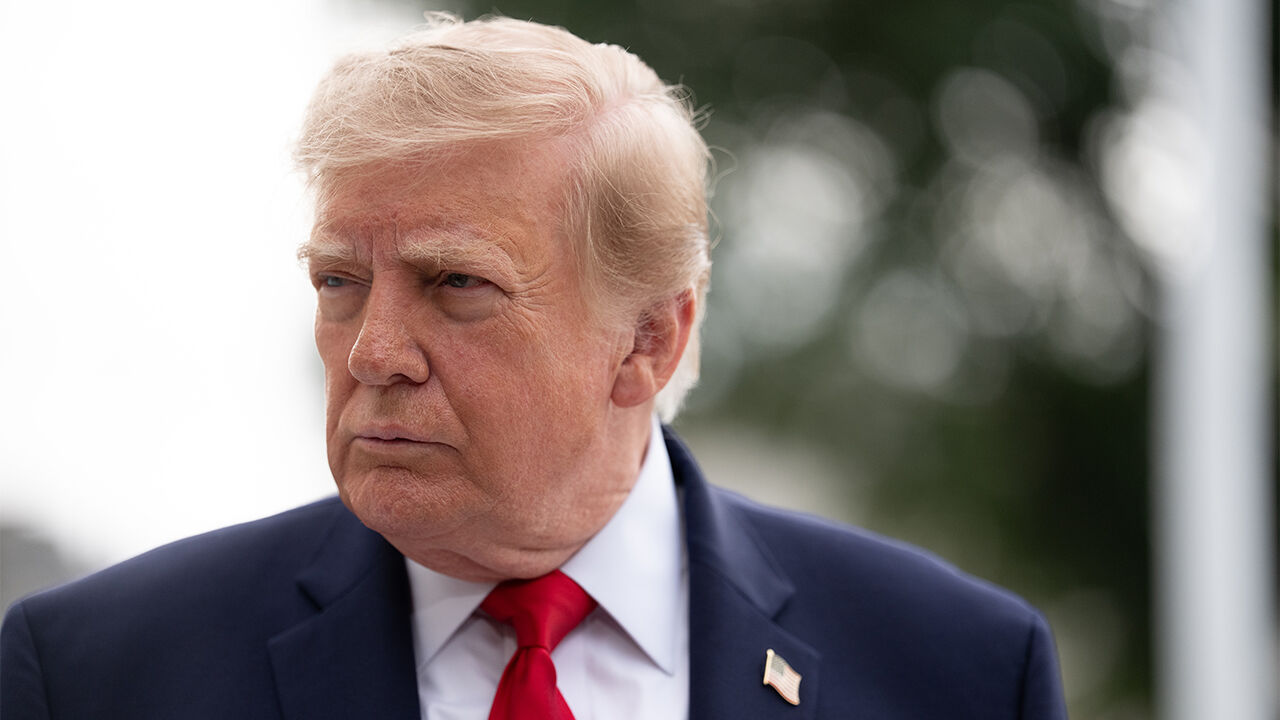
▲ U.S. President Donald Trump
U.S. media outlets are reporting that the outlook for the ruling Republican Party in the upcoming November midterm elections is heading toward the worst-case scenario, as soaring oil prices and high inflation caused by the Iran war—with no clear exit in sight—drive a sharp plunge in approval ratings for U.S. President Donald Trump.
In an article published on the 26th (local time) titled "Republican election outlook is going from bad to craptastic," U.S. internet media outlet Axios pointed out that "Republicans nationwide are being swept up in a fierce undertow triggered by President Trump's low popularity."
It added, "All year long, it has been bad for Republicans, but this week felt different. The political environment seemed to be collapsing in real time, and ominous indicators piled up one after another."
Axios noted that unfavorable factors for the Republicans include the disapproval rating for President Trump surging to 60.4%—the highest across his first and second terms combined, based on an aggregation of various polls—along with spiking gasoline and diesel prices, rising grocery prices, and mortgage interest rates approaching 7%.
The Republican Party currently holds a razor-thin three-seat majority in the federal Senate. If they lose four seats in this Senate election, they will hand over the majority status to the Democrats. Diagnostics show that defeats appear certain in North Carolina and Georgia, while Texas, Florida, and Alaska are locked in tight races, and Maine is also looking precarious.
Consequently, for the Democrats, securing control of the Senate—once considered a long shot—is increasingly coming within tangible reach.
The situation is even more difficult for the Republicans in the House of Representatives.
On the 25th, the nonpartisan election-forecasting organization The Cook Political Report classified up to 15 districts as "Democratic leaning," predicting that the Democrats are likely to secure 220 to 230 seats.
All 435 seats in the House are up for reelection in this midterm election, with a majority requiring 218 seats.
Charlie Cook, the founder of the organization, told Axios, "Many people have long predicted a Democratic 'blue wave' for this election, but I see it rather as a 'red undertow.'"
He projected that the Democrats are likely to win not because of high Democratic approval ratings, but because animosity toward President Trump and the Republican Party is much stronger.
Cook also remarked that "over the past 90 days, President Trump's political standing has gone from 'very unpopular' to 'toxic,' and now it is at the level of 'radioactive.'"
This appears unrelated to the growing trend of Republican candidates attempting to "distance" themselves from President Trump while conducting their election campaigns.
Reports have also emerged that farmers, a core support base for the Republicans, are turning their backs.
In an article on the 27th titled "U.S. farmers are rethinking their loyalty to the Republicans," The Wall Street Journal (WSJ) analyzed that "tariffs, soaring prices for diesel, gasoline, and fertilizer driven by the Iran war, and President Trump's plan to expand beef imports have alienated U.S. farmers and ranchers, opening doors for Democrats in traditional Republican strongholds."
The report noted that while farmers had been loyal supporters of President Trump and the Republican Party for years, grievances have accumulated over the past year, pushing approval ratings for President Trump close to historic lows.
Federal Senator John Hickenlooper (Democrat-Colorado) told the WSJ, "If you ever wanted to flip rural voters [toward the Democrats], the conditions right now are better than ever."
(Photo: Getty Images)
※ Please note: This article was translated by AI and may contain errors.


 Video News
 Video News
 Video News
 Video News
 Video News