
 KOR
KOR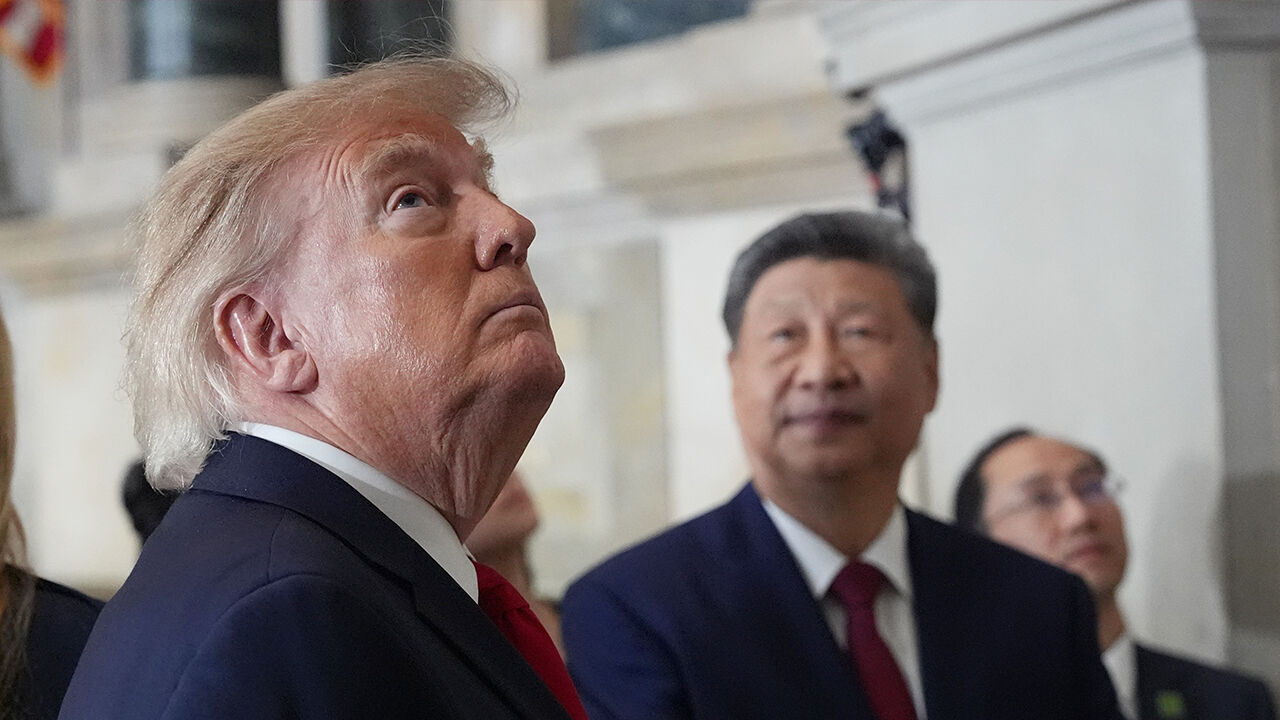
▲ U.S. President Donald Trump and Chinese President Xi Jinping
Experts have evaluated that the recent summit between U.S. President Donald Trump and Chinese President Xi Jinping amounts to little more than extending a fragile truce that has prevented direct clashes between the two nations.
While it is an achievement that the leaders of both countries reaffirmed their commitment to stabilizing relations, significant differences remain on core issues such as trade, artificial intelligence (AI), Taiwan, and Iran, leaving it uncertain whether the current stability will last long, they noted.
Thomas Christensen, a professor at Columbia University and former U.S. Deputy Assistant Secretary of State for East Asian and Pacific Affairs, said on the 25th (local time) at a seminar evaluating the U.S.-China summit hosted by the Center for Strategic and International Studies (CSIS), a U.S. think tank, that the meeting is "sort of a truce, and a pretty fragile one."
He further projected that even though the bilateral trade truce has been extended by another two months until January 10, "if you look out a year from now, there's going to be a lot of problems in the relationship, including in the economic sphere."
He pointed out that despite agreements reached at the U.S.-China summits in October of last year and May of this year, substantial friction remains as China is dissatisfied with U.S. export restrictions on advanced technology and expanded sanctions against Chinese companies, while the U.S. is unhappy with China's rare earth exports and purchases of U.S. agricultural products.
However, some evaluations drew attention to the fact that both leaders showed a strong commitment to stabilizing relations.
Edgar Kagan, a CSIS chair and former Senior Director at the U.S. National Security Council (NSC), highlighted the unusual level of hospitality and protocol shown by President Trump to President Xi, assessing that it "shows an intent to stabilize the relationship, going beyond just a mere truce."
In particular, noting that such protocol is an area directly controllable by the president, he analyzed that "it shows President Trump sees building a strong relationship with President Xi as a tool to stabilize ties with China."
Regarding AI, a sector experiencing fierce competition between the U.S. and China, the summit provided an opportunity to explore potential bilateral cooperation, but forecasts emerged that the strategic competition itself will likely remain unchanged.
Taking advantage of the summit, the U.S. and Chinese sides have discussed establishing an AI hotline to notify and communicate with each other in the event of an AI-related accident.
While a former high-ranking U.S. official evaluated that such an attempt is worth making, the official noted that previous bilateral hotlines have failed to function properly and predicted that "this one probably won't work properly either."
The official added, "This summit is not going to play any role in curbing the competitive instincts of both sides over AI."
This is interpreted to mean that given both the U.S. and China view AI as a core industry and strategic technology dictating national competitiveness and are fiercely vying for dominance, it is difficult to ease the competitive framework itself through this summit.

Bonnie Glaser, Director of the China Power Project at CSIS, pointed out that compared to the summit last May, "an important change has emerged."
Unlike last May, when President Xi expressed the principled stance that the U.S. "must not mishandle" the Taiwan issue, this time China's position has become firmer by explicitly stating the specific demand to "oppose independence," she noted.
Glaser analyzed that China may have judged it relatively more feasible to change the official U.S. position on Taiwan independence from "not supporting" to "opposing" it, rather than altering the U.S. stance on arms sales to Taiwan.
Professor Christensen stated that China's primary goal is to undermine Taiwan's morale through military pressure campaigns or diplomatic efforts with the U.S., adding, "I think China clearly intended through this summit to break the morale of Taiwan."
He further projected that "the U.S. is likely to sell weapons to Taiwan within the next year or so," and China's reaction to this could become another friction point in U.S.-China relations.
However, the former high-ranking official said, "I view this as President Xi reiterating China's long-standing position," adding, "I don't think China's position has become particularly hard-line."
The Iran issue was also cited as a variable that will impact future bilateral relations.
According to China's state-run Xinhua News Agency, President Xi urged the U.S. and Iran to resolve issues through negotiations during the summit.
Professor Christensen expressed skepticism over the likelihood that China would pressure Iran in the manner desired by the U.S., instead predicting that China would support Iran in rebuilding its conventional deterrence against the U.S. and recovering its economy.
Consequently, he projected that the Trump administration's grievances surrounding these issues could progressively grow.
(Photo: AP, Yonhap News)
※ Please note: This article was translated by AI and may contain errors.


 Video News
 Video News
 Video News
 Video News
 Video News