
 KOR
KOR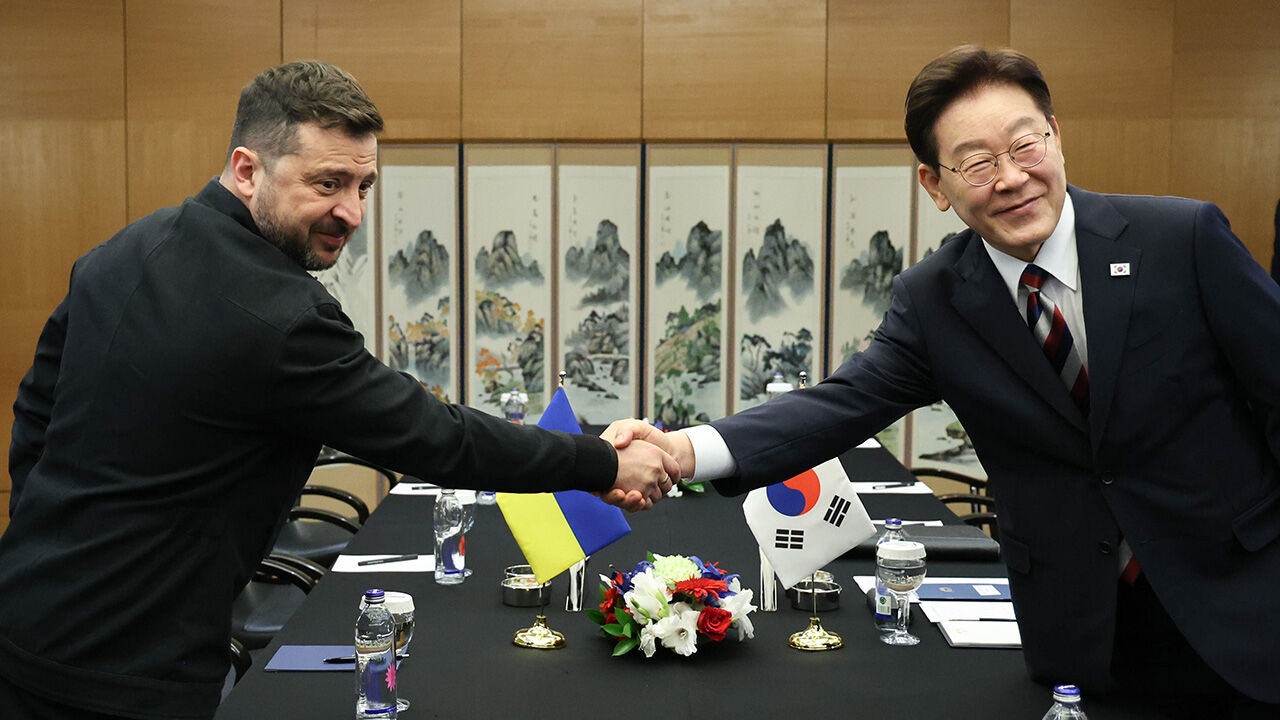
▲ President Lee Jae-myung and Ukrainian President Volodymyr Zelenskyy shake hands ahead of their bilateral summit at a hotel in Ankara, Turkiye, on July 8 (local time).
The presidential office said that ahead of President Volodymyr Zelenskyy revealing the repatriation of two North Korean prisoners of war (POWs) to South Korea during a United Nations address, the Ukrainian side had notified Seoul that there would be a mention of the prisoners, and Seoul had explained its position that it should not be disclosed.
A senior official from the presidential office met with reporters at the South Korean press center established in Mexico City on the occasion of President Lee Jae-myung's state visit to Mexico on the night of September 24 (local time), stating that Seoul "did know" that Ukraine would mention details regarding the prisoners.
However, the official stated, "The message sent to us was not clear. It was uncertain how it would be expressed (in the speech)," adding, "There was merely word along the lines of 'there will likely be a mention of those people.'"
In response, the South Korean side explained its stance that the repatriation to South Korea should not be made public, according to the official.
This indicates that Ukraine did not clearly communicate that it would disclose the repatriation of the two North Korean soldiers to South Korea, and unilaterally announced it despite South Korea's opposition to publicizing it.
Earlier, President Lee also criticized the move on his social media on September 24 (local time), writing, "I do not know what circumstances Ukraine had in breaking the confidentiality agreement and making it public, but it is very regrettable."
Regarding the overall repatriation process, the senior presidential official said, "It must be handled quietly in accordance with their free will, domestic and international law, and humanitarian principles. Only then can it be handled swiftly, smoothly, and safely."
The official continued, "However, as some individuals met with those people, conducted interviews, and reports surfaced, matters became difficult. Movements opposing (the repatriation) also grew sharper."
The official further explained, "In our consultations with Ukraine, there was also an understanding that the process would be handled quietly without public disclosure, but it is a fact that President Zelenskyy mentioned it in his speech contrary to that existing understanding," adding, "That is why President Lee stated it was regrettable."
Amid criticism from conservative opposition parties asking whether the government tried to keep the POW repatriation confidential out of concern over North Korea's reaction, the official drew a firm line, saying, "We complied with humanitarian and human rights principles, and there were no considerations beyond that."
The official countered, "No country conducts the repatriation of prisoners of war publicly. The same applies to North Korean defectors," adding, "There is a perspective suggesting that not making it public means there is a hidden agenda or an attempt to deceive the public, but that is not true."
The official also pointed out, "I believe all the wild speculation and attacks surrounding this issue have political motivations."
(Photo: Yonhap News)
※ Please note: This article was translated by AI and may contain errors.



 Video News

 Video News
 Video News