
 KOR
KOR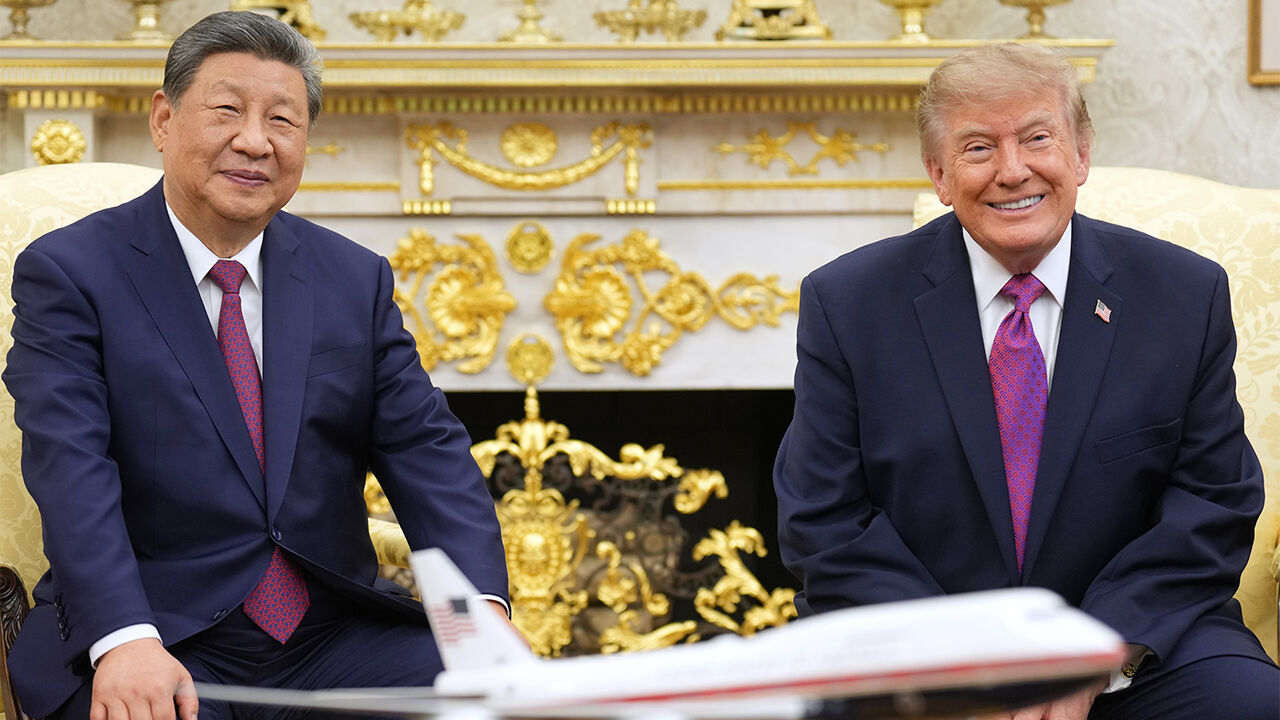
▲ U.S. President Donald Trump and Chinese President Xi Jinping hold a meeting in the Oval Office of the White House in Washington, D.C., on Thursday, September 24, 2026.
Japanese media have expressed concern over what they called an unusual remark after U.S. President Donald Trump referred to the U.S. and China as "allies" during World War II during his meeting with Chinese President Xi Jinping on the 24th (local time).
According to the Nihon Keizai Shimbun (Nikkei) and other outlets, President Trump welcomed President Xi to the summit at the White House in Washington, D.C., on the 24th (local time) by calling China a "wartime ally" from World War II and mentioning American volunteer fighters who battled against Japan.
Trump stated, "The pursuit of common interests has united the peoples of our two countries across numerous differences, making us allies during World War II."
He referenced the "Flying Tigers," an American volunteer pilot unit that fought against the Japanese military in China at the time.
"Their feats were truly incredible," Trump said, emphasizing that the United States would continue to cooperate with China moving forward.
In response, President Xi chimed in, saying, "During World War II, China and the United States stood shoulder to shoulder to fight against fascist aggression," implicitly targeting imperialist Japan, which initiated the Sino-Japanese and Pacific wars.
"The Chinese people have never forgotten this history, nor have the American people," Xi added.
President Xi also noted during a telephone conversation with President Trump last November that "now is the time to jointly safeguard the fruits of victory from World War II."
Japanese media outlets voiced worries that President Trump's emphasis on past U.S.-China cooperation against Japan could lead to closer future ties between Washington and Beijing at the expense of the U.S.-Japan relationship.
The media also pointed out that the China which was allied with the United States during World War II was not the People's Republic of China, established in 1949, but the Republic of China led by Chiang Kai-shek.
The Yomiuri Shimbun noted, "There are concerns that Trump's remarks could serve as material to strengthen China's narrative surrounding its resistance to Japan. It is unusual for a U.S. president to use such expressions, and repercussions are expected."
Nikkei commented that the Xi Jinping administration has criticized the defense policy and historical views of Prime Minister Sanae Takaichi's administration as "neo-militarism," demanding that President Trump focus on the history of fighting alongside Japan in the past. The newspaper analyzed that President Trump's comments could be seen as responding to these demands.
The daily observed that while President Trump had previously mentioned "World War II allies" during a dinner on his visit to Beijing last May, that instance was limited to quoting President Franklin Roosevelt, whereas this time he used his own words.
Nikkei also suggested that ahead of the upcoming U.S. midterm elections, President Trump may have "repaid" China with historical references in an effort to secure firm commitments from Beijing, such as additional purchases of U.S. agricultural and manufactured products.
In addition, Japanese media predicted that Prime Minister Takaichi, who returned home after holding a summit with President Trump ahead of President Xi on the sidelines of the UN General Assembly in New York, faces the task of rebuilding strained Japan-China relations.
Jiji Press pointed out that Prime Minister Takaichi's diplomatic competence will be put to the test regarding whether she can create an opening to improve ties with President Xi at the Asia-Pacific Economic Cooperation (APEC) summit scheduled to be held in China in November.
The news agency noted that Prime Minister Takaichi's call during her UN General Assembly speech for the deletion of the "enemy state clauses" in the UN Charter—which target World War II defeated nations—could become another spark worsening bilateral ties.
Prime Minister Takaichi reportedly showed strong determination by directly adding references concerning the removal of the enemy state clauses to her speech.
The enemy state clauses are provisions that originally allowed the victorious nations of World War II to take military action without authorization or a declaration of war by the UN Security Council to prevent a resurgence of military aggression by defeated nations like Germany and Japan.
In response to Prime Minister Takaichi's demand, the Chinese government immediately pushed back, stating that the clauses retain "important practical significance."
(Photo: AP, Yonhap News)
※ Please note: This article was translated by AI and may contain errors.



 Video News

 Video News
 Video News