
 KOR
KOR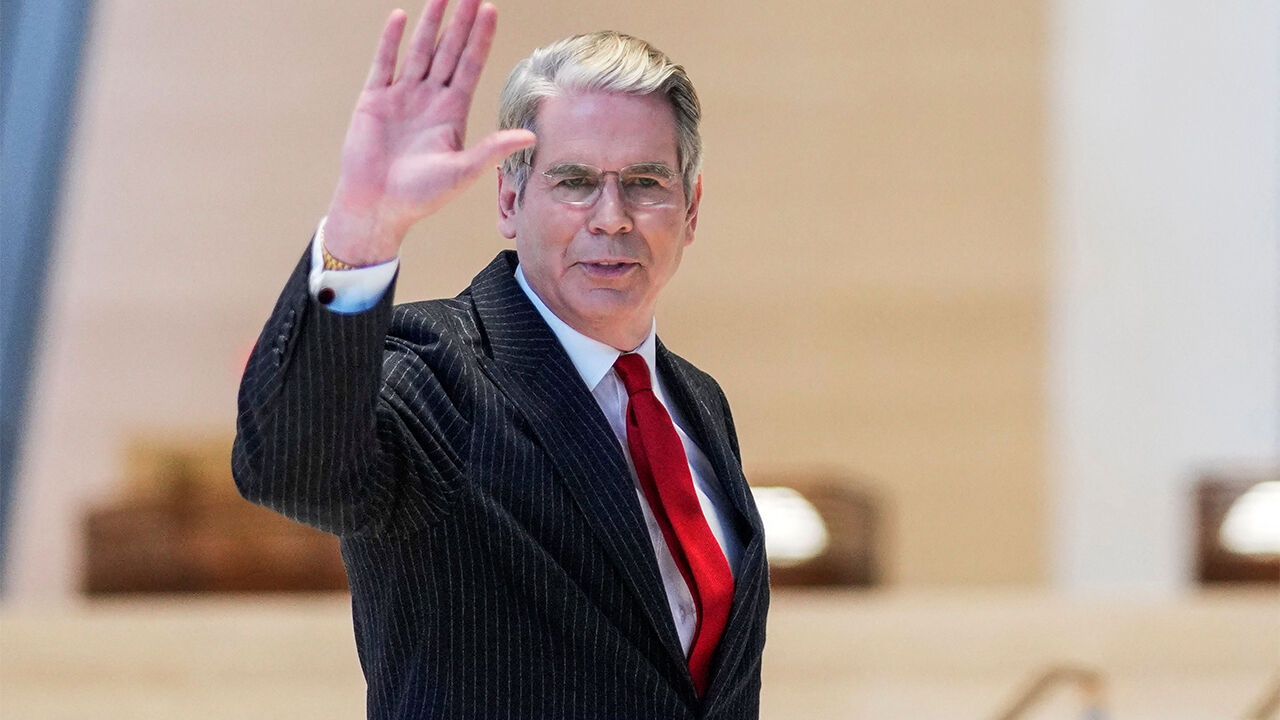
▲ US Treasury Secretary Scott Bessent
US Treasury Secretary Scott Bessent announced on September 23 (local time) that the ongoing "trade truce" with China, which was set to expire in November, will be extended by two months.
In an interview with Fox News that day, Secretary Bessent spoke about the outcome of his talks with Chinese Vice Premier He Lifeng, stating, "We agreed to extend the so-called Busan Agreement, the economic agreement between the US and China that was scheduled to end on November 10."
The "Busan Agreement" refers to the terms agreed upon by US President Donald Trump and Chinese President Xi Jinping during their summit on the sidelines of the Asia-Pacific Economic Cooperation (APEC) meeting in Busan in October of last year.
At the time, the two leaders agreed to refrain from escalating the "trade truce" where they had been exchanging tariffs exceeding 100% against each other, and to suspend additional tariffs and some trade retaliation measures for one year.
Ahead of the summit between President Trump and President Xi scheduled for September 24 at the White House, there had been expectations that the two countries would reach a consensus to extend the trade truce by one year in accordance with the previous agreement.
However, meeting at the World Bank (WB) headquarters in Washington on this day—just one day before the summit—Secretary Bessent and Vice Premier He managed to agree on only a two-month extension rather than a one-year extension during their final agenda-coordination talks.
Regarding the decision to limit the extension to two months, Secretary Bessent explained, "It is to secure more time to see what we can accomplish in the economic sector."
When asked about the possibility of achieving a "larger-scale agreement" during the extension period, he said, "I don't know. It's not even certain whether the current agreement will simply be extended as is. There are a few things that the Chinese side has not fully implemented. We have now conveyed our expectations to see if they will implement the agreement more comprehensively."
As for the issues China has failed to fulfill, he explained, "There are about 17 billion dollars worth of commitments to purchase soybeans and other agricultural products, and in our view, they are running slightly behind schedule, and we are encouraging China to fulfill them."
When asked about tangible outcomes from this summit, Secretary Bessent mentioned the activation of a trade committee between the two countries to discuss the removal of tariffs on non-sensitive items worth 30 billion dollars each, financial services, and China's purchase of US agricultural products, adding, "Quite a lot of work is currently underway."
In particular, when asked whether a proposal to set up a "hotline" to notify each other in the event of artificial intelligence (AI)-related accidents would be accepted, Secretary Bessent stated, "I believe they (China) will agree."
He continued, "Whether it's out-of-control AI agents, or non-state actors using AI for cyber operations or biological weapons, we are working with China to define what the most important or most dangerous elements are. It hasn't been decided yet, but we hope to be able to discuss any incidents that occur (with China), especially cross-border ones."
Regarding criticisms that there are still no sanctions against major Chinese banks in connection with the US strengthening Iran's isolation through an "economic pariah strategy," Secretary Bessent hinted that the relationship between Iran and China would be discussed at this summit, noting, "For some countries, it is better to have private discussions than to make a public spectacle."
President Xi arrived in the US on the afternoon of this day to begin a three-day, two-night state visit.
The two leaders are scheduled to hold a summit at the White House on September 24.
(Photo: Getty Images)
※ Please note: This article was translated by AI and may contain errors.


 Video News

 Video News
 Video News
