
 KOR
KOR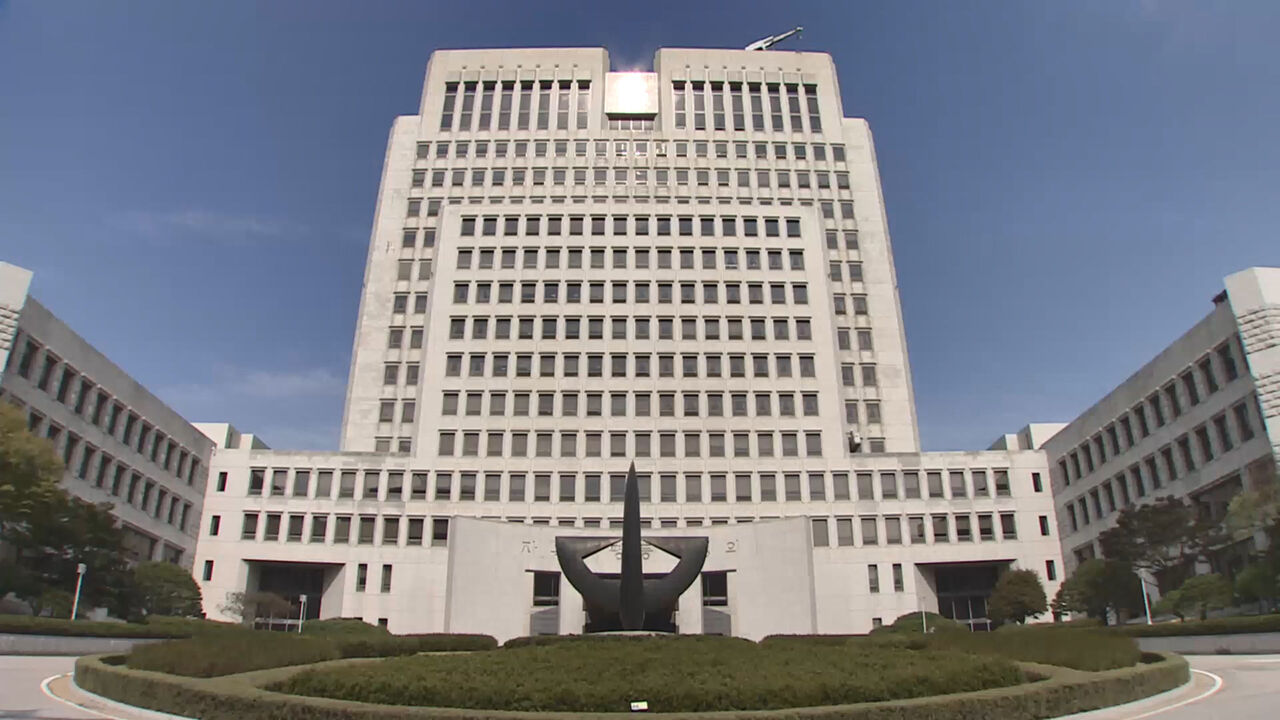
▲ Supreme Court of Korea
The Supreme Court has ruled that a defendant who testified in court that she did not attend the Shincheonji Church cannot be punished for perjury.
The Supreme Court's First Division (presiding Justice Ma Yong-joo) overturned the lower court's ruling, which had sentenced a defendant identified as A to a 2 million won fine on perjury charges, and sent the case back to the Uijeongbu District Court.
Defendant A, who had previously attended the Shincheonji Church, suggested to an acquaintance, B, that they attend church together.
Afterwards, B began attending the Shincheonji Church, which led to discord with her husband, C. C grew to resent A, believing that A had proselytized his wife into the Shincheonji Church.
C stood trial on charges of posting on Facebook that A was a Shincheonji proselytizer and warning others to be careful (violation of the Act on Promotion of Information and Communications Network Utilization and Information Protection, etc., regarding defamation) and visiting A's store (violation of the Minor Offenses Act).
A appeared as a witness in the trials for both cases and testified to the effect that while she had attended the Shincheonji Church in the past, she now attended a church affiliated with the General Assembly of Presbyterian Churches in Korea.
The prosecution indicted A on perjury charges, claiming she gave false testimony while attending a front church disguised as Shincheonji.
The first instance court found her not guilty, but the second instance court found her guilty and sentenced her to a fine of 2 million won.
The Supreme Court reversed this decision, leaning toward an acquittal once again.
The rationale was that A's statements amounted to no more than a subjective evaluation or opinion regarding the religious character of the church, and therefore perjury was not established.
The Supreme Court cited the legal principle that "when a witness's statement is a legal evaluation of experienced facts or merely a simple opinion, it cannot be deemed a false statement as defined in the crime of perjury."
It also presented the legal principle that even if there are minor errors in the process of elaborating on a subjective evaluation based on experienced facts or views on legal effects, that alone does not constitute perjury.
In A's case, the Supreme Court stated, "It can be understood that she testified based on her own evaluation or opinion that the church she currently attends is not Shincheonji, which can be viewed as expressing a subjective evaluation and opinion on the religious character of the church," adding, "It cannot be concluded that she made a false statement about facts she experienced in the past."
The admissibility of KakaoTalk chat logs collected by a private individual (a private citizen) also became an issue in this case.
The KakaoTalk conversations used by the second instance court as evidence of guilt were chat logs between A and B obtained by C from the mobile phone of his ex-wife B, and were submitted to investigative agencies by C attached to a complaint.
However, a statement submitted by B included the content that "C forcibly snatched the mobile phone and leaked the KakaoTalk chats without consent."
Pointing this out, the Supreme Court stated, "The statement includes content that casts doubt on whether the KakaoTalk chat contents were collected in accordance with due process."
The Supreme Court presented the legal principle that "when evidence submitted by the prosecutor is collected by a third party rather than an investigator, the prosecutor must prove that the evidence was collected in accordance with due process, or that the public interest in discovering the truth in criminal proceedings outweighs protected interests such as an individual's personal interests."
Based on this, such evidence can only be used as evidence of guilt when the court has specifically examined circumstances regarding the evidence collection procedure, the necessity for public interest in criminal prosecution, and the degree of an individual's personal interests during trial.
The Supreme Court pointed out, "This is especially true when the defendant argues that evidence collected by a third party is illegally collected evidence, or when the remaining evidence submitted by the prosecutor includes content that dispels doubts regarding the lawfulness of the procedure by which a third party collected the evidence," adding that these points should have been examined in this case as well.
(Photo: Provided by Yonhap News TV, Yonhap News)
※ Please note: This article was translated by AI and may contain errors.


 Video News

 Video News
 Video News
