
 KOR
KOR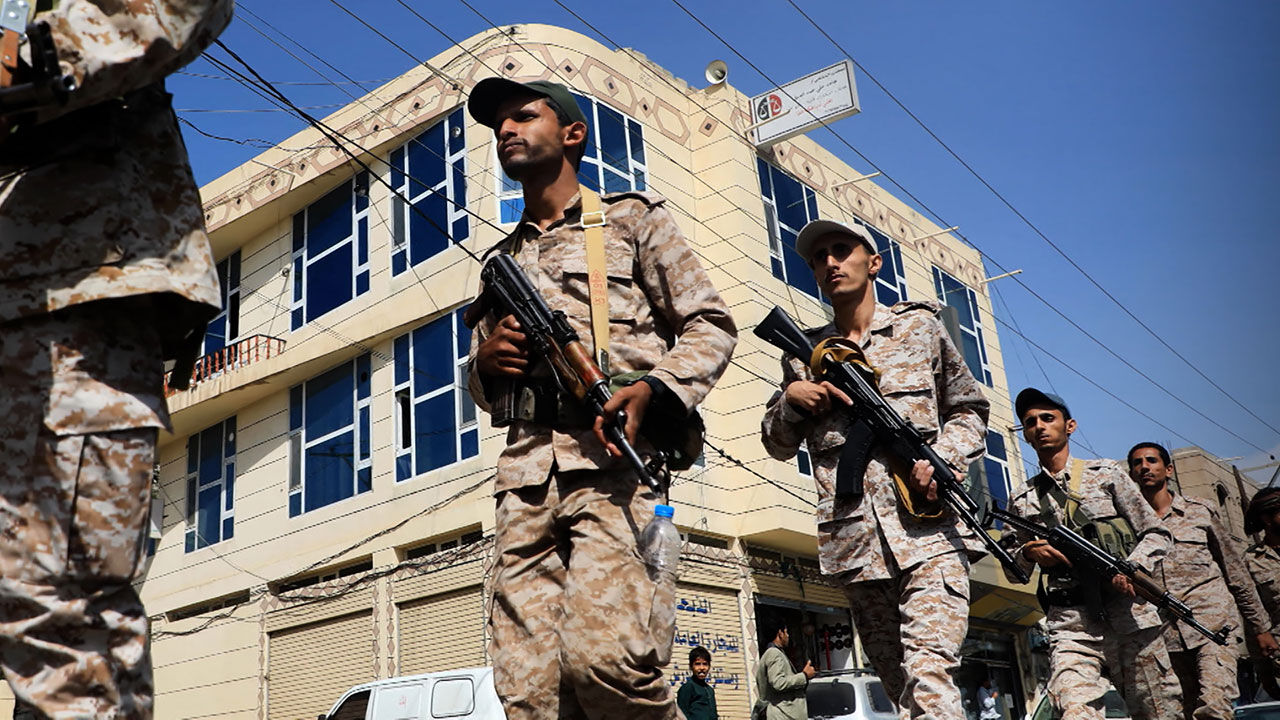
▲ Houthi rebels
The Iran-backed Houthi rebels in Yemen have captured strategic strongholds along the western Red Sea coast of Yemen in just 48 hours, sending ripples through Middle Eastern geopolitics.
While the offensive capitalized on divisions within pro-government forces, the Associated Press reported on September 23 (local time) that unprecedented, direct intervention by Iran's Islamic Revolutionary Guard Corps (IRGC) was confirmed, making it safe to view the campaign as effectively an IRGC operation.
A reconstruction of the Houthis' capture of the Red Sea coast—based on interviews with 10 sources, including senior Houthi officials, regional officials, top-ranking Yemeni military commanders, and members of the Yemeni Presidential Leadership Council—reveals that Iran went beyond merely supplying weapons to the Houthi rebels, extending its involvement to front-line tactical command.
The Associated Press analyzed that this move by Iran suggests its regional hegemony strategy, targeting the United States and Arab allies beyond the civil war in Yemen, has entered a new phase.
The most striking aspect of the process by which the Red Sea coastal areas, including the port of MOKA, fell into Houthi hands is Iran's shifting role.
The Associated Press reported that IRGC advisors, who previously operated largely behind the scenes as strategic planners maintaining distance from the frontline, acted as de facto field commanders in this offensive.
They were reportedly deeply involved in every stage of the operation, such as establishing tactical movement plans and directly communicating with front-line commanders.
Iran appears to have meticulously prepared for this situation in advance.
According to security experts, Iran has been intensively supporting the Houthis with advanced missiles, suicide drones, uncrewed combat vessel operations training, and logistics since last year.
Notably, an Iranian aircraft that landed at Sanaa International Airport in Yemen last July, having broken through Saudi airstrikes, reportedly carried numerous IRGC advisors. They allegedly joined advisors from Lebanon's Iran-backed militant group Hezbollah stationed in Yemen to prepare for the offensive.
Iran also provided communications network analysis and satellite intelligence interpretation capabilities, serving as the "eyes and ears" of the Houthis.
This marks Iran's most blatant and direct military intervention since the outbreak of the Yemeni civil war in 2014.
Backed by Iran's comprehensive intelligence support, the Houthis precisely pierced the critical Achilles' heel of the Yemeni pro-government forces.
By hacking communication networks, they thoroughly monitored the movements of the National Resistance Forces, the core troops of the pro-government faction, and launched disruption tactics.
In contrast, the pro-government allied forces responsible for defending the Red Sea coast were fragmented.
While the 30,000-strong National Resistance Forces suffered from the Houthis' heavy barrage of missiles and drones, the Giants Brigade, which appeared as a relief force, acted unilaterally without prior coordination.
The long-standing animosity between the two forces, born from power struggles between Saudi Arabia and the United Arab Emirates (UAE)—former pillars of the anti-Houthi coalition—served as a fatal and self-defeating move at the moment of ultimate crisis.
A lament by a senior Yemeni military official that "the lack of a unified command structure was a golden opportunity for the Houthis" highlights the painful current reality of the pro-government forces.
Cut off from communications with the leadership and reduced to a disorganized rabble, the troops fell into a panic and retreated in disorder, and even Major General Tariq Saleh, the commander of the National Resistance Forces, fled to Saudi Arabia.
Ultimately, the Houthis made a bloodless entry into the empty port of MOKA on September 10 without encountering any resistance.
This crisis raises fundamental questions about the geopolitical dynamics of the Middle East, extending far beyond a mere shift in territorial control.
The most profound shockwave is the silence from Saudi Arabia.
While the Houthis advanced toward MOKA with unstoppable momentum, the airstrikes from Saudi Arabia that the Yemeni government forces had so desperately awaited never materialized.
This coincided with a situation where the United States hesitated to provide military support to Saudi Arabia out of fear of escalation, culminating in a sense of helplessness among pro-U.S. allies in the region.
The Houthis bolstered their arsenal by seizing vast quantities of Saudi- and UAE-manufactured armored vehicles, rockets, and ammunition left behind by retreating government forces.
Having seized the Red Sea coast, including strategic islands, the Houthis now hold a chokehold that can cut off Saudi Arabia's core oil transport routes at any time.
In particular, Iran, having faced preemptive strikes by the United States and Israel, has obtained a powerful lever to pressure the U.S. and regional allies by weaponizing instability in the global energy market.
※ Please note: This article was translated by AI and may contain errors.



 Video News
 Video News
 Video News
