
 KOR
KOR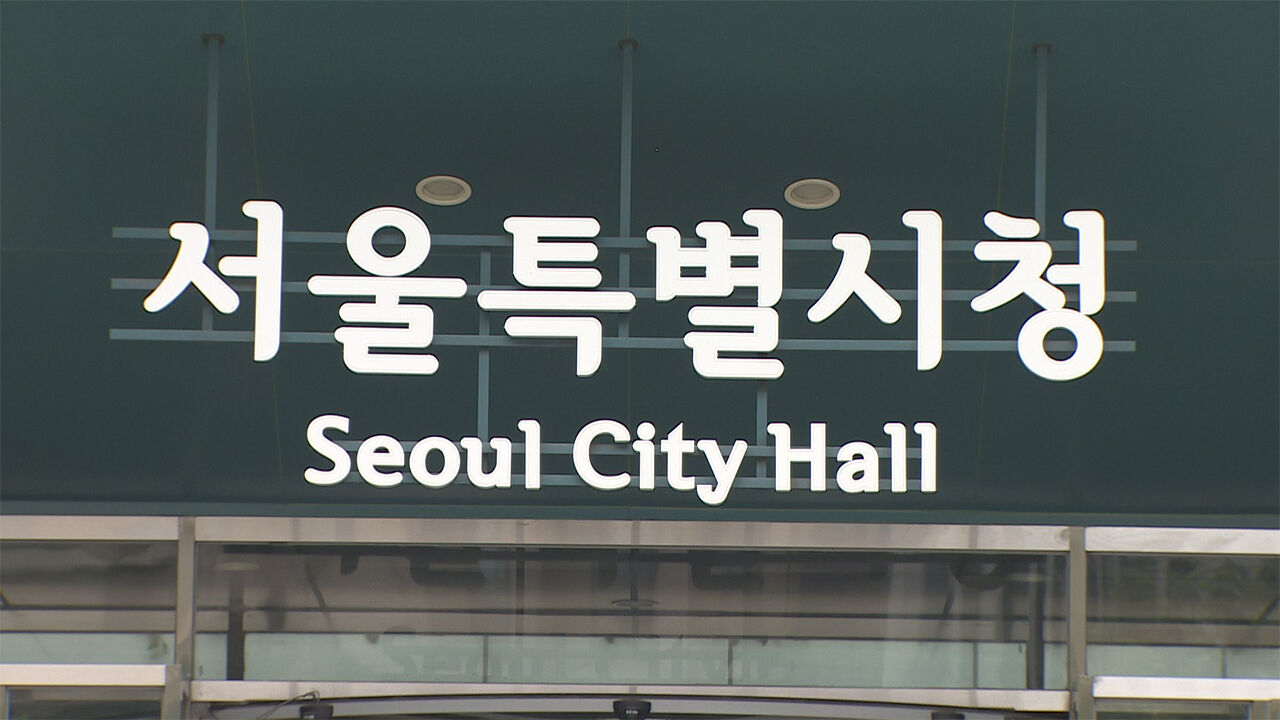
▲ Seoul Metropolitan Government logo
Regarding the omission of reinforcing bars at the GTX-A Samseong Station underground construction site, the Seoul Metropolitan Government has urged the Ministry of Land, Infrastructure and Transport to make a prompt decision on the pillar reinforcement method, warning that delays will increase construction difficulty and postpone completion.
Seoul announced on September 11 that it had delivered the interim results of the site's detailed safety diagnosis and external expert advisory results to the Ministry of Land, Infrastructure and Transport and the国家철도공단 (Korea National Railway), making the request accordingly.
Along with this, Seoul also requested the prompt implementation of skip-stop operations (passing through without stopping) for GTX-A trains at Samseong Station.
Previously, safety concerns arose when it was revealed that reinforcing bars were missing from pillars at the 5th underground level construction site of Section 3 of Yeongdong-daero, which is part of the GTX-A Samseong Station section.
This construction error was discovered and reported to the Seoul Metropolitan Government by the contractor, which then pushed for reinforcement work to increase the load-bearing capacity of the pillars with missing rebars.
However, as the Ministry of Land, Infrastructure and Transport stepped in to hold Seoul—the project owner—accountable for the incident and launched its own joint inspection into the construction error, the project has faced delays.
The ministry's policy is to extend the joint inspection period by four months, from the original July 20 to November 20, and to determine a specific reinforcement method following additional reviews.
In a press release, Seoul expressed concern, stating, "While structural safety at the current construction stage has been verified, experts judge that as construction progresses, the reinforcement effect achieved with the same steel plate diminishes." It added, "If the decision is delayed, thicker steel plates will be required, and the schedule for the main complex development project could also face setbacks."
Seoul explained that structural safety in the current construction state has been secured, noting that the interim results of the emergency detailed safety diagnosis rated the condition and safety of the structures constructed so far as 'A', earning an 'A' in the comprehensive evaluation as well.
However, pointing out that experts indicated the effectiveness of using the same steel plate decreases the longer reinforcement is delayed, the city urged the Ministry of Land, Infrastructure and Transport to make a quick decision.
According to actual expert review results, when using a 22mm-thick steel plate, the reinforced strength is 123% of the initial design strength immediately after the completion of the 5th underground level construction, but it drops to 118% upon completion of the 4th underground level, 113% upon the 3rd underground level, and 105% upon the 2nd underground level.
To secure the 120% reinforcement efficiency level suggested by the ministry, steel plates would need to be thicker depending on the construction stage, requiring up to 58mm after the completion of the 2nd underground level.
As steel plates become thicker, their weight increases and installation work such as welding becomes more difficult.
Seoul urged a swift decision, noting that the review of the adequacy of pillar reinforcement commissioned by the Korea National Railway is scheduled to run until December 31, and if the decision on the construction method is delayed, the reinforcement construction period will increase, potentially affecting the main construction schedule.
Additionally, Seoul requested the prompt implementation of skip-stop operations for GTX-A trains at Samseong Station.
Based on the vibration levels measured by external experts, Seoul's judgment is that train skip-stop operations and reinforcement work can be carried out concurrently.
Originally, the GTX-A Samseong Station skip-stop operation was scheduled for last month.
Seoul believes that if the reinforcement work had proceeded according to the city's plan—which was to review safety after confirming the omitted rebars and complete reinforcement by July—skip-stop operations would have been possible in August.
Consequently, Seoul argued that responsibility for additional operational losses, such as subsidies for operating deficits, lies with the Ministry of Land, Infrastructure and Transport due to its delayed decision-making.
The city also emphasized that while the responsibilities of the contractor and construction supervisor regarding the omitted rebars must be thoroughly investigated, the costs resulting from delays caused by postponed decisions even after safety has been confirmed should not be passed on to Seoul and its citizens.
(Photo: Provided by Yonhap News TV, Yonhap News)
※ Please note: This article was translated by AI and may contain errors.



 Video News
 Video News
 Video News
