
 KOR
KOR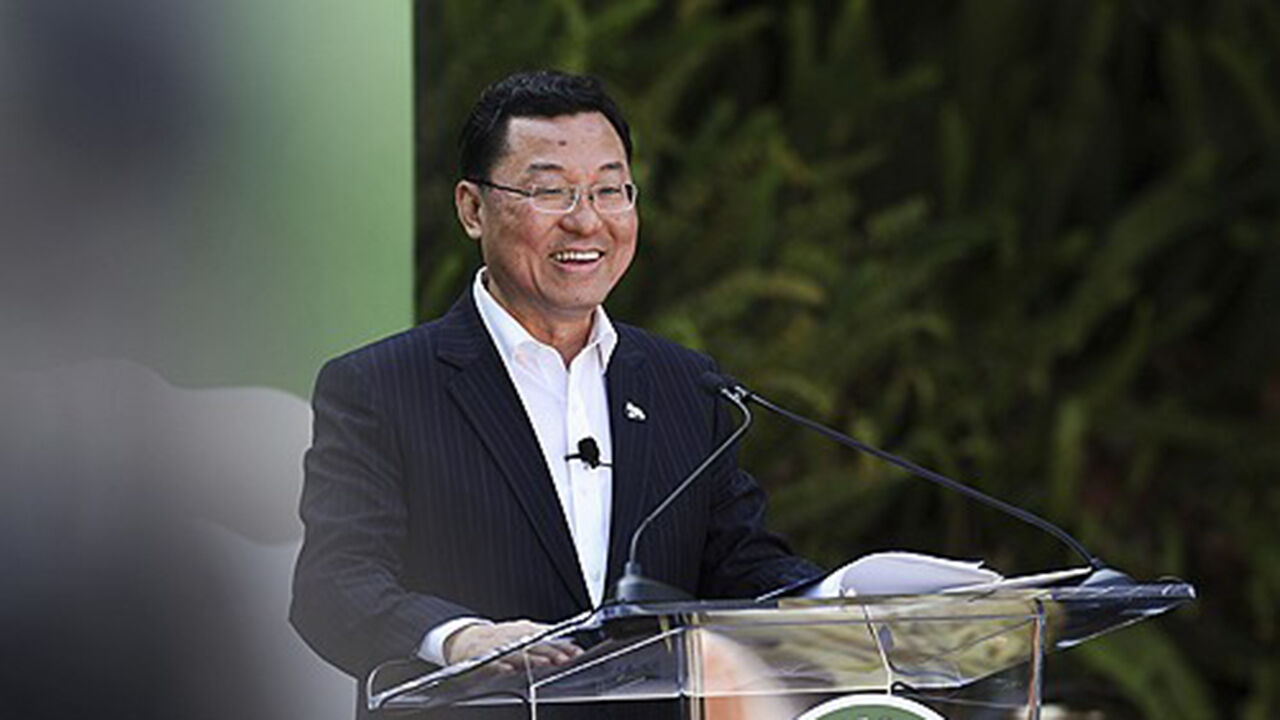
▲ Xie Feng, Chinese Ambassador to the US
Ahead of the summit between US President Donald Trump and Chinese President Xi Jinping, Chinese Ambassador to the US Xie Feng has presented four "red lines" that must not be crossed in US-China relations: the Taiwan issue, democracy and human rights, development paths and systems, and development rights.
In an op-ed published on September 23 in the People's Daily, the official newspaper of the Chinese Communist Party, titled "Promoting the Practical Implementation of a Constructive and Strategically Stable US-China Relationship," Ambassador Xie stated, "China's sovereignty, security, and development interests must not be infringed upon."
He emphasized, "The four red lines of the Taiwan issue, democracy and human rights, development paths and systems, and development rights must not be challenged."
He also highlighted that President Xi's upcoming visit marks his first state visit to the US in 11 years, following President Trump's visit to China in May, representing reciprocal state visits between the two leaders.
Ambassador Xie cited a "constructive and strategically stable US-China relationship" as the most important political consensus reached by the two leaders during the Beijing summit last May, urging both nations to translate this into action rather than mere slogans.
Evaluating that recent economic and trade negotiations have made positive progress, he stated that this demonstrates how facing each other with an attitude of equality, respect, and mutual benefit can help find ways to address each other's concerns.
However, he demanded of the US, "Agreements must be turned into action, and words and deeds must not be inconsistent," while calling for an end to measures pressuring China under the pretexts of national security, economic imbalances, and forced labor.
In the field of artificial intelligence (AI), he argued for healthy competition rather than a zero-sum approach.
Ambassador Xie said, "What the US and China should compete on is how to innovate and develop, how to ensure controllable conditions, and how to improve global governance," adding, "We can no longer draw a 'Silicon Curtain,' nor should we wage an AI version of 'Star Wars.'"
He further emphasized expanding exchanges in military, law enforcement, health, agriculture, tourism, science and technology, and cultural and people-to-people fields by utilizing political-diplomatic and economic-trade mechanisms.
President Xi is on a state visit to the US starting today through September 25, and is scheduled to hold a summit with President Trump in Washington on September 24.
The People's Daily also published a "Zhong Sheng" column reflecting the Chinese authorities' stance on major foreign policy issues, arguing that the difficulties in US-China relations stem from the US misperceiving China and fixating on strategic competition.
It defined the upcoming Washington summit as an important opportunity to implement the agreements made by the two leaders and advance a "constructive and strategically stable relationship," emphasizing that both sides must maintain the momentum of improving ties.
(Photo: AP, Yonhap News)
※ Please note: This article was translated by AI and may contain errors.


 Video News
 Video News

 Video News
![An Se-young Shares Her Thoughts with a Smile After Mistake: "I Need to Exercise Restraint" [Sports Mug]](http://img.sbs.co.kr/newimg/news/20260923/202225276_300.jpg) Video News
Video News