
 KOR
KOR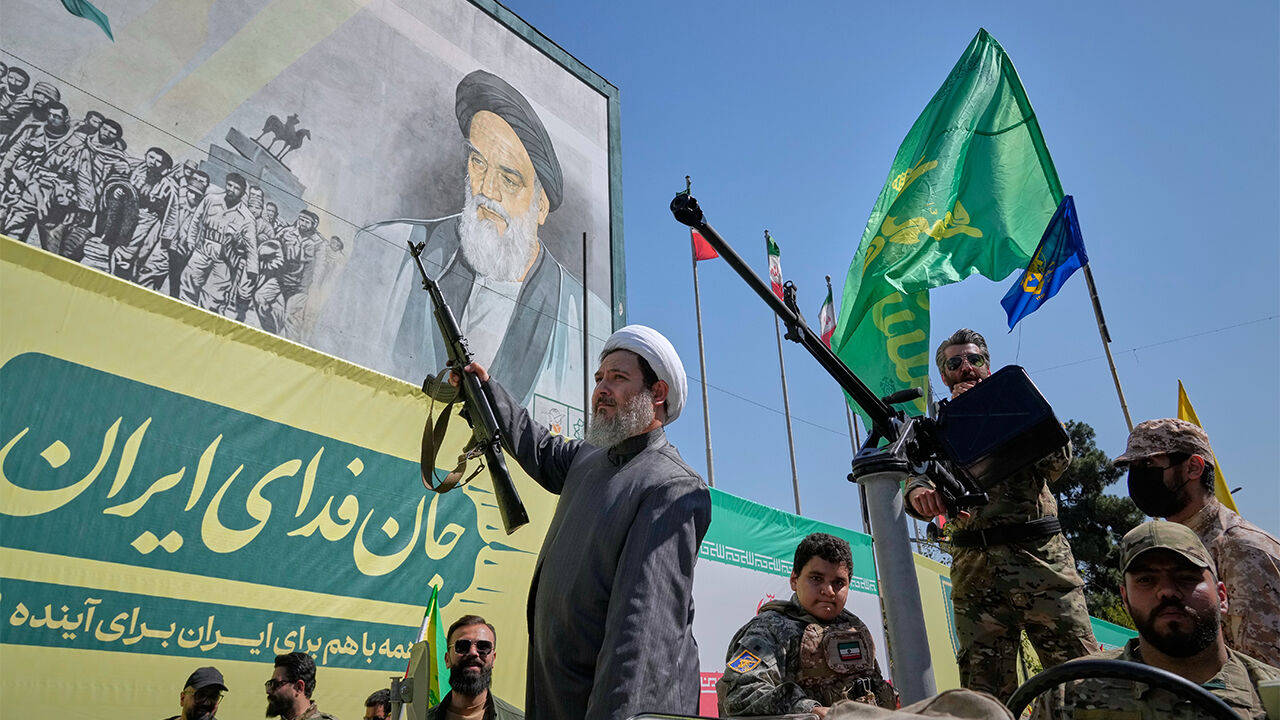
▲ Tehran, Iran
Amid threats from U.S. President Donald Trump to annihilate Iran, Tehran has reportedly presented an extraordinary and conciliatory card offering to reopen the Strait of Hormuz.
In particular, Iran has reportedly dispatched a delegation with full authority to restore negotiations to New York, where the UN General Assembly is taking place. International attention is focused on whether discussions between the U.S. and Iran to end the war—which fell into a prolonged deadlock following the scrapping of a preliminary peace memorandum of understanding (MOU)—will reach a major turning point on the occasion of this general assembly.
According to Reuters, Kyodo News, and other sources on September 22 (local time), the Iranian government recently proposed through mediators to reopen the Strait of Hormuz within seven days, on the condition that the U.S. eases military pressure and lifts the blockade on Iranian ports.
If the reports are true, Iran has played its most powerful card yet to restore negotiations with the U.S. to end the conflict.
A notable point in these reports is that the Iranian delegation attending the UN General Assembly has been delegated full authority to decide on restoring diplomacy with the U.S.
An Iranian government official emphasized that they plan to proceed in earnest with relevant discussions with mediators taking advantage of the UN General Assembly, stating, "An Iranian delegation vested with full authority to restore diplomacy with the U.S. is currently staying in New York."
Although drawing the line at the possibility of a direct summit between Iranian President Masoud Pezeshkian and President Trump, the official expressed a willingness for behind-the-scenes dialogue, saying, "The UN General Assembly is an opportune moment for the U.S. to return to diplomacy."
This suggests that backchannel discussions for a permanent end to hostilities between the two countries are moving rapidly in New York through mediators.
Iran's latest proposal comes as military tensions between the two countries hover near a tipping point.
Recently, President Trump targeted Iran with hardline remarks, stating, "The question is when to blow up the whole country. They better behave well," effectively hinting at the annihilation of the nation.
The General Staff of the Armed Forces of the Islamic Republic of Iran also issued a strong warning, saying, "We have obtained intelligence on the resumption of U.S. military operations and will launch unlimited retaliation." Analysts suggest that multiple domestic and external factors drove Iran to extend a hand for dialogue just days after walking on thin ice.
Experts cite Iran's worsening economic hardships as the primary factor.
As heavy U.S. economic sanctions and the prolonged blockade of core import and export ports continue, Iran's economy is suffering severe blows.
With public discontent mounting amid economic distress, the Iranian leadership urgently needs an exit strategy to ease economic breathing room while avoiding the catastrophe of an all-out war.
The U.S. midterm elections scheduled for November are also seen as one of the background factors prompting Iran to float the proposal to reopen Hormuz.
Some interpret this as a calculated move to hand the Trump administration—which bears political burdens from Middle East security crises and soaring oil prices ahead of the elections—an acceptable diplomatic achievement (the reopening of Hormuz) while securing practical benefits such as sanctions relief.
Previously, the two countries entered discussions to end the conflict by signing a peace MOU aimed at easing military tensions last June.
However, the agreement faltered during the implementation stage of the MOU, effectively rendering it a piece of paper, and the situation deteriorated rapidly thereafter.
Claiming control over the Strait of Hormuz based on the provisions of the MOU, Iran attacked commercial vessels, and the U.S. responded with physical force, leading to sporadic armed clashes.
The situation became tangled beyond repair as the U.S. followed up its naval blockade by squeezing Iran to a level that choked its economy, while Iran deployed its proxy forces, the Houthi rebels in Yemen, to seize control of the Bab el-Mandeb Strait at the entrance of the Red Sea and block crude oil exports from Saudi Arabia, its largest oil exporter.
While Iran has passed the ball to the U.S. by floating the card of reopening Hormuz on the occasion of the UN General Assembly, it remains uncertain whether the U.S. will accept conditions requested by the Iranian side, such as formalizing a commitment to diplomatic resolution and agreeing on a timetable.
Still, remarks pointing to the possibility of resumed dialogue between the two countries are emerging from the UN General Assembly floor.
U.S. Secretary of State Marco Rubio stated in an interview with NBC News on this day that he is "open" to dialogue with Iran on the occasion of the UN General Assembly.
While noting that "nothing is scheduled at this point," he emphasized, "If that can lead to something positive, if there is a prospect that we can ultimately achieve the core objective of all this work, we are certainly open to that."
(Photo: AP, Yonhap News)
※ Please note: This article was translated by AI and may contain errors.


 Video News
 Video News
 Video News
 Video News
 Video News