
 KOR
KOR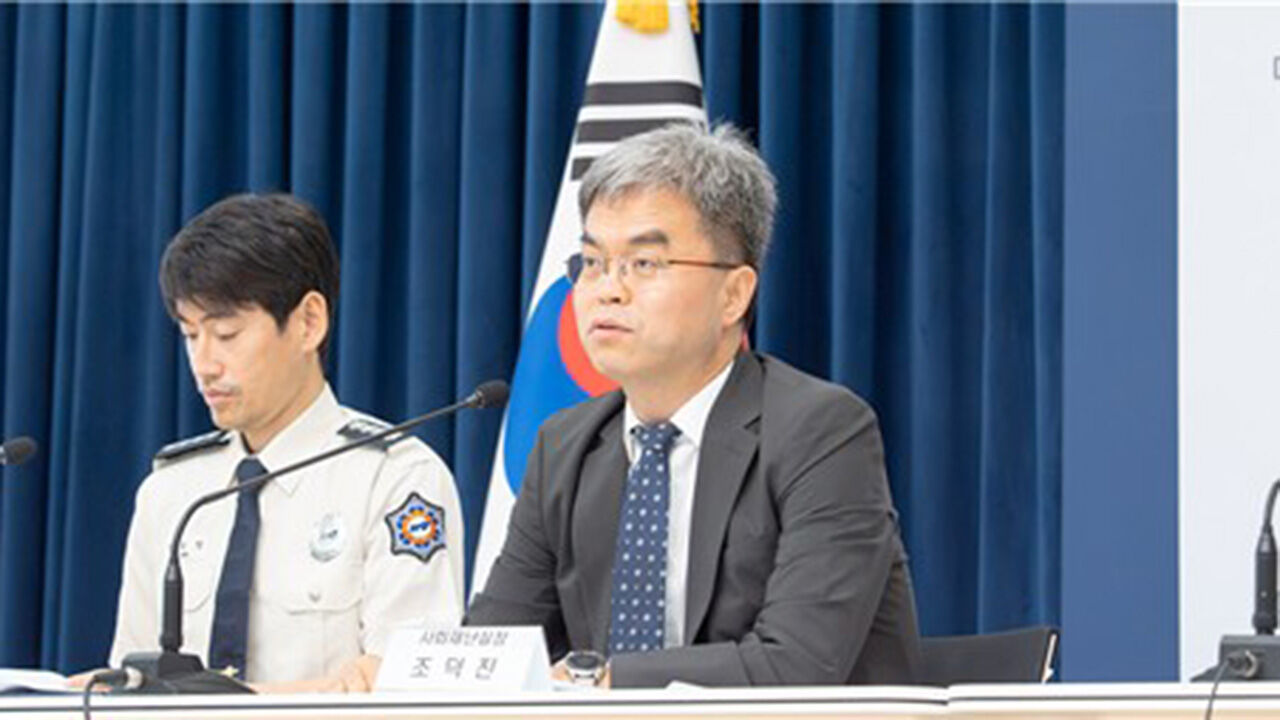
▲ Policy briefing on measures to strengthen fire safety management in aging housing
The government will phase in the distribution of automatic fire extinguishers to 6.68 million aging apartment households lacking sprinklers and make electrical safety inspections mandatory.
The scope of support for supplying smoke detectors will also be expanded to fire-vulnerable homes, including apartments permitted for construction before 2004.
The Ministry of the Interior and Safety announced these measures today (September 22) during a joint briefing by related ministries held at the Government Complex Sejong, titled the "Measures to Strengthen Fire Safety Management in Aging Housing."
This plan supplements the recurrence-prevention measures formulated following the Busan apartment fire in September of last year.
The government drew up additional measures as casualties continued to occur in aging homes even after the implementation of previous policies.
In February of this year, a female high school student died at Eunma Apartment, and in July, two elementary school students died at a townhouse in Eunpyeong-gu, Seoul, while their guardian was out.
Last month, a mother—who was a basic livelihood security recipient with a brain lesion disability—and her son died at an apartment in Gayang-dong, Seoul.
All of these homes were more than 30 years old and lacked sprinklers and smoke detectors.
The government will step-by-step distribute automatic fire extinguishers to 6.68 million aging apartment households without sprinklers.
Automatic fire extinguishers are devices installed in locations with a high probability of fire that detect blazes and automatically spray extinguishing agents even when no one is present.
They are simpler to install than sprinklers and cost around 25,000 to 30,000 won per unit.
A pilot project will target 39,000 households in Seoul this year, with distribution expanding next year using local government budgets from cities and provinces.
Starting in 2028, the government plans to expand the program nationwide with national budget support.
Legal grounds will also be established to allow the use of apartment long-term repair reserves for the installation of automatic fire extinguishers.
Regarding the question of "Why not retroactively install sprinklers?", an official from the Ministry of the Interior and Safety explained, "Retrofitting sprinklers in aging apartments without them would cost about 57.8 trillion won. There is also a lack of space to install water tanks, pumps, and pipes, alongside practical difficulties such as resident inconvenience caused by interior construction within households."
"We are introducing automatic fire extinguishers not to replace sprinklers, but as an initial firefighting measure to realistically bridge the fire safety gaps in existing aging homes," the official added.
In addition, electrical safety inspections will become mandatory starting in 2027 for aging apartments without sprinklers, and electrical inspection items will now include outlets and multi-tap cords, which are major ignition points for electrical fires.
Additional inspection costs will be supported through the Electric Power Industry Infrastructure Fund.
Measures to expand the mandatory installation of arc fault circuit interrupters to homes to prevent arc fires will also be pursued from the second half of 2029.
The supply of standalone smoke detectors will also be expanded to enable early fire detection.
Among a total of 21.72 million households nationwide, 8.97 million require smoke detectors.
While 4.53 million fire-vulnerable households lacking smoke detectors are eligible for support from the National Fire Agency, the remaining 4.44 million households are excluded from support.
The government plans to sign business agreements (MOUs) with organizations such as the National Agricultural Cooperative Federation and the Korea Fire Insurance Association to promote pilot projects for expanding smoke detector distribution.
Legal grounds will be established by next year to expand support for fire-mitigation facilities—such as detectors, which are currently limited to welfare recipients, individuals with severe disabilities, and elderly people living alone—to fire-vulnerable homes including apartments permitted for construction before 2004 and detached, multi-family, and row houses completed before February 2017.
The government will expand subscriptions to "119 Safe Call," a service that notifies users of fire outbreaks and evacuation methods via text message and phone, and step up unannounced crackdowns on items piled in emergency stairwells and the opening of fire doors.
Apartments will also be newly included as targets for the public reporting reward system.
To reduce nighttime childcare gaps, village care facilities operating from 10 p.m. to midnight will be expanded starting next year, and the provision of child-care services will be strengthened.
The government plans to pursue follow-up measures including legal revisions, pilot projects, and securing budgets, while quarterly monitoring implementation progress.
(Photo: Provided by the Ministry of the Interior and Safety, Yonhap News)
※ Please note: This article was translated by AI and may contain errors.



 Video News


!["Thought It Was a Bronze"… Dramatic Comeback Driven by a 10.9-Point Bullseye [AG Video]](http://img.sbs.co.kr/newimg/news/20260922/202224917_300.jpg) Video News
Video News