
 KOR
KOR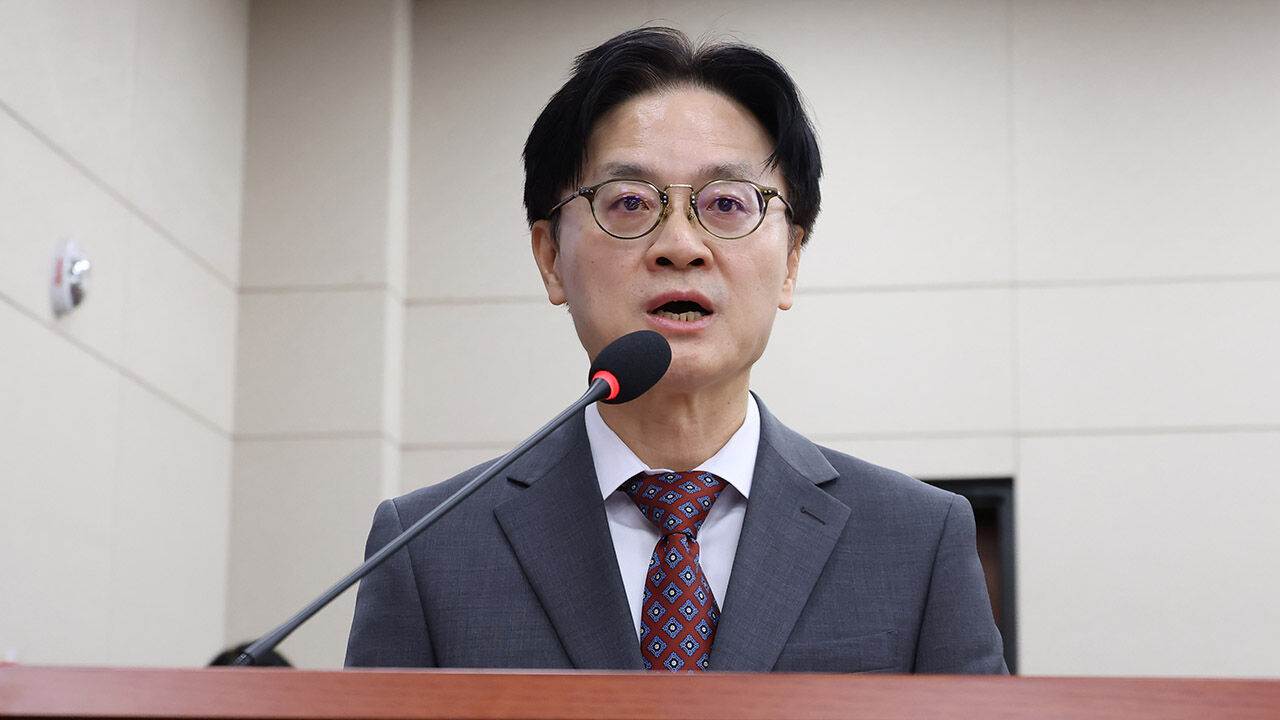
▲ Minister of Trade, Industry and Energy Kim Jung-kwan reports on the first preliminary US investment project under the Special Act on the Operation and Management of Strategic Investments Between the Republic of Korea and the United States to the National Assembly's Trade, Industry, Energy, SMEs and Startups Committee on the 22nd.
The South Korean government has selected the construction of the Encinal combined-cycle gas turbine power plant in Texas, U.S., as the first project for its 200 billion-dollar strategic investment package targeting the United States.
Minister of Trade, Industry and Energy Kim Jung-kwan attended a full meeting of the National Assembly's Trade, Industry, Energy, SMEs and Startups Committee today (the 22nd) and reported to the parliament on one project the government has decided to pursue and two projects for which implementation plans have been prepared regarding the U.S. investment negotiations.
Minister Kim stated, "Today, through the Project Management Committee chaired by the Minister of Trade, Industry and Energy and the Steering Committee chaired by the Minister of Economy and Finance, we are reporting one project that the government has decided to pursue."
He added, "Although we have not yet made a definitive decision to proceed, we would like to report on the implementation plans for two projects reflecting the interests of both countries."
According to officials from the Trade, Industry, Energy, SMEs and Startups Committee, the first U.S. investment project mentioned by Minister Kim was confirmed to be the construction of a combined-cycle gas turbine power plant in the Encinal region of Texas.
Recently, Texas has experienced a surge in electricity demand due to a massive influx of advanced semiconductor manufacturing plants and artificial intelligence (AI) data centers.
The Encinal project is designed to address this demand, with a total facility capacity of approximately 6.3 gigawatts (GW).
Reports indicate that the plan is to first build a 1.4GW gas turbine power plant to check actual demand and economic feasibility, and then sequentially expand with a 4.9GW high-efficiency combined-cycle power generation facility.
The total project cost is estimated at 22.3 billion dollars, and the government reportedly reported to the National Assembly that business feasibility reviews show it can sufficiently recover its principal and interest by earning between 43.29 billion and 45.43 billion dollars over 20 years.
Unlike the first project, the two projects classified as future consultative tasks were identified as the construction of eight large-scale nuclear reactors in the U.S. and the Alaska liquefied natural gas (LNG) development project.
These three major energy projects, including the Encinal gas-fired power plant construction, have continuously faced criticism for potentially violating the government's long-held principle of "commercial rationality" due to murky investment recovery prospects and high business risks.
In particular, regarding the project to build eight new nuclear reactors in the U.S., the government pursued securing a stake of around 20% in the U.S. nuclear vendor Westinghouse, but negotiations faced hurdles as the U.S. side showed reluctance.
Minister Kim stated during his report to the National Assembly today that negotiations are underway with the goal of securing a 5% to 10% stake in Westinghouse, committee officials conveyed.
Additionally, the government is pushing for a configuration where six of the eight new nuclear reactors to be built in the U.S. would be Westinghouse's AP1000 model and two would be South Korea's independently developed APR1400, though an agreement has yet to be reached.
Despite these controversies over commercial rationality, the government's decision to finalize the first project and report the follow-up implementation plans is interpreted as a decision considering national interests from a comprehensive perspective, including the expansion of South Korean companies into the U.S. market, beyond simple business viability.
Minister Kim stated, "The government has fiercely negotiated with the U.S. to pursue projects with commercial rationality. We needed to approach this in a balanced manner from the perspective of national interests so that U.S. investments go beyond simple capital injection and recovery to become an opportunity for our companies to expand their entry into the U.S. market and further lay the groundwork for entering the global market."
Minister Kim also made clear the principle that the actual investment execution scale must not exceed the 200 billion-dollar limit of the U.S. investment fund.
He reportedly expressed the stance that if it exceeds 200 billion dollars, the investment will not be made.
Today's report was held behind closed doors as it included sensitive information such as the terms of negotiation between South Korea and the U.S. and detailed project investment conditions.
After listening to the closed-door briefing, a committee member remarked, "It appears the date for signing the MOU has not been finalized yet. Regarding nuclear power investment in the U.S., South Korean nuclear reactor technology must naturally be included."
(Photo: Yonhap News)
※ Please note: This article was translated by AI and may contain errors.


 Video News

 Video News
 Video News
 Video News