
 KOR
KOR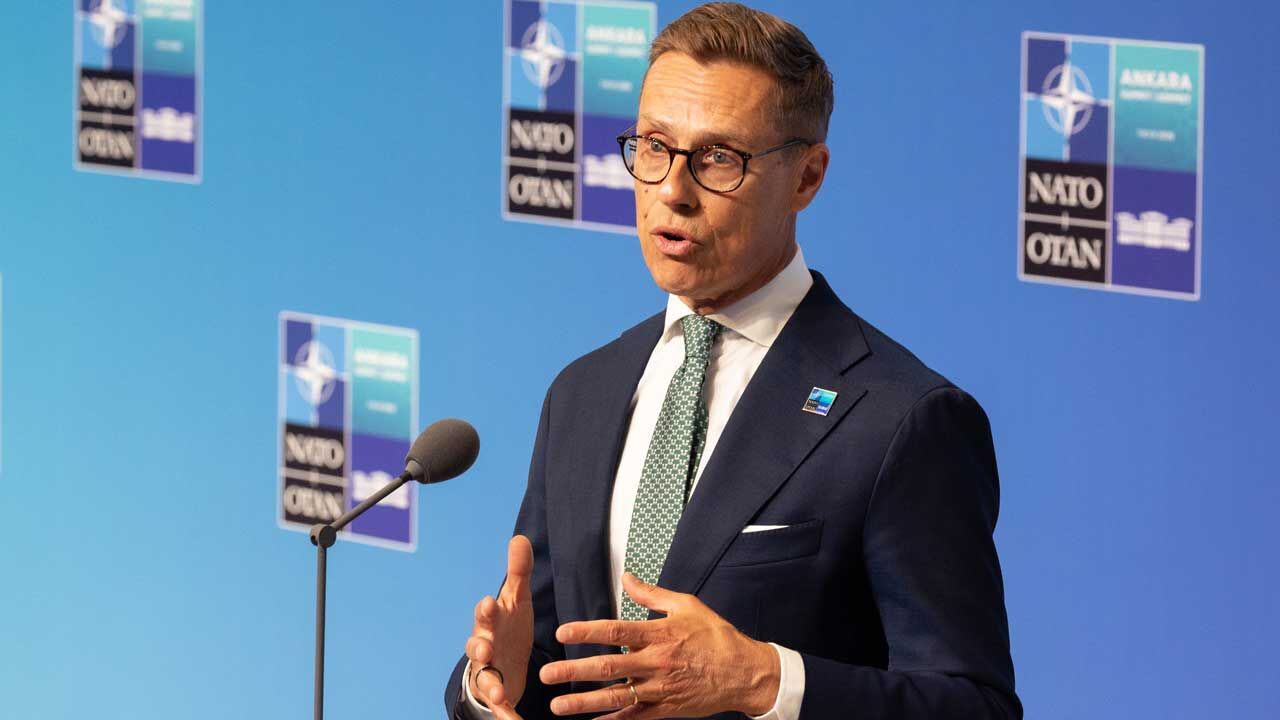
▲ Finnish President Alexander Stubb
A declaration emphasizing that human instruction, oversight, and control over artificial intelligence (AI) must be maintained, while proposing the establishment of a global oversight framework to achieve this, was adopted on the 21st local time under the leadership of Finland and Norway, according to the U.S. political outlet Politico.
The declaration was prepared on the occasion of the high-level segment of the 81st United Nations General Assembly held in New York, and was adopted ahead of a summit meeting at the White House between U.S. President Donald Trump and Chinese President Xi Jinping.
The United States and China, the countries where AI research and development is most active in the world, did not participate in the adoption of this declaration.
Those who signed the declaration include leaders from about 20 countries such as Finland, Norway, Germany, Canada, Australia, Spain, Ireland, the Netherlands, Singapore, South Africa, and Kenya, as well as European Commission President Ursula von der Leyen.
The declaration acknowledges that AI has the "potential to improve lives, advance science, and strengthen economies," while warning that "the rapid development of advanced AI models poses serious risks to safety and security if not properly managed."
Finnish President Alexander Stubb, one of the leading figures in drafting the declaration, told Politico in an interview that he wants to create "momentum" to draw in more participants.
He said, "I think it will be in the interest of both China and the United States to have safety guards of some form. Our message is that human intervention is necessary and humans must remain in the driver's seat."
The declaration mentions recent cyberattacks by out-of-control AI agents targeting the Hugging Face platform and urges action to counter such risks.
Regarding AI companies, it argues that they should establish "transparent safety protocols, including mandatory pre-deployment testing and independent evaluations," and grant sufficient access to qualified evaluators to assess risks.
However, the declaration does not call for slowing down or halting the pace of AI development.
The focus should be on risk management rather than stopping development itself.
It also includes content stating that countries around the world should "further develop and coordinate" common standards and enhance transparency through joint reporting of serious safety incidents.
The declaration urges UN member states to explore the possibility of establishing an international body to oversee AI based on existing international mechanisms.
President Stubb told Politico in an interview that personally, he favors creating a new body similar to the International Atomic Energy Agency (IAEA) within the UN system.
However, seemingly mindful of U.S. President Trump, who is skeptical of the UN, Stubb added, "We need to keep options open so that people do not reject it simply because it is within the UN system," Politico reported.
Norwegian Prime Minister Jonas Gahr Støre, who spearheaded the declaration alongside President Stubb, participated in the interview via video link and said, "It would be very encouraging if the Group of Seven (G7) and the G20 presidency, which the UK will hold in the future, take up this issue."
He stated, "The UN is large, but the G7 and G20 are more focused."
(Photo: Getty Images)
※ Please note: This article was translated by AI and may contain errors.


 Video News

 Video News
 Video News
 Video News