
 KOR
KOR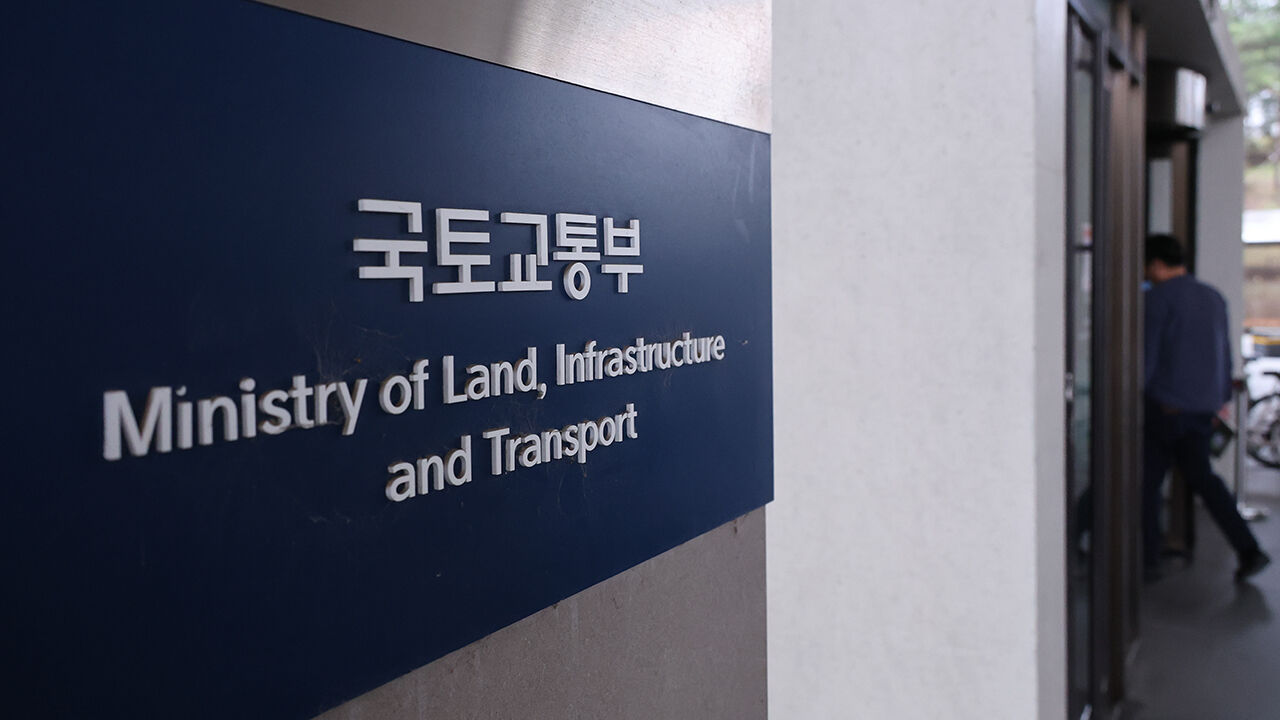
▲ Ministry of Land, Infrastructure and Transport
The government will supply an annual average of 240,000 public housing units, including public sales and rentals, by 2030, creating conditions for citizens to reside stably for a long period at affordable costs.
For various demand groups, "universal public housing" equipped with wider floor areas will be introduced, and the overall quality of public rentals will be improved to increase residential satisfaction.
Customized support for vulnerable housing groups, youths, newlyweds, and others will also be strengthened.
The Ministry of Land, Infrastructure and Transport announced the "Housing Stability Plan for Realizing Deep and Dense Housing Welfare" containing these measures on the 21st.
The government will supply a total of 1.19 million public housing units, or an annual average of about 240,000 units, by 2030, and allocate 77% of them (about 920,000 units) to the Seoul metropolitan area, where housing demand is high.
The 1.19 million units account for about 13.6% of all renter households in the country (8.717 million households) as of 2024.
Rental housing will be supplied through various methods, including 350,000 construction-type units built on public land and other sites, 313,000 purchase-type units with fast downtown supply speeds, 230,000 jeonse-type units utilizing existing private housing, and 52,000 publicly supported private rental units.
In the 3rd new towns and other areas, 243,000 units of public sales housing (211,000 units in the metropolitan area) will be supplied for homeless actual demand groups, and equity-accumulation or profit-sharing models will also be introduced as models to reduce housing cost burdens.
Among public housing units, about 150,000 units are expected to be available for moving in nationwide from the fourth quarter of this year to the end of next year, and the government expects that the metropolitan area (about 100,000 units) will account for two-thirds of them, helping to stabilize the lease and rent market in the metropolitan area.
An official from the Ministry of Land, Infrastructure and Transport said, "We have prepared a customized housing ladder considering the circumstances of the citizens," and added, "For those who need to purchase their own homes, we will supply 243,000 units of public sales housing cheaper than market prices, and for those who have immediate difficulty purchasing homes, we will supply 190,000 units of high-quality universal public housing."
Through this plan, long-term public rental housing where people can live for 10 years or more will increase from 1.931 million units in 2024 to more than 2.5 million units in 2030.
Along with this, the government plans to support the stable residence of tenants by introducing a long-term private rental model operated for 20 years or more through strengthened financial support and eased rental regulations.
Universal public housing targeting various classes as demand groups, not just vulnerable groups, will also be newly introduced.
Universal public housing plans to include wide pyeong sizes, such as the exclusive 84 square meters where family-unit households can live comfortably, and enhance quality through structural improvements and high-end finishing materials.
The government plans to supply about 190,000 units of universal public housing, such as breaking ground on 175,000 construction-type units and contracting 18,000 purchase-type units by 2030, centered on preferred locations such as station areas and downtowns.
Old public rentals will actively promote reconstruction, remodeling, or facility improvements, while new public rentals will increase supplies in preferred locations like station areas while raising quality by applying medium-sized pyeong proportions and floor noise reduction structures.
For low-income households, in addition to existing support for rent and housing repair costs, a plan to support fixed common management fees will be prepared, and support for upgrading the housing conditions of households living in jjokbang (cubic rooms) and goshiwon will also be expanded.
Life-cycle customized housing support for youths, newlyweds, the elderly, and others will be strengthened.
For unmarried youths, 243,000 public housing units will be supplied, and measures to lower the housing cost burden of the youth generation will be promoted through the supply of happy dormitories and shared youth housing, as well as full-scale entry into purchased rentals.
The youth monthly rent subsidy, which supports homeless youths and others with up to 200,000 won per month for 24 months, will raise the income threshold to 2.74 million won, expand the supported age range to 18 to 34 including 18-year-olds, and extend the age limit by up to three years according to military service periods.
For newlyweds and child-rearing households, 328,000 public housing units will be supplied, and "marriage penalties" will be resolved, such as allowing contract renewals once even if the income and assets of youths who moved into public rentals before marriage exceed the renewal criteria after marriage.
When entering public rentals, the income requirements for newlyweds will be raised to about twice the level of unmarried youths to expand entry opportunities, and income standards related to policy loan applications such as the Ddimidol Loan will also be improved to lower the threshold for loans.
Child-rearing households will be provided with childcare-specialized housing offering various services and spaces such as housing, childcare, and education, and public rental households needing larger homes due to childbirth and child growth will also be supported in moving to larger pyeong sizes.
For elderly households, 54,000 public housing units will be supplied, and customized housing linked with rental housing and housing services will be expanded beyond public rentals to private rentals (Silver Stay) and large-scale complexes (retirement villages).
Application for public rentals and use of various housing welfare services will be improved to be easier and faster.
A "waiting list integration system" will be established to link recruitment notices and qualification verification—previously conducted individually by public housing operators such as the Korea Land and Housing Corporation (LH) and local public corporations—into a single system, reducing the period until winner selection from 150 days to 40 days.
Consultation and support windows for housing problems will be unified centered around regional housing welfare centers, and local public corporations will be permitted to receive capital investments so that local governments can actively promote policies tailored to regional conditions.
Kim Yi-tak, First Vice Minister of Land, Infrastructure and Transport, said, "A home is not just a simple space, but the most fundamental foundation sustaining the lives of citizens," adding, "We will supply better homes in larger quantities and provide denser support to citizens in need, allowing all citizens to experience housing stability regardless of income, age, or residential region."
(Photo: Yonhap News)
※ Please note: This article was translated by AI and may contain errors.




 Video News
 Video News