
 KOR
KOR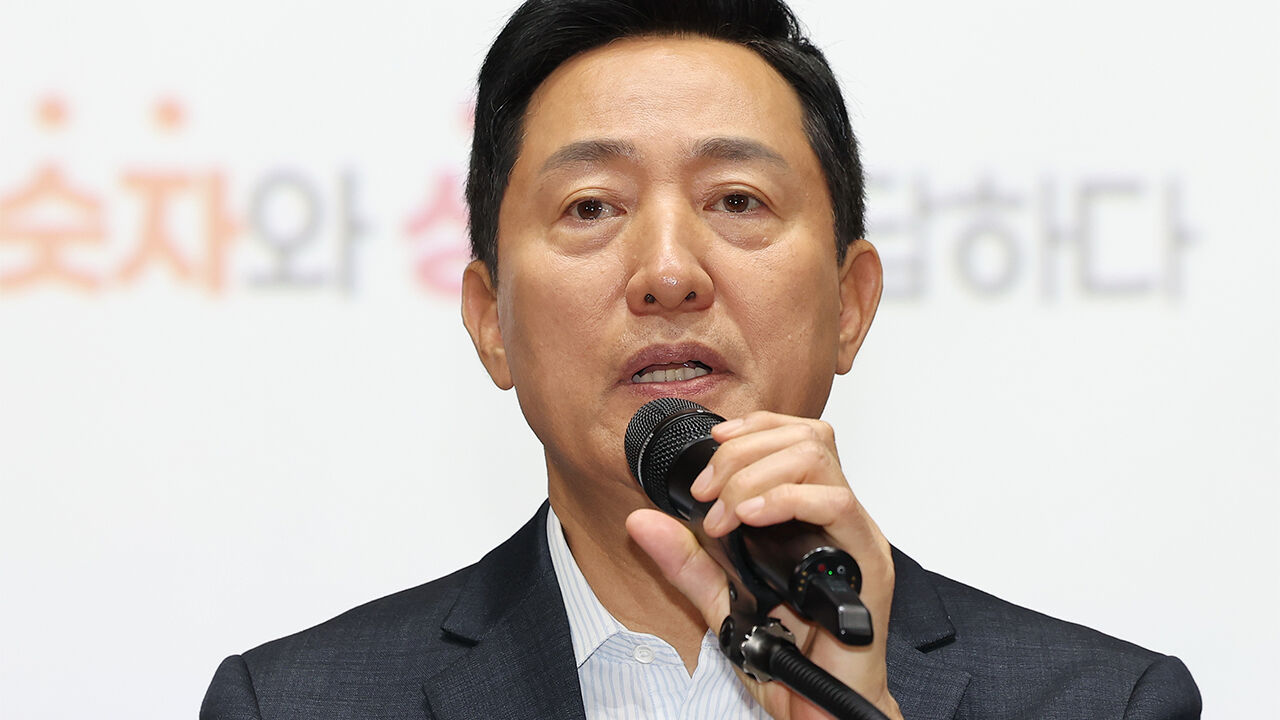
▲ Seoul Mayor Oh Se-hoon speaks at the 2026 Housing Policy Achievement Sharing Session held at Seoul City Hall on September 21.
Seoul Mayor Oh Se-hoon stated that long-stalled redevelopment and reconstruction projects have been normalized, noting that Seoul's housing supply crunch is gradually easing.
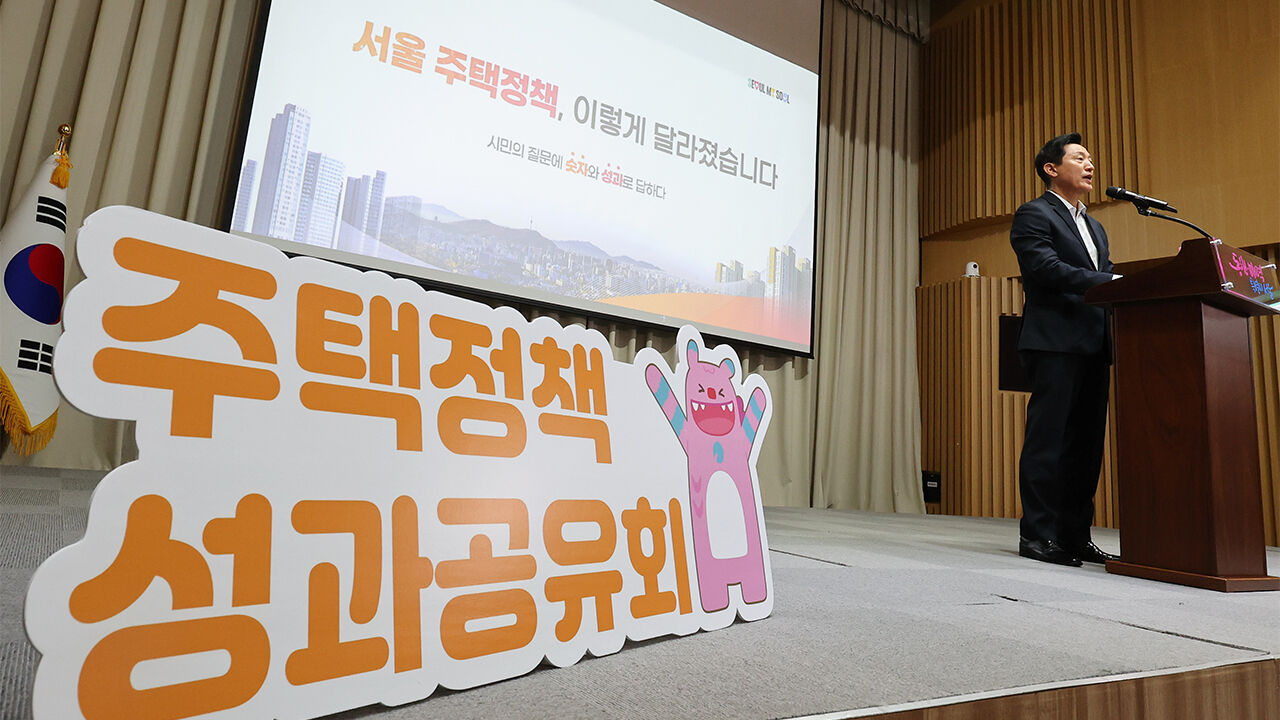
Mayor Oh made the remarks today (September 21) during the 2026 Seoul Housing Policy Achievement Sharing Session, titled "Seoul Housing Policy: How It Has Changed," held at the Seoul City Hall briefing room.
Regarding Seoul's housing supply, Mayor Oh explained, "Over the past five years, the designation of new maintenance districts has averaged 35 per year, more than double the average of 17 from the preceding 10 years," adding, "Maintenance projects are currently underway in 496 locations across the entire city of Seoul."
According to the Seoul Metropolitan Government, since the introduction of the Rapid Integration Planning in 2021, maintenance projects spanning 214 areas and comprising 307,000 households have been pursued.
The designation period for maintenance districts, which typically took five years or longer, has also been reduced to about two years.
The Seoul city government plans to accelerate the process of connecting these expanded maintenance districts to actual construction and occupancy.
Regarding the government's August 13 measures, he explained that regulatory improvements must be implemented in parallel to eliminate obstacles hindering project feasibility and speed on the ground.
Seoul stated that it is removing regulations it can independently adjust, such as lowering the consent rate for establishing redevelopment associations from 75% to 70% and easing standards for park and green space donations.
At the same time, the city plans to continuously petition the government for institutional improvements that can accelerate actual supply, including a temporary three-year relaxation on restrictions for transferring union member status, the easing of redevelopment rental housing ratios, and the relaxation of legal upper floor area ratios for private maintenance projects.
Regarding the "delegation of licensing authority for maintenance projects of 500 households or fewer to autonomous districts," he expressed concern that it could undermine urban planning principles without guaranteeing speed due to controversies over equity among districts.
He added that there are quite a few cases where projects are delayed at the district level, noting that the designation of implementers for Changsin Districts 9 and 10 was delayed by two months, while projects for Yujin Shopping Center and Sewon District 4 have been put on hold.
Regarding the proposal to utilize the Tancheon Water Recycling Center as an alternative for housing supply in Yongsan Park, Mayor Oh explained, "Yongsan Park and greenbelts are green spaces that must be preserved for future generations. In contrast, the Tancheon Water Recycling Center is a project of a different nature; rather than destroying new green spaces, it multidimensionally utilizes existing urban infrastructure to create housing, parks, and industrial facilities together."
The Seoul Metropolitan Government plans to develop the Tancheon Water Recycling Center into the Southeast Area Youth-Specialized Industrial Complex combining youth housing, parks, and research and development (R&D) facilities to supply 13,000 households, with the private investment eligibility survey scheduled to be completed by the end of this year.
Mayor Oh explained that out of about 15,500 households that moved out of long-term jeonse housing (Shift) before their contracts expired, 82.4% moved out voluntarily, and among them, 72% transitioned to homeownership, confirming the housing ladder effect.
Regarding controversies over high deposits for the newlywed long-term jeonse housing "Mirinae House," he said, "We set them at around 80% of the surrounding market prices and provided extended residency periods and preferential purchase opportunities upon childbirth. As concerns over deposit burdens have grown due to recent rises in housing and jeonse/monthly rent prices, we plan to continuously monitor feedback from the field and review necessary supplementary measures."
Addressing criticisms that the supply of public housing may have been neglected, Mayor Oh explained, "Over the five years since 2021, we have supplied a total of 131,000 public housing units through public contributions from maintenance projects, direct supply by the Seoul Housing and Communities Corporation (SH), and purchased rentals," adding, "Seoul's current public rental housing stock stands at 410,000 units, of which SH has supplied approximately 68%."
He further added that an additional 130,000 public housing units are scheduled to be supplied by 2031.
He mentioned areas where private maintenance projects are difficult to handle, noting that the public stepped in to revive projects such as Ahyeon District 1 in Mapo-gu and Pnap Toseong Moatown in Songpa-gu.
He stated that 43,000 units through public redevelopment and reconstruction and 15,000 units through publicly participated Moatowns are currently being promoted, and that the structure in which the private and public sectors jointly lead housing supply will be further expanded.
For young adults, approximately 35,000 housing units have been supplied over the five years starting from 2021, and the city plans to continue supplying various housing options tailored to life stages and income levels, such as university students, early-career workers, and newlyweds.
Regarding "Youth Safety Housing," where new projects have temporarily contracted due to recent rises in interest rates and construction costs, he stated that supply will be normalized through financial support for business operators and improvements to project procedures, targeting a cumulative total of 46,000 units by 2030.
In response to the "triple hardship" of rising jeonse prices, a shift toward monthly rent, and loan regulations, direct housing cost support—such as youth monthly rent subsidies and interest support for jeonse and monthly rent deposits—will be expanded.
Mayor Oh stated, "There were many questions and criticisms surrounding Seoul's housing policy, and we sought to answer those questions not with words, but with numbers and achievements. We will ensure that the achievements of turning back the clock on maintenance projects and expanding public housing and the housing ladder translate into actual occupancy and housing stability for citizens."
(Photo: Yonhap News)
※ Please note: This article was translated by AI and may contain errors.


 Video News


 Video News
