
 KOR
KOR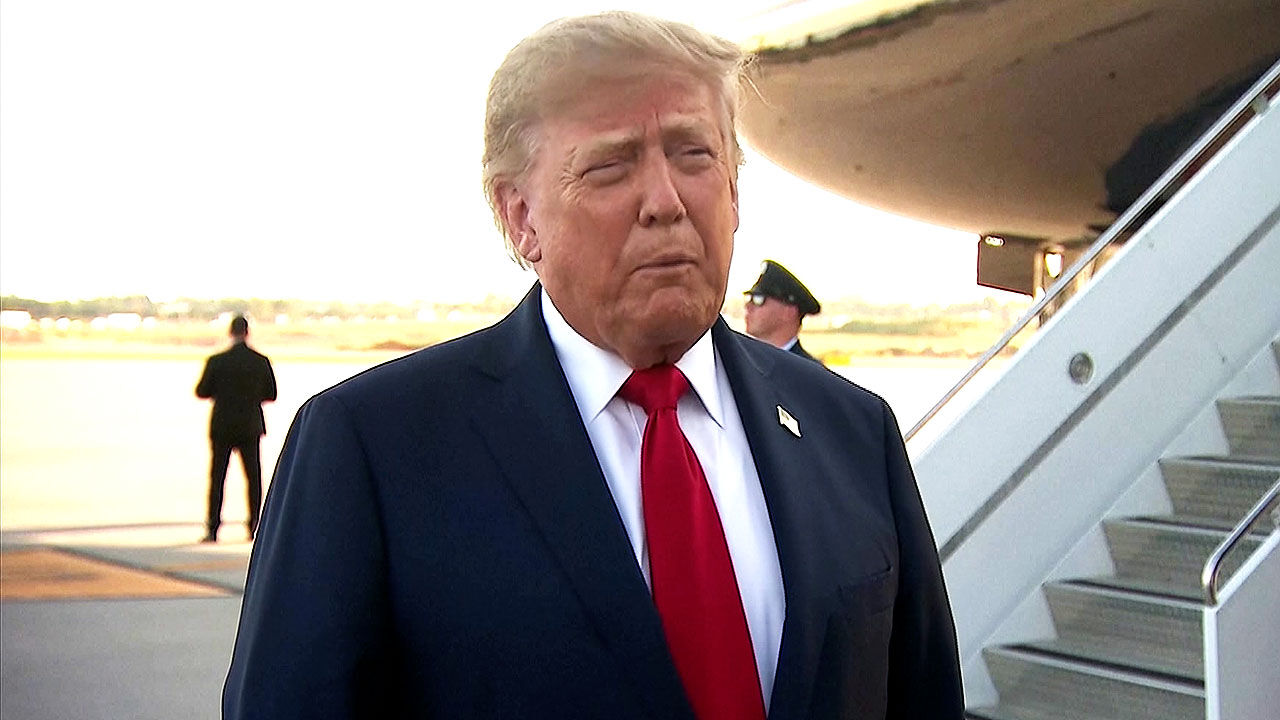
▲ U.S. President Donald Trump
The high-level meeting of the 81st United Nations General Assembly, where leaders from around the world gather to discuss major international issues, will open at the UN Headquarters in New York, U.S., running from September 22 to 28 local time.
According to the UN Headquarters on September 20, the theme of this year's assembly is "Restoring trust, managing change: The UN for all."
Amid growing security anxieties in the international community as the prolonged Russia-Ukraine war and the Gaza conflict are compounded by the U.S.-Iran conflict, heads of state are expected to engage in intense diplomatic maneuvers regarding the end of wars, the restoration of the international order, and the reinforcement of multilateralism.
In particular, as the situation in the Middle East has grown increasingly complex and criticisms have emerged that the UN Security Council is failing to play its proper role in international issues, discussions surrounding the role and reform of the UN are expected to gain full momentum.
On September 22, the first day of the general debate, Brazilian President Luiz Inacio Lula da Silva will take the floor as the first speaker, following a tradition maintained since 1955.
He will be followed by U.S. President Donald Trump, representing the host country, as the second speaker.
President Trump is expected to reaffirm his longstanding "America First" and "peace through strength" stances while calling for UN reforms.
South Korean President Lee Jae-myung is also scheduled to deliver a keynote speech in the second slot that same afternoon.
Leaders of countries directly involved in wars will also take the podium in succession.
On the morning of September 23, Iranian President Masoud Pezeshkian and Ukrainian President Volodymyr Zelenskyy will deliver speeches.
On September 24, Israeli Prime Minister Benjamin Netanyahu is scheduled to speak.
Previously, New York City Mayor Zohran Mamdani had threatened his arrest upon visiting New York, but Prime Minister Netanyahu dismissed the threat and reaffirmed his intention to visit.
On the same day, Palestinian Authority President Mahmoud Abbas will address the assembly via video link.
President Abbas was unable to visit the UN in person after being denied a U.S. visa.
On September 28, the final day, North Korean Vice Foreign Minister Kim Son-gyong will deliver a speech.
Vice Minister Kim is expected to reiterate the existing stance, maintained since last year, that denuclearization is not open for discussion.
Chinese President Xi Jinping and Russian President Vladimir Putin, who have not attended the UN General Assembly in person since 2015, the 70th anniversary of the UN's founding, will be absent once again.
During the high-level session, sideline events addressing international security, including AI safety—which has recently emerged as a major topic in the international community—will be held consecutively.
The United States will host a high-level meeting on AI cooperation on September 23, presided over by U.S. Ambassador to the UN Mike Waltz and others.
Discussions are reported to cover policy, legal, and regulatory environments necessary for the large-scale deployment of AI, as well as issues regarding freedom of speech.
On the same day, the Security Council will also hold a high-level open briefing themed on AI and international security.
Private sector figures, including Yoshua Bengio, co-chair of the UN Independent International Scientific Panel on AI and professor at the University of Montreal in Canada, and OpenAI CEO Sam Altman, are scheduled to attend and speak.
In addition, a high-level meeting on climate action and a high-level meeting commemorating the 40th anniversary of the "Declaration on the Right to Development" will be held on September 23; an informal dialogue on cooperation between the Security Council and the Arab League on September 24; and a high-level meeting on pandemic preparedness on September 25.
Notably, this meeting marks the final high-level session held during Secretary-General Antonio Guterres's tenure.
Behind the official stage, bilateral talks among world leaders and diplomatic engagements with candidates for the next UN Secretary-General are expected to take place, decisively influencing the future election race.
※ Please note: This article was translated by AI and may contain errors.


 Video News

 Video News
 Video News
 Video News