
 KOR
KOR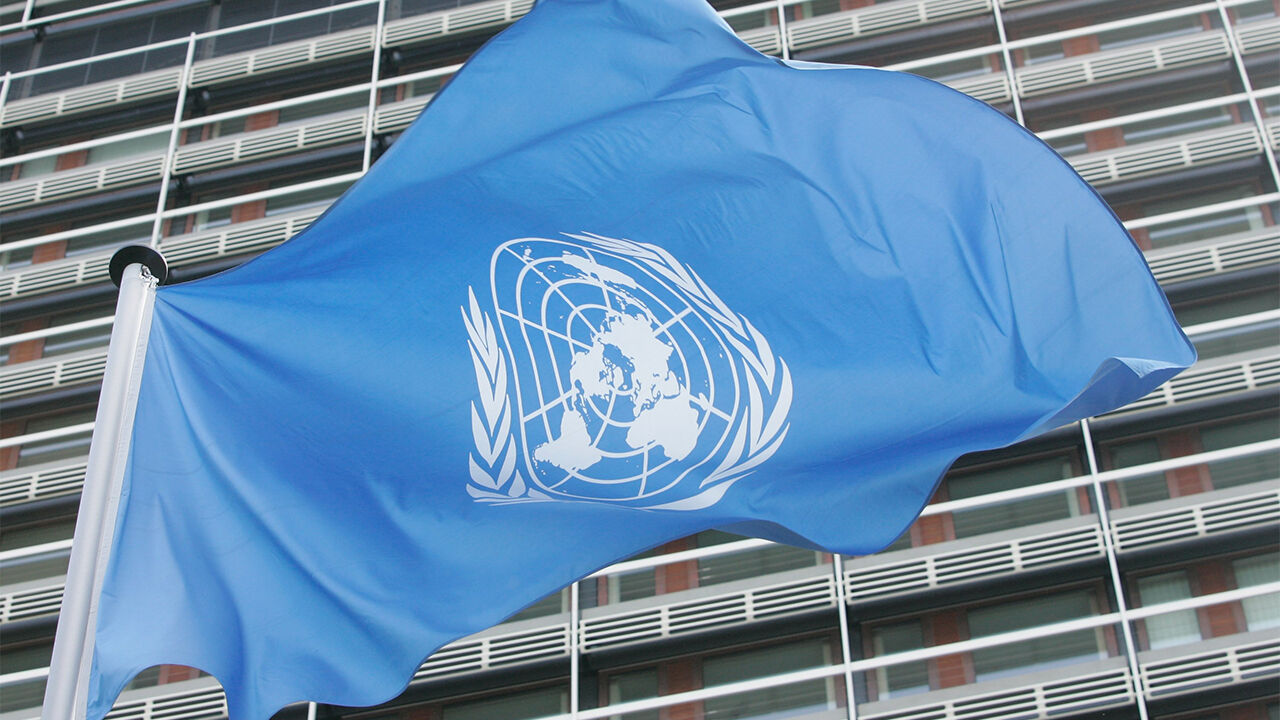
▲ The United Nations
As the UN Security Council (UNSC) has held three rounds of closed-door straw polls to select the next UN Secretary-General, the number of opposing votes against the candidates has surged.
With projections pointing to the veto power of the P5 (five permanent members) as a key variable, attention is focused on whether a "third candidate" favored by the permanent members will emerge.
According to the UN on September 20, local time, the third closed-door straw poll held on September 18 placed Rebeca Grynspan (70), Secretary-General of the UN Conference on Trade and Development (UNCTAD) from Costa Rica, and Carolyn Rodrigues-Birkett (52), Guyana's Permanent Representative to the UN, in first and second place, respectively.
Both candidates have maintained their lead following the previous first and second rounds of voting.
What stands out more than the rankings is the growing number of opposing votes with each subsequent ballot.
First-place candidate Grynspan received 9 votes in favor, 5 against, and 1 abstention this time.
Her opposing votes, which stood at 1 during the first vote, increased to 4 in the second and 5 in the third.
For second-place candidate Rodrigues-Birkett, while favorable votes remained steady at 9, 8, and 8 across the first to third rounds, opposing votes grew from 2 to 3, and then to 6.
Looking at the remaining 6 candidates, there is also a clear trend of declining abstentions and rising opposition.
As the voting repeats, the council member states' assessments of the current 8 candidates are becoming more concrete, leading to a more pronounced expression of opposition.
Straw polls are informal procedures to narrow down a single candidate for the Security Council to recommend to the UN General Assembly, and they are repeated until a consensus is reached.
To become the final candidate, one must secure at least 9 favorable votes from Security Council members, while ensuring that none of the permanent members (the United States, the United Kingdom, France, Russia, and China) exercise their veto power.
Since it is still a closed-door voting stage where votes from permanent and non-permanent members are not separated, the origin of the opposing votes cannot be pinpointed.
However, because candidate recommendations become impossible if even one permanent member exercises its veto power in the end, their stance is regarded as the biggest variable moving forward.
In particular, permanent member Russia has publicly expressed dissatisfaction with the current pool of candidates.
Kirill Logvinov, Director of the Department of International Organizations at the Russian Foreign Ministry, said in a recent interview with local media outlet Interfax, "None of the running candidates are clearly acceptable from Russia's perspective," adding, "We do not rule out the possibility of a new candidate running."
In UN diplomatic circles, as opposing votes from member states against the existing candidate pool increase and the calculations of the permanent members grow more complex, some raise the possibility that a new candidate favored by the Security Council could emerge in the future.
Daniel Forti, a UN expert at the Stimson Center, diagnosed that day, "In the past three selection processes, there was a clear front-runner, but this time, no such clear dynamic is visible," adding, "The next chief might not even be elected by December 31, when the current Secretary-General's term ends."
He urged that Security Council member states have a responsibility to successfully wrap up the selection of the next chief and ensure an orderly handover of duties, while other member states must also actively raise their voices on the occasion of the UN General Assembly.
(Photo: Getty Images)
※ Please note: This article was translated by AI and may contain errors.


 Video News
 Video News
 Video News
 Video News
 Video News