
 KOR
KOR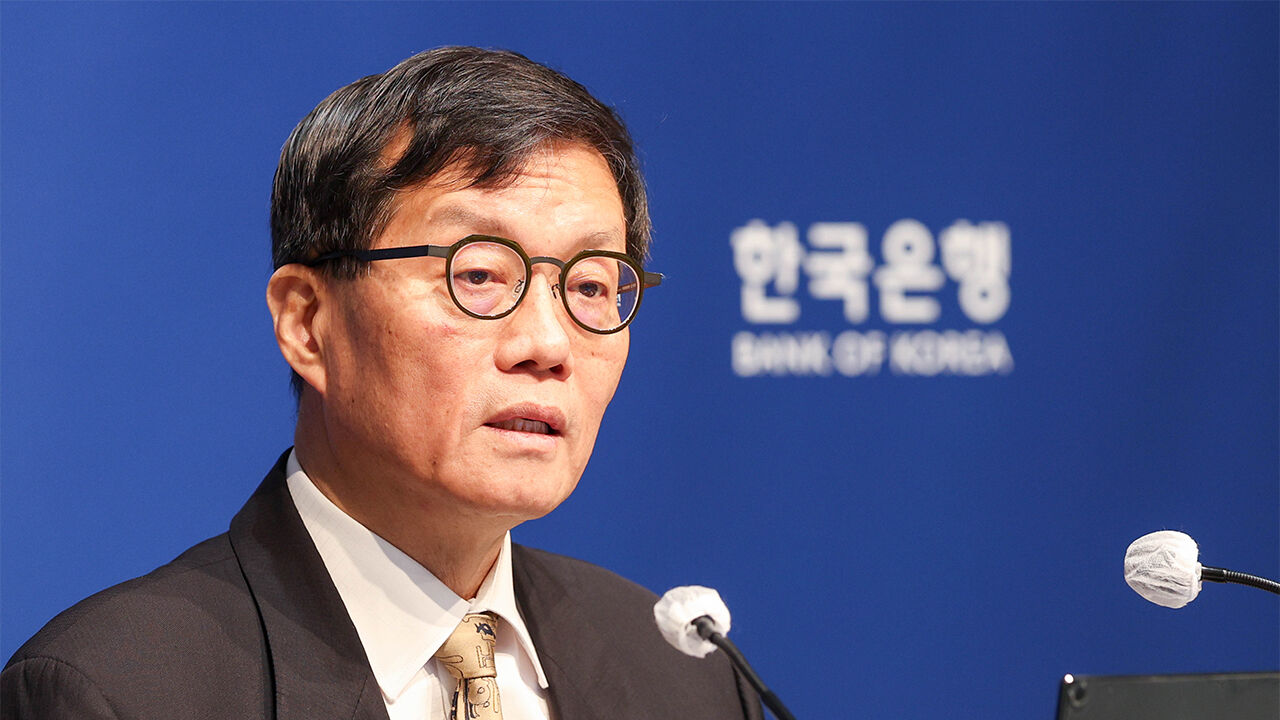
▲ Former Bank of Korea Governor Rhee Chang-yong
Former Bank of Korea Governor Rhee Chang-yong has been appointed as a non-executive advisor to the central bank following his retirement and is receiving an advisory fee of 7 million won per month.
Records of his advisory activities are not separately managed.
This is because the role deals with sensitive matters such as monetary policy.
According to data submitted by the BOK to Representative Lee Jong-wook of the People Power Party, who sits on the National Assembly's Strategy and Finance Committee, on the 19th, former Governor Rhee is currently registered as an advisor to Governor Shin Hyun-song.
His appointment period is one year starting from April 21 of this year, the day after his retirement, and his role involves frequently exchanging opinions with Governor Shin.
The advisory fee amounts to 7 million won per month, reaching 84 million won on an annual basis.
It is not the first time that a former governor has assumed an advisory role after retirement and received advisory fees.
His predecessor, former Governor Lee Ju-yeol, received 10 million won per month for two years starting in April 2022, 4 million won per month for one year starting in April 2024, and was appointed solely as an advisor without advisory fees for one year starting in April 2025.
The BOK's gubernatorial advisor system dates back to the enactment of the BOK Articles of Incorporation in 1950.
At that time, foreign experts could be hired as advisors to secure the necessary expertise for central bank operations, and the scope of advisors was expanded to include both Korean and foreign nationals in 1967.
Thirteen former BOK governors, up to former Governor Rhee Chang-yong, have been listed as past advisors.
While there were occasional retired finance ministers, bank superintendents, and Monetary Policy Board members, only former governors have been appointed since former Governor Lee Seong-tae assumed the advisory post in May 2010.
However, no records remain to verify the actual advisory activities of the advisors.
There are no general records such as advisory reports, meeting minutes, or business journals, nor are there simple statistics such as the number of advisory sessions or whether policies were reflected.
In reality, it is reported that retired BOK governors rarely engage in close consultations with the incumbent governor regarding monetary policy directions in their capacity as advisors.
Particularly regarding base rate decisions centered around the Monetary Policy Board, BOK officials note that the atmosphere makes it difficult for former governors to offer advice, even informally.
However, unlike other former governors, former Governor Rhee has been providing "sideline commentary" by responding to media interviews or taking the stage as an external lecturer immediately after his retirement.
Some critics suggest that the appointment of gubernatorial advisors is a custom established simply to "honor" former governors.
The perspective is that advisory fees have effectively been paid to former governors under the guise of maintaining their dignity.
In response, a BOK official explained, "We appoint gubernatorial advisors in accordance with Article 35 of the BOK Articles of Incorporation," adding, "Upon appointment, a modest advisory fee necessary for the advisor's activities is set."
The official further explained, "Most of the advisory content involves sensitive matters related to monetary policy or BOK management, which is why separate advisory performance is not managed."
In response, Representative Lee Jong-wook urged, "Even if it is difficult to disclose specific advisory details due to the independence and security of monetary policy, records of when, how many times, and in which fields advice was provided should at least be kept and explained to the National Assembly."
(Photo: Yonhap News)
※ Please note: This article was translated by AI and may contain errors.




 Video News
 Video News
 Video News