KOR
KOR
What happened to the pioneers of the dot-com boom?
On the September 17 broadcast of SBS's
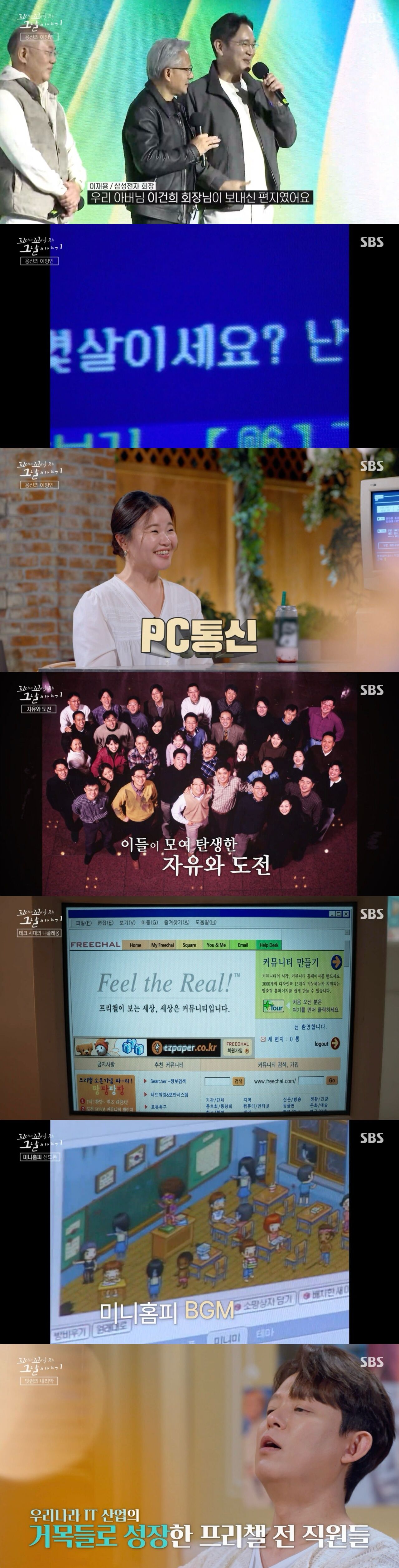
Tails of Tales, under the subtitle "Respond, Freedom and Challenge!", the show shed light on the culture that brought people together during an era before smartphones.
Passing through the days of PC communication—when people secretly logged on despite the risk of skyrocketing phone bills—the high-speed internet era eventually opened the floodgates to the dot-com boom.
As IT venture companies mushroomed to lead the dot-com craze, Freedom & Challenge gathered talented individuals connected to Seoul National University and Samsung, centered around CEO Jeon Je-wan, who had graduated from Seoul National University's Department of Business Administration and worked at Samsung C&T. They eventually created and launched Freechal.
Jeon Je-wan had taught himself computers during his days at Samsung C&T, developed a new personnel management system, and was awarded the 1st Proud Samsung Employee Award in recognition of his contribution to reforming Samsung's personnel system.
In 1997, amid the Asian financial crisis, he left Samsung to establish Freedom & Challenge and gathered talented people one by one. Together, they created Freechal, a platform where anyone could easily create a community anytime and anywhere. It became a massive hit, surpassing 1 million members and opening about 35,000 communities within just three months of its launch.
South Korea's representative fashion platform, Musinsa, also traces its roots back to a community hosted there. Freechal soared to success thanks to people flocking to online communities, finding joy in connecting and opening up a new world.
Around the same time, Cyworld, which provided a club service, envied Freechal's capital and talent pool and created its own new service.
They launched Cyworld, featuring a mini-homepage service that marked the beginning of Korean-style social media. It became a massive hit by introducing industry-first features like BGM services and the cyber currency "Dotori" (Acorns).
Positioning itself as an innovative new service that shifted the paradigm from a shared community space you visit to a personal space others come to visit, Cyworld transformed into a major service rivaling South Korea's Naver and Daum.
Feeling threatened by Cyworld's emergence, Freechal launched a "My Homepage" service that closely resembled mini-hompages and declared that community operations would become paid services.
However, this triggered public outrage, causing users to abandon the platform instantly and cutting its user base in half.
Then, in 2010, dot-com companies faced the unexpected arrival of the smartphone era. The emergence of feed-style social media, where information actively seeks out users, led to the collapse of the dot-com era.
Cyworld, whose basic service structure changed, was pushed aside by foreign social media platforms. Eventually, in 2013, Freechal announced the termination of its service.
Since then, Cyworld's founders have been active in the new era, while former Freechal employees have grown into giants of South Korea's IT industry, serving as Naver's Head of Design, Kakao's Co-CEO, a member of the Presidential Committee on Artificial Intelligence Strategy, and the CEO who created Pinkfong.
Yet, Jeon Je-wan, the former CEO of Freechal, was not among them. Currently working as a cleaner at a pension in Yangyang, he said, "The pain of struggling through a failing business is immense. My life practically reached the point of ruin, and I am cleaning here because I need to forget the distress. Since I need to focus on one thing to forget, this is why I do it. Still, it keeps coming to mind, which means I haven't been able to empty my mind. But is it easy to empty? Having built a structure that entered the domestic top 3 in just a year, if I could empty all of that away, I would be an enlightened person."
Having cut ties with everyone, former Freechal CEO Jeon Je-wan now makes a living cleaning pensions and working as a designated driver. In reality, Freechal had a structural flaw where the more successful the site became, the more operating losses the company accumulated.
Consequently, investment funds quickly dried up, around the same time IT-related stock prices began to plummet, marking the burst of the dot-com bubble. Although former CEO Jeon ran around desperately seeking investments, Freechal—pushed to the edge of a cliff as the market failed to recognize the potential of IT companies—announced paid community operations. Just as he thought he might have found a breakthrough, it was short-lived.
In December 2002, former CEO Jeon Je-wan was arrested. Although he explained that it was an unavoidable management decision due to the company's financial difficulties and not for personal gain, he was sentenced to one year in prison. "I want to take this opportunity to apologize to Freechal users for failing to protect their data until the end," he expressed.
Later, driven by the belief that Cyworld's historical value and importance of data should not be overlooked, former CEO Jeon acquired Cyworld and invested over 30 billion won to develop it. However, with the outbreak of COVID-19, he ultimately failed to revive Cyworld, leaving many saddened as he is left only to reminisce about those days.
(Photo: Yonhap News / SBS Entertainment News Editor Kim Hyo-jung)
※ Please note: This article was translated by AI and may contain errors.
Where Are They Now? The Rise and Fall of Korea's Dot-Com Craze

Copyright Ⓒ SBS & SBSi. All rights reserved.
Copying, redistribution, and unauthorized use in AI training are strictly prohibited.
Copying, redistribution, and unauthorized use in AI training are strictly prohibited.

Trending Now
-
![72 Billion Won Worth of Seoul Love Gift Certificates Available on First-Come Basis... 5% Discount and 2% Refund [Friendly Economy]](https://img.sbs.co.kr/news/pc/thumb_v3.png) Video News
Video News
72 Billion Won Worth of Seoul Love Gift Certificates Available on First-Come Basis... 5% Discount and 2% Refund
-
Video News
Parked in Apartment Lot Only to Find Car Doused in Sewage... "What Am I Supposed to Do?"
-
Video News
"Slept 30 Minutes a Day for 17 Years" Livestreamed... A Twist Ending
-
Video News
Suspicious Packages Found Drifting Ashore on Jeju Coast Once Again
-
"48 Dead in Nigeria After Drinking Suspected Methanol-Laced Alcohol"
![72 Billion Won Worth of Seoul Love Gift Certificates Available on First-Come Basis... 5% Discount and 2% Refund [Friendly Economy]](http://img.sbs.co.kr/newimg/news/20260918/202223577_300.jpg) Video News
Video News
 Video News
 Video News
 Video News