
 KOR
KOR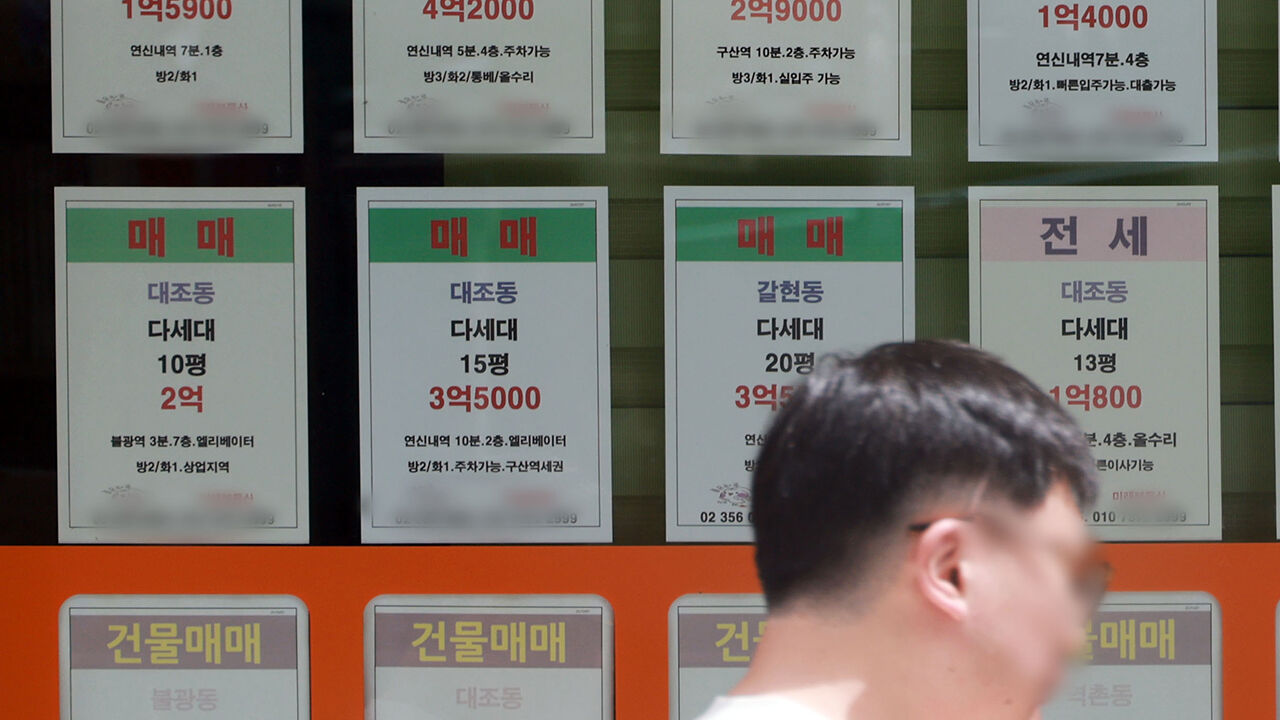
▲ Real estate agency in Seoul
The grace period for the actual residency obligation applied when homeless buyers purchase homes with existing tenants within land transaction permission zones will be extended until the end of next year.
The recognized grace period will also be expanded from current lease agreements to include renewed lease periods.
The Ministry of Land, Infrastructure and Transport announced today (September 17) that the application deadline for the actual residency grace period, originally announced in May, will be extended by one year from the initial deadline of December 31 of this year to December 31 of next year.
Previously, ahead of the expiration of the heavier capital gains tax on multi-homeowners on May 9 this year, the government announced a plan in February to temporarily defer the actual residency obligation within permission zones until the end of the initial lease term, limited to cases where there is a tenant and the buyer is a homeless person, to support prompt sales by multi-homeowners.
Following the expiration of the capital gains tax surcharge in May, the scope of the measure was expanded to all housing units, including non-owner-occupied single-home properties, allowing buyers who apply for land transaction permits by the end of this year to receive a grace period for actual residency until the expiration of their lease contracts.
This additional extension is a follow-up measure to the August 3 tax reform plan, which includes short-term incentives to encourage housing sales, such as the temporary alleviation of capital gains tax surcharges for multi-homeowners and the phased abolition of tax benefits for purchased rental apartments in regulated areas.
Previously, the ruling party also suggested to the government during a party policy coordination meeting on September 15 that an additional grace period was necessary, pointing out that under the tax reform plan, those seeking to sell their homes next year would be unable to apply for the residency grace period.
The government plans to legislate the amendment to the Real Estate Transaction Reporting Act containing these details on September 18 and enforce it on October 1.
The measure will apply to all housing units currently under lease as of the enforcement date of October 1 for a 15-month period until the end of next year.
As with previous measures, registration of housing acquisition must be completed within four months after the land transaction is permitted.
Considering that purchased rental apartments (registered rental housing) in regulated areas face transaction restrictions depending on the circumstances, the actual residency grace period can be postponed in the interest of fairness.
All of Seoul and 15 regions in Gyeonggi Province currently designated as land transaction permission zones have also been designated as regulated areas.
Consequently, trading of purchased rental apartments is restricted if mandatory rental periods remain.
Because these areas are also designated as speculation-overheated districts, the transfer of cooperative member status is restricted from the point of association establishment authorization for reconstruction projects and management disposal plan authorization for redevelopment projects until the previous notice date, making transactions unavailable.
Therefore, if the application of tax benefits resulting from the sale of purchased rental apartments is postponed beyond the expiration date of mandatory rentals or the previous notice date, the application for the actual residency grace period will also be adjusted to become available for 15 months starting from that respective point.
The recognized scope for the residency grace period will also be broadened from the remaining lease term of existing lease contracts to renewed contract periods.
The intent is to enhance housing stability for tenants by recognizing additional contract periods if there are tenants who wish to continue living in their current homes using contract renewals.
Contract renewals are limited to one time for a maximum of two years.
Accordingly, combining the 15-month application period and the 24-month contract renewal based on the enforcement date (October 1), move-ins can be deferred for up to 3 years and 3 months, until December 31, 2029.
To receive the residency grace period, contract renewals must be concluded prior to applying for the grace period, and the renewed contract must commence within the application period (October 1 to December 31, 2027).
In cases where there is no contract renewal, move-in is deferred until the initial expiration date of the lease contract as of the enforcement date (up to two years), requiring move-in to be completed by September 30, 2028.
The requirements for homeless buyers will be restricted to "individuals who have continuously maintained homeless status since May 12 of this year," identical to the measure announced last May.
After moving in, residents are obligated to live in the property for two years.
Kim Yi-tak, First Vice Minister of Land, Infrastructure and Transport, stated, "This measure maintains the core residency principle of the land transaction permission system while alleviating practical difficulties arising during the transaction process of leased housing and enhancing tenant housing stability." He added, "By keeping the homeless actual-demand requirements and the two-year residency obligation intact, transactions will be centered around actual demand while thoroughly blocking speculative demand."
(Photo: Yonhap News)
※ Please note: This article was translated by AI and may contain errors.


 Video News
 Video News

 Video News
 Video News