
 KOR
KOR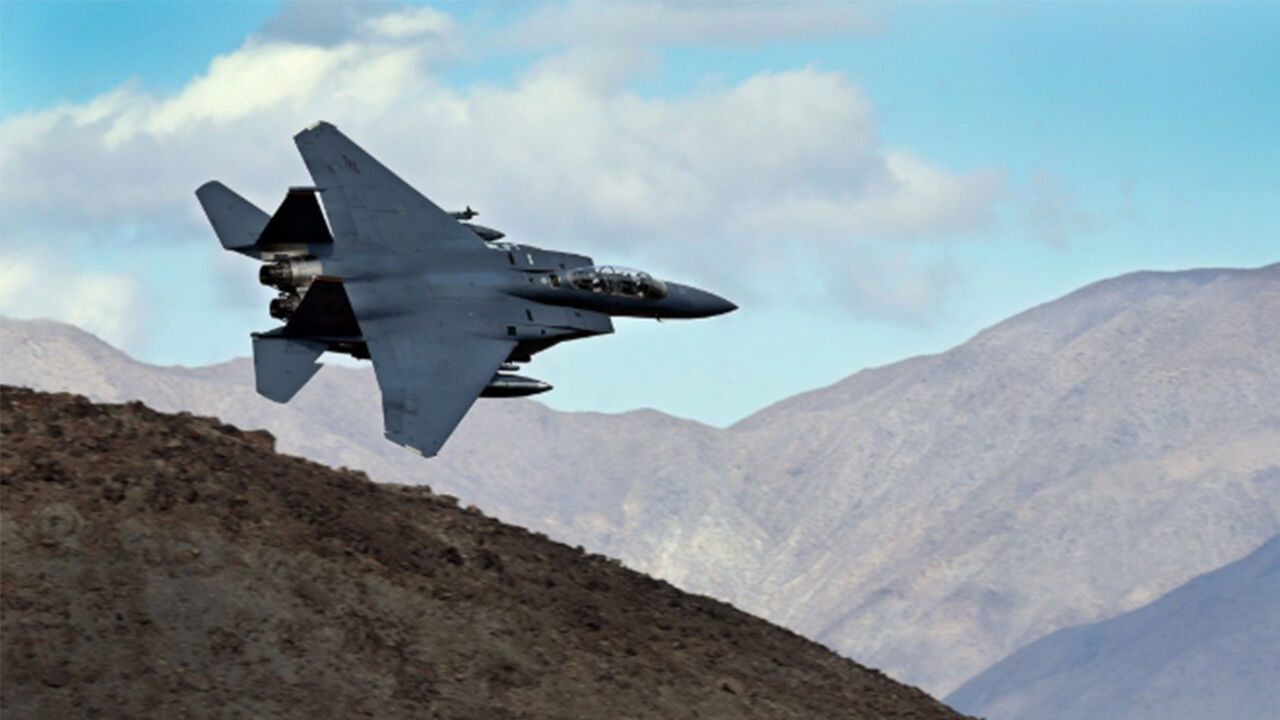
▲ U.S. Air Force F-15E fighter jet (file photo)
"When I saw that the parachute didn't deploy, that was the most terrifying moment of my life. As I was falling, I prayed, 'Lord, Thy will be done. But I need some help to get through this trial.'"
The dramatic survival story of a U.S. Air Force colonel who was rescued after spending more than two days stranded in the middle of enemy territory has been revealed, following the shooting down of his fighter jet by a missile during operations in Iran last April.
Identified only by the call sign "Bravo," the colonel shared the harrowing details of his fall into the heart of enemy territory south of Isfahan, Iran, and his subsequent rescue in an interview with CBS's flagship news program "60 Minutes," which aired on the 13th (local time).
On the night of April 2, a two-seat F-15E fighter jet took off to strike drone and missile facilities near Iran's nuclear material stockpile site when it was hit by an Iranian shoulder-fired missile.
A state-of-the-art fighter jet worth 30 million dollars (approx. 40 billion KRW) was struck by a portable missile worth 100,000 dollars (approx. 135 million KRW).
As a fire broke out on the aircraft, pilot "Alpha" in the front seat and weapons systems officer "Bravo" in the back seat initiated an emergency ejection.
The problem was that Bravo's parachute had been damaged by Iranian missile debris.
Because the parachute failed to deploy properly, Bravo plummeted at speeds of 110 to 160 km/h in sheer terror, suffering severe fractures to his spine, arms, and shoulders from the impact with the ground.
It was nothing short of a miracle that he was not killed instantly and could still walk.
Driven by the absolute resolve that "I must not be taken hostage and appear on Iranian television," Bravo dragged his body and retreated to a high-altitude cliff about 2,100 meters above sea level.
Iran, which had shot down the fighter jet, did not stand idle.
Photos of the jet's wreckage were released by Iranian media, and armed Iranian search parties pursued him to within a few hundred meters of where he was hiding.
The U.S. rescue unit succeeded in recovering Alpha 6 hours into the operation, but had to temporarily withdraw after failing to locate Bravo amid fierce gunfights with Iranian forces.
U.S. Defense Secretary Pete Hegseth, in an interview with CBS, recalled, "Making the decision in the situation room to leave Bravo behind in enemy territory for another day was the hardest moment."
Bravo endured another day in the freezing cold of the high-altitude mountains with a broken body, almost no water, and scarce food.
Meanwhile, the Central Intelligence Agency (CIA) used advanced technology to track his exact location while executing deception operations to distract the attention of Iranian forces.
U.S. forces struck nearby positions of the Iranian Islamic Revolutionary Guard Corps (IRGC) with missiles and drones to secure a rescue route.
About 90 U.S. special operations forces landed on a temporary desert airstrip inside Iranian territory using rescue helicopters and transport planes.
It is reported to be the first time U.S. ground troops have set foot on Iranian territory since the operation launched in 1980 to rescue American hostages at the U.S. Embassy in Iran.
Hundreds of personnel were deployed in the air, and thousands of support personnel participated in the operation.
Upon seeing the U.S. rescue team that found him, Bravo's first words were, "Let's go."
Bravo recalled, "It was the greatest moment of my life."
However, the crisis continued.
The landing gear of the rescue transport plane sank into the desert sand, causing a situation where it could not take off.
To prevent advanced military technology from falling into Iranian hands, the U.S. military blew up the helicopters and two aircraft worth 100 million dollars (approx. 135 billion KRW) each at the scene.
Subsequently, all members escaped safely via an additional covertly infiltrated support team.
On the morning of Easter (April 5), about 50 hours after being shot down, Bravo made the first phone call to his wife in the United States to let her know he was safe.
Regarding the rescue operation, Bravo stated, "This is not just a story about me coming back alive. It is a historic example showing how far the military and the nation will go to uphold America's promise never to leave a single service member behind in enemy territory."
(Photo: AP, Yonhap News)
※ Please note: This article was translated by AI and may contain errors.



 Video News
![[자막뉴스] "피 토하고 폐 비대" 충격 결과…숨기고 승인해 93명 '생체 실험'](http://img.sbs.co.kr/newimg/news/20260914/202222078_300.jpg) Video News
Video News
 Video News
 Video News
 Video News