
 KOR
KOR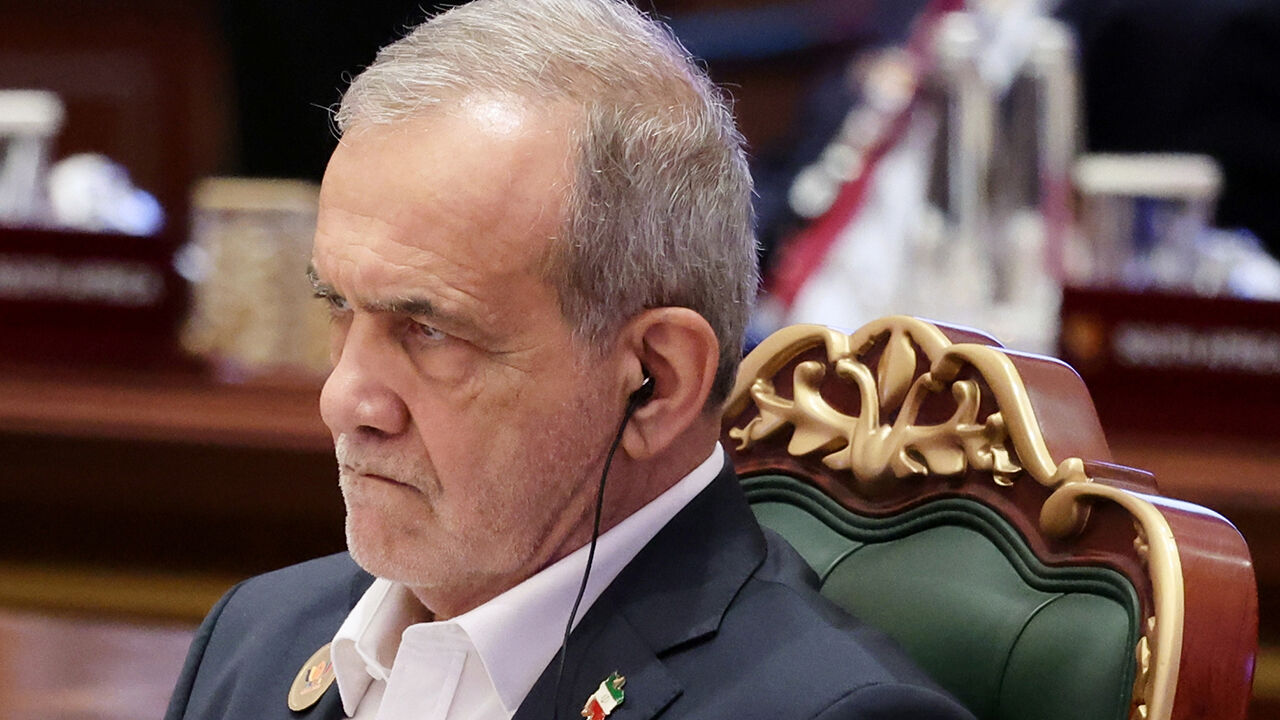
▲ Iranian President Masoud Pezeshkian
Iranian President Masoud Pezeshkian was furious with the Iranian military for attacking civilian vessels passing through the Strait of Hormuz in July while a cease-fire memorandum of understanding between the United States and Iran was being implemented, The New York Times (NYT) reported.
Five Iranian officials and two members of the Revolutionary Guard with knowledge of the situation told the newspaper that upon hearing the news that the Iranian military had attacked three merchant ships in the Strait of Hormuz, including a Qatari liquefied natural gas (LNG) carrier, President Pezeshkian called Islamic Revolutionary Guard Corps Commander-in-Chief Ahmad Vahidi.
During the call, Pezeshkian reportedly shouted, chastised him for the reckless action, and demanded an explanation.
In response, Commander Vahidi explained that he had neither approved nor been informed in advance of the attacks on the merchant vessels.
Iranian officials added that the Supreme National Security Council (SNSC), which oversees security policy, was also completely unaware of the attacks.
This meant that the military organization judging and carrying out military operations on the ground did not follow the orders of the Iranian leadership.
On July 8, the day after the merchant ship attacks, the United States resumed attacks on Iran, effectively rendering the cease-fire memorandum of understanding void.
Iranian officials reported that a political conflict "the most intense in history" subsequently broke out within the Iranian leadership.
Shouting broke out among the leadership, two general-grade officers pressured to resign, and the SNSC was reorganized with Mohsen Rezaei, a former longest-serving commander-in-chief of the Revolutionary Guard, appointed as secretary-general.
President Pezeshkian pressed for who decided on the questionable merchant ship attacks, and sources familiar with the matter said he was told that field commanders acted independently without waiting for leadership approval under instructions to attack any vessels violating the control of the Strait of Hormuz.
The Iranian government claimed to outsiders at the time that the merchant ships were operating on illegal routes, but U.S. officials told the NYT that they explained the "independent action" to the United States and Middle Eastern countries.
The NYT commented, "Most of the Iranian leadership had no idea that an extremist hardliner faction had taken independent action," adding, "The hardliners' clandestine operations derailed the efforts of Iran's pragmatic moderates to end hostilities with the United States and revive a shattered economy."
It added, "The division (between pragmatic moderates and extremist hardliners) persists, and the hardliners have further solidified their footing."
According to the NYT, three Iranian officials pointed to Hossein Taeb, who opposed negotiations with the United States and steadily persuaded Ayatollah Khamenei, as the person behind the merchant ship attacks in July.
Ayatollah Khamenei appointed him, who served as the head of the Revolutionary Guard's intelligence agency for more than 20 years, as the commander-in-chief of the Basij militia last month.
They pointed out that this division and the rise of the extremist hardliners are due to the fact that new Supreme Leader Ayatollah Mojtaba Khamenei has not appeared in public even once since taking office in March.
As he did not even attend his father's funeral in early July citing security reasons and has not revealed his actual appearance or even his voice for six months, doubts about whether he is even alive are growing.
Iranian cleric Alireza Firuzmandi expressed concern on state television in late July, saying, "It may be a security necessity, but how long must this last?" and adding, "If we cannot see our leader, we will remain in permanent vulnerability and decline."
His few written statements sometimes served as the basis for the pragmatic faction to be attacked.
After signing the cease-fire memorandum of understanding in June, he criticized it, saying, "I agreed (to the memorandum of understanding) because the president and the SNSC approved it, but 'in principle,' I have a different opinion."
Citing Iranian officials, the NYT reported that over the past few weeks, as the level of military conflict with the United States escalated, the Iranian leadership and military debated returning to negotiations and ways to raise international oil prices through intensified military attacks.
Military hardliners, including Islamic Revolutionary Guard Corps Aerospace Force Commander Majid Mousavi, reportedly pushed for heightened military confrontation and presented detailed war plans, such as intensifying attacks on regional energy infrastructure utilizing the "Axis of Resistance," including the Houthis in Yemen and Shia militias in Iraq.
However, President Pezeshkian and Parliament Speaker Mohammad Bagher Ghalibaf, who headed the negotiating team, warned that these war plans could lead to U.S. airstrikes and crippling economic pressure, the NYT reported.
(Photo: AP, Yonhap News)
※ Please note: This article was translated by AI and may contain errors.



 Video News

 Video News
 Video News
 Video News