
 KOR
KOR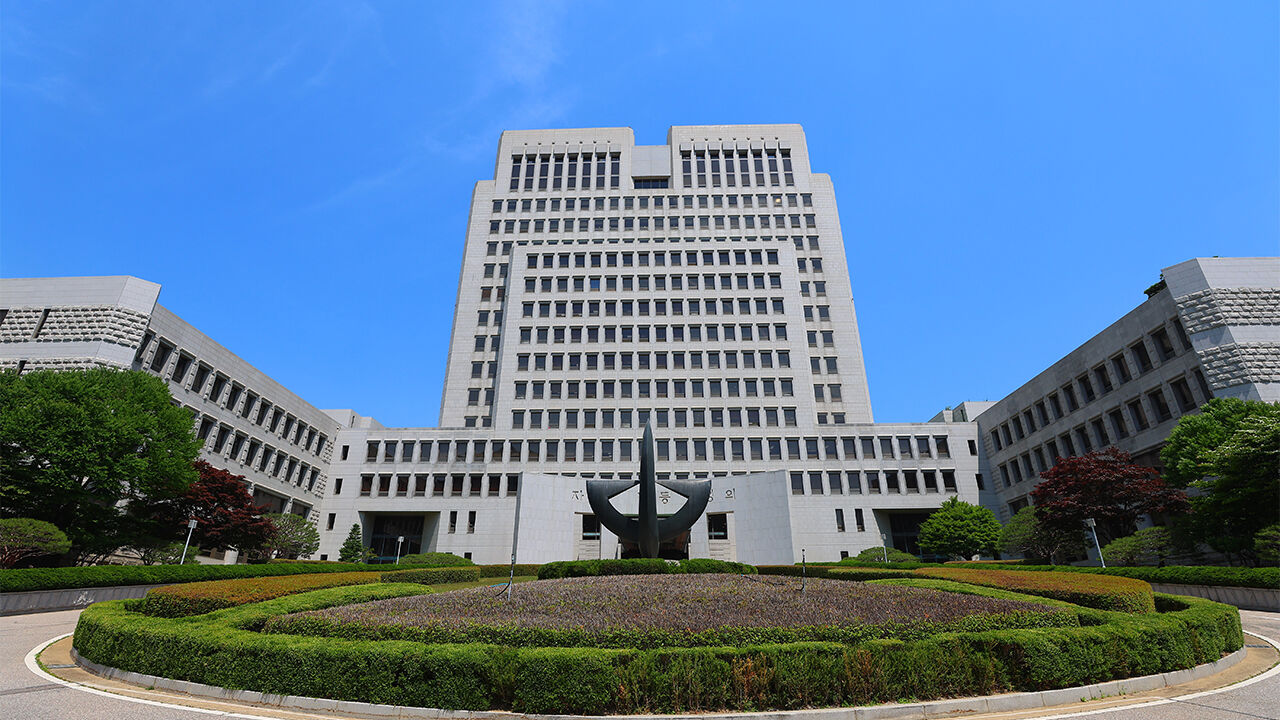
▲ Supreme Court of Korea
The Supreme Court has ruled that if a company has a practice of rehiring retirement-age workers, employees reaching retirement age can continue to be recognized as having the right to expect reemployment.
The Supreme Court's Second Division (presiding Justice Um Sang-pil) overturned the lower court's ruling in favor of the plaintiff in a lawsuit filed by local bus company Naju Transportation against the National Labor Relations Commission seeking the cancellation of a retrial ruling on unfair dismissal relief, and sent the case back to the Daejeon High Court.
This lawsuit arose after Naju Transportation refused to rehire bus drivers who reached retirement age as contract workers.
The company's employment rules set the retirement age at 61, while stipulating that workers can be employed on a contract basis after retirement if deemed specially necessary for business operations.
In fact, among the 38 bus drivers who retired between 2021 and 2022, about 47%, or 18 drivers, were rehired, and investigations showed that applicants were rehired without exception, with only a few exclusions.
The bus drivers whose reemployment was denied filed for relief with the labor commission, claiming unfair dismissal.
After the Jeonnam Regional Labor Relations Commission and the National Labor Relations Commission accepted this, Naju Transportation filed a lawsuit in court asking to cancel the retrial ruling.
The first instance court recognized the drivers' right to expect contract reemployment based on employment rules and actual rehiring practices.
It ruled against the plaintiff, judging that the company had no reasonable grounds to refuse reemployment.
The second instance court's judgment was different.
It found it difficult to recognize the workers' rights, stating that the employment rules did not impose a reemployment obligation on the company and the actual reemployment rate was only about 47%.
The second instance court also based its decision on the fact that they were hired as contract workers through a process of applying to a separate job posting and submitting resumes.
In addition, it viewed that the 2017 collective agreement—which stipulated that "for those who reach retirement age, employment contracts can be extended on a contract basis according to labor-management agreement"—had already lost its validity and could not serve as the basis for the right to expect reemployment.
However, the Supreme Court pointed out that this judgment by the second instance court misunderstood the legal principles regarding the right to expect reemployment.
The Supreme Court judged that, considering various circumstances such as employment rules and actual rehiring practices, a relationship of trust had been formed between the company and the bus drivers that they could be rehired as fixed-term workers if certain conditions were met even after passing retirement age.
Accordingly, it concluded that the drivers whose reemployment was denied are recognized as having the right to expect reemployment after retirement.
The Supreme Court pointed out, "Among the company's bus drivers who reached retirement age in 2021 and 2022 and applied for contract reemployment, they were rehired without exception, with a few exclusions," adding, "It appears there were no cases prior to that either where a retiree's application for reemployment was denied."
It also noted that the right to expect reemployment is based on the trust relationship formed between the company and the workers, not on the 2017 collective agreement.
(Photo: Yonhap News)
※ Please note: This article was translated by AI and may contain errors.





 Video News
 Video News