
 KOR
KOR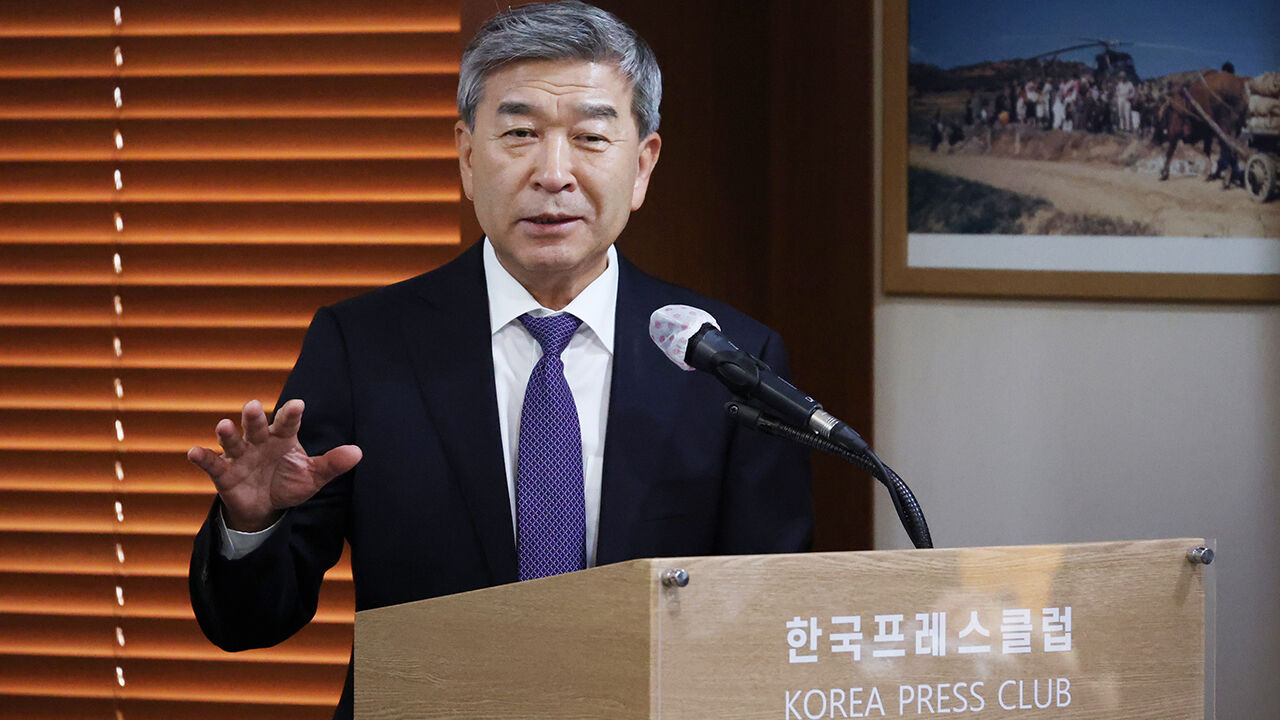
▲ Kim Dong-seok, CEO of the Korean American Voters Council
Predictions have emerged that even if the Democratic Party reclaims the House of Representatives in the upcoming U.S. midterm elections this November, President Donald Trump's power will not weaken; rather, his exercise of executive authority could be further strengthened.
Speaking at an event titled "U.S. Midterm Election Outlook and Strategies for South Korean Companies," hosted by the Korea Chamber of Commerce in the U.S. (KOCHAM) at the Teaneck Marriott at Glenpointe in New Jersey on the 10th (local time), Kim Dong-seok, CEO of the Korean American Voters Council, stated, "This midterm election is not a referendum that decides the end of Trump's power," adding, "The next two years are terrifying."
Addressing the view that President Trump's power would weaken if the Republican Party loses its House majority, Kim said, "Absolutely not," and added, "Trump doubles down when the opponent is strong."
He outlined a scenario for the upcoming midterms where the Democratic Party secures 222 to 223 seats to reclaim the House majority, while the Republican Party maintains its Senate majority with 51 to 52 seats.
"If the Democrats take the House and the Republicans keep the Senate, Trump's power will not simply weaken; the form of his power will change," he said. "The legislative president who makes laws will weaken, but the executive president who commands, executes, vetoes, and litigates can become stronger."
If the Democrats take control of the House, they could step up checks on the executive branch through budget and bill reviews, hearings, and the issuance of subpoenas, but significant authority that the president can exercise independently—such as tariffs, sanctions, and foreign affairs and security—will remain largely intact.
This explains why, instead of legislative gridlock making lawmaking difficult, more weight could be placed on exercising authority utilizing existing laws or executive orders.
Kim emphasized that these changes could directly impact countries heavily influenced by U.S. policies, noting that South Korea, in particular, needs to closely monitor the trade sector.
His point is that a defeat in the House elections should not be immediately interpreted as an easing of external trade pressure.
In response, Kim advised that rather than relying solely on the White House or the executive branch, a multi-layered network connecting the Senate, the House, state governments, corporations, and civil society must be established.
Specifically mentioning states like Michigan, Alabama, Georgia, and Texas, where investments by South Korean companies are concentrated, he said there is a need to expand contact points between South Korean businesses and the political circles in those regions.
The Korean American Voters Council, established by CEO Kim in 2013, serves as a bridge that consistently communicates issues concerning the Korean American community to some 200 U.S. federal lawmakers and aides.
※ Please note: This article was translated by AI and may contain errors.



 Video News
 Video News
 Video News
 Video News
 Video News